
For a big head the Apple AirPods Max is the safest buy, because Apple is the only manufacturer here that publishes dimensions — 168.6 mm wide by 83.4 mm deep by 187.3 mm high — and its tensioned mesh canopy spreads load instead of concentrating it on one line. The Sennheiser MOMENTUM 4 Wireless is the pick if clamping force is what hurts, and the Soundcore Space Q45 is the large-bodied value option at approximately 295 g with up to 50 rated hours.
The missing number
Nobody publishes a headband range, and that is the whole problem
Search for a shoe and you get a size. Search for a headphone and you get a weight, a battery figure and a driver diameter — three numbers that tell you nothing about whether it will close around your head. Of the twenty-five products in this site’s registry, exactly one publishes its physical dimensions, and not one publishes the adjustment range of its headband.
That is not an oversight you can research your way out of. It is the state of the published data, so the honest approach is to say so and then use the proxies that do exist. Those are:
- Published overall height. The one real measurement, where you can get it. A taller headphone has more yoke travel and a deeper earcup opening.
- Headband construction. A tensioned mesh or a wide padded strap distributes pressure. A thin band with a single foam pad concentrates it, and that is where a large head feels a headphone first.
- Weight. On a stretched band, mass lands on the two or three contact points already carrying the most load. 254 g and 386 g are different experiences at hour three.
- Whether it folds. A folding hinge is one more joint in the yoke. It is a convenience for a carry-on and a small structural cost at the extremes of adjustment.
You are not buying a size. You are buying four indirect numbers and the right to send it back.
Two different pains
Work out which thing actually hurts first
Pressure on the crown
A hot spot on the top of your head, usually inside the first hour, sometimes with a visible dent in your hair. This is a load-distribution problem: a narrow band carrying the whole weight of the headphone across a few square centimeters. A wide strap or a mesh canopy fixes it, a lighter headphone helps, and more padding on a narrow band mostly does not.
Clamping force on the jaw and temples
A dull ache behind the ears or along the jaw, building over two to three hours. This is the band being held further open than its design center point, which raises spring tension. Padding does not fix it. A headphone with a relaxed clamp to begin with does, and so does the oldest trick in the category — leaving it stretched over a stack of books overnight, which relaxes the band permanently and is not reversible.
Ears touching the inside of the pad
A third, separate problem. Big heads and big ears correlate but are not the same thing, and a cup tall enough for your head can still have a pad opening too shallow for your ear, so the rim rests on cartilage instead of around it. That is the complaint behind why noise-cancelling headphones hurt your ears, and it gets worse, not better, with a firmer seal.
The matrix
The four picks on the figures that are actually published
| Apple AirPods Max | Sennheiser MOMENTUM 4 | Soundcore Space Q45 | Sony WH-1000XM6 | |
|---|---|---|---|---|
| Dimensions | 168.6 x 83.4 x 187.3 mm | Not published | Not published | Not published |
| Weight | 13.6 oz (386.2 g) | approx. 293-295 g | approx. 295 g | approx. 254 g |
| Headband | Tensioned mesh canopy | Padded strap | Padded strap | Padded strap |
| Battery, canceling on | up to 20 h | up to 60 h playback | up to 50 h | up to 30 h |
| Battery, canceling off | - | - | up to 65 h | up to 40 h |
| Folds | No | Fold-flat earcups | Into a hard case | Into a magnetic case |
| Quick charge | 5 min = approx. 1.5 h | - | 5 min = 4 h | - |
| Case weight | 4.74 oz (134.5 g) | Not published | Not published | Not published |
What to look for
Five checks before you buy for a large head
- Buy somewhere with a real returns window. This matters more than any spec, because the decisive measurement is unpublished. Wear it for two hours at home before the window closes, not twenty minutes in a shop.
- Count the clicks you have left. If your current pair bottoms out, you need a physically bigger headphone, not a better one. Moving from a mid-price over-ear to a compact flagship usually makes fit worse.
- Prefer a wide strap or a mesh canopy. Load distribution is the fixable half of the problem, and it is visible in a product photo.
- Watch the weight if the band is at its limit. Under 300 g is a useful line. Above 350 g you are relying on the canopy design to save you.
- Consider stepping out of over-ear entirely. An on-ear with a sliding band, or an earbud, sidesteps headband range completely.
The escape routes
If no over-ear fits, stop buying over-ears
Two honest alternatives. The first is on-ear: the Koss Porta Pro at $49.99 and the KSC75 at $24.99 at the time of writing both use a sliding temple arrangement rather than a fixed band, both run cooler than any sealed cup, and neither cancels anything. On a plane that is the wrong product. At a desk it is a cheap and comfortable one.
The second is earbuds, which remove head size from the equation altogether and replace it with ear-canal size. If you are a large-headed flyer who has given up on over-ears, the canceling earbuds in the travel earbuds roundup are the sane next step, and earbuds versus over-ear for flying sets out what you actually lose. The mirror image of this page — best headphones for small heads — covers the opposite failure, where the band will not close far enough.
In short
Key takeaways
- No manufacturer publishes a headband adjustment range, so fit has to be read from proxies.
- Apple AirPods Max is the only product here with published dimensions: 168.6 x 83.4 x 187.3 mm.
- Crown pressure is a load-distribution problem; a wide strap or mesh canopy fixes it.
- Jaw and temple ache is clamping force, which only a relaxed clamp or a stretched band fixes.
- Soundcore Space Q45 at approximately 295 g and up to 50 rated hours is the large-bodied value pick.
- If the band on your current pair bottoms out, buy a physically bigger headphone, not a pricier one.
At a glance
Quick picks
Scores are our editorial judgment from published specifications and cited third-party measurements, not our own testing. The rubric is published in full. Tap any row for the full write-up.
| # | Product | Best for | Score | Price |
|---|---|---|---|---|
| 1 | 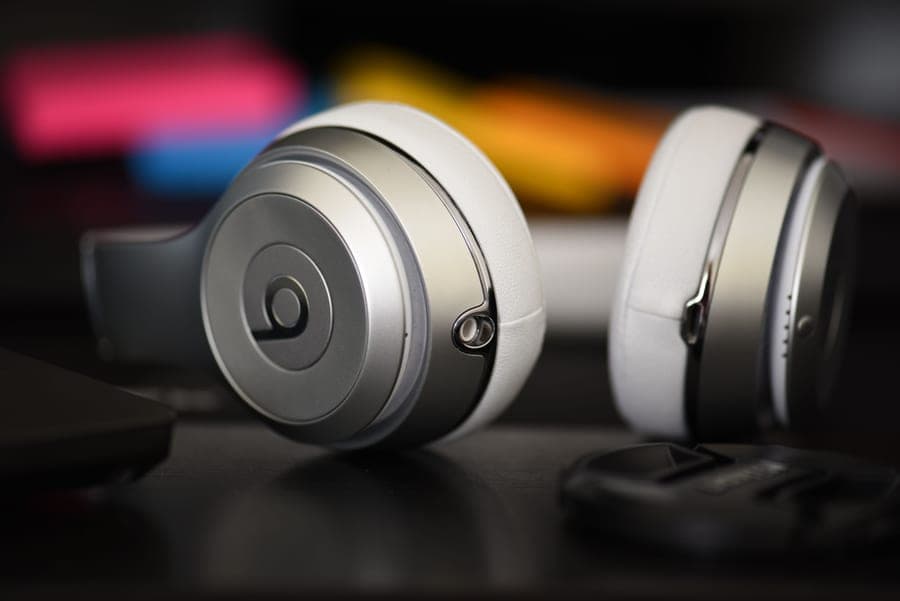 Apple AirPods Max (USB-C)Superb on an iPhone and genuinely hostile to a carry-on: 386.2 g, no fold, a soft case that leaves the headband exposed, and no audio cable in the box. | Best for a genuinely large head | 7.47.4 out of 10, our editorial score | |
| 2 | 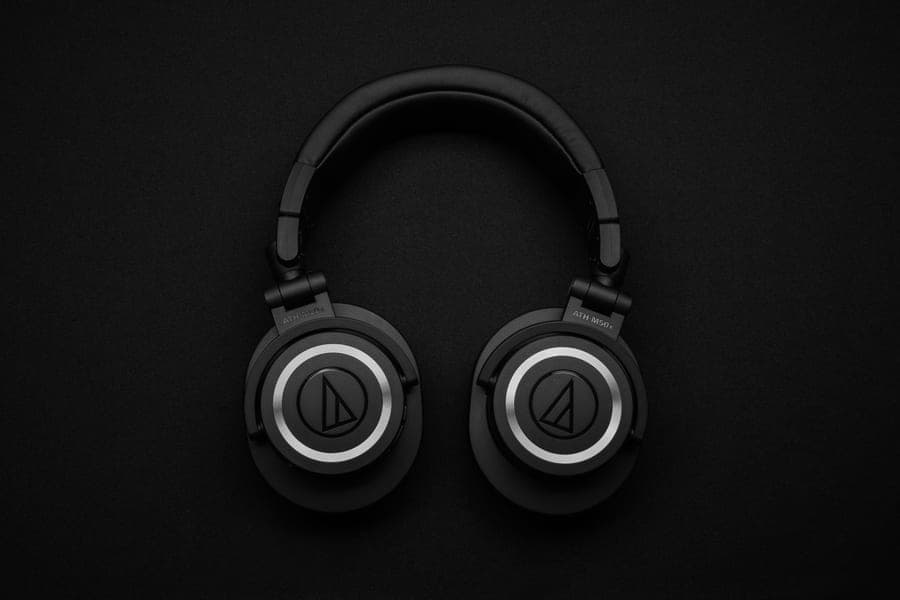 Sennheiser MOMENTUM 4 WirelessSennheiser publishes up to 60 hours. That is the difference between charging at the gate and not thinking about a charger for an entire two-week trip. | Best if clamp is what hurts | 8.88.8 out of 10, our editorial score | |
| 3 | 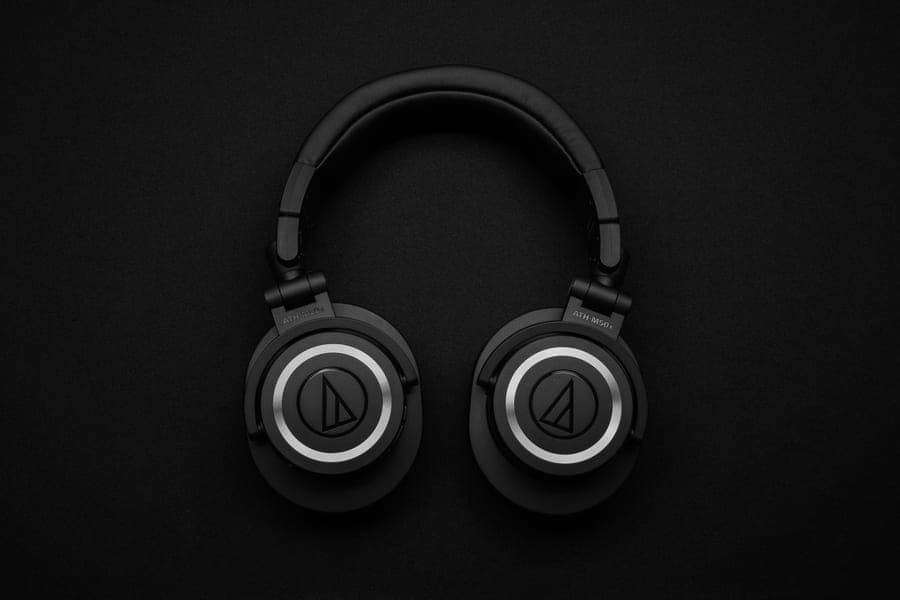 Soundcore Space Q45Fifty rated hours with canceling on, a hard case and a 3.5 mm cable in the box, at a fraction of flagship money. The compromise is in the last 10 percent of quiet, not the first 80. | Best value in a large over-ear | 8.28.2 out of 10, our editorial score | |
| 4 | 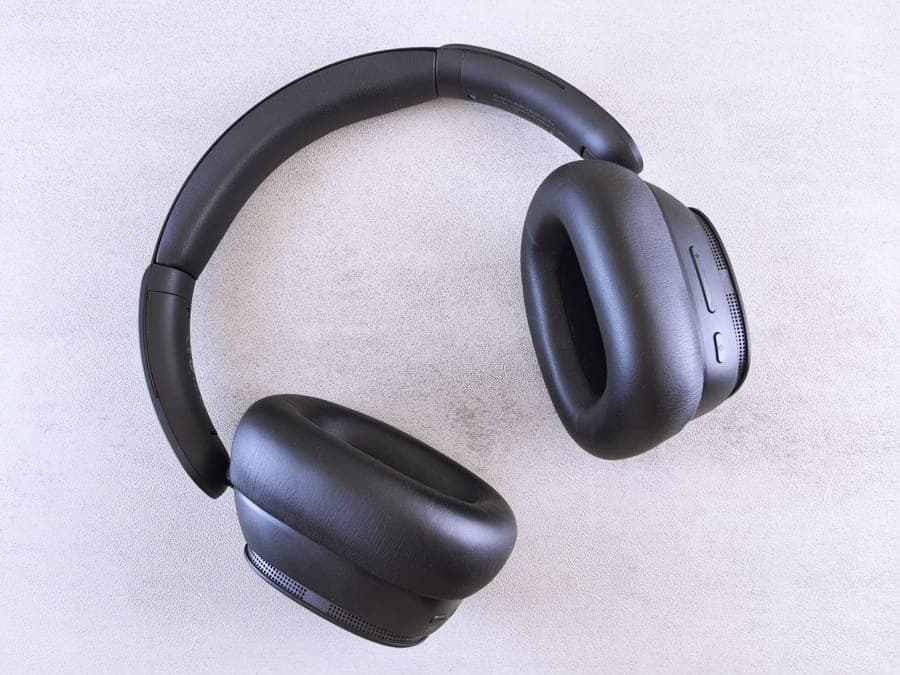 Sony WH-1000XM6The most complete travel headphone on sale: 254 g, 30 rated hours with noise canceling on, and it folds into a case small enough to stop being a decision. | Best if it has to fold as well | 9.19.1 out of 10, our editorial score |
#ad Amazon links are affiliate links. No live price is shown anywhere on this site, so every button reads “Check price on Amazon”. How this is funded.
The picks in full
Every pick, in detail
1. Best for a genuinely large head
Apple AirPods Max (USB-C)
Superb on an iPhone and genuinely hostile to a carry-on: 386.2 g, no fold, a soft case that leaves the headband exposed, and no audio cable in the box.
Our editorial score: 7.4 / 10
#ad Live price not shown. How this is funded
Also sold direct by Apple — we earn nothing there, so check both.
The AirPods Max is the pick for one unglamorous reason: Apple is the only manufacturer on this site that publishes the headphone’s physical dimensions. 168.6 mm wide, 83.4 mm deep and 187.3 mm high. When nobody will give you a headband range, a published height is the next best proxy, and 187.3 mm is generous.
The design helps as well. The canopy is a tensioned mesh rather than a padded strap, which spreads load over a wider area of the skull instead of concentrating it on one line — and a pressure line on the crown is the specific complaint most large-head buyers have after two hours, not ear pain.
The cost is blunt: 13.6 oz, which is 386.2 g, plus a 4.74 oz Smart Case. That is the heaviest headphone on this site by a wide margin and it does not fold. Up to 20 rated hours of listening with canceling on, and five minutes of charge buys around 1.5 hours.
What works on a plane
- Lossless audio over USB-C, and the tightest handoff between an iPhone, iPad and Mac of anything here
- The metal-and-mesh build is the most durable in this group
- Spatial Audio with head tracking makes a movie on your own iPad genuinely better
What does not
- 386.2 g, the heaviest here by roughly 90 g, and you feel every gram past hour three
- Does not fold, and the Smart Case leaves the headband exposed while adding 134.5 g
- 20 rated hours is the shortest battery in this group and will not clear a long-haul plus a layover
- No 3.5 mm cable in the box, so a seatback screen needs an adapter you buy separately
How it scores against the five travel axes
Published specifications
| Spec | Figure | Source |
|---|---|---|
| Weight | 13.6 oz (386.2 g) | Apple tech specs |
| Smart Case weight | 4.74 oz (134.5 g) | Apple tech specs |
| Dimensions | 168.6 mm W x 83.4 mm D x 187.3 mm H | Apple tech specs |
| Battery, ANC on | Up to 20 hours listening | Apple tech specs |
| Quick charge | 5 minutes gives around 1.5 hours | Apple tech specs |
| Bluetooth | 5.0 | Apple tech specs |
| In the box | Headphones, Smart Case, USB-C cable, documentation | Apple tech specs |
| Folds | No | Apple tech specs |
2. Best if clamp is what hurts
Sennheiser MOMENTUM 4 Wireless
Sennheiser publishes up to 60 hours. That is the difference between charging at the gate and not thinking about a charger for an entire two-week trip.
Our editorial score: 8.8 / 10
#ad Live price not shown. How this is funded
Also sold direct by Sennheiser — we earn nothing there, so check both.
A large head does two things to a headphone: it stretches the band to its limit and it raises clamping force, because the band is being held further open than it was designed for. If what you feel is squeeze rather than a band digging into your crown, this is the answer.
Of the over-ears here this is the most relaxed grip, with deep pads and fold-flat earcups. Approximately 293 to 295 g, a 42 mm transducer, and up to 60 rated hours of playback — the longest battery figure on this site — with a carry case and a 1.2 m 3.5 mm cable in the box.
Sennheiser does not publish a headband range either, so the clamp judgment here is editorial, derived from the published pad and earcup design rather than measured. The rubric is written out in full at our methodology page.
What works on a plane
- Up to 60 rated hours, roughly double the flagship norm
- The 1.2 m 3.5 mm cable is in the box, so seatback screens work straight out of the bag
- Fold-flat earcups make the carry case slim rather than deep
- The 42 mm transducer is the most relaxed listen here over a very long session
What does not
- Published measurements consistently place its noise canceling a step behind the Bose
- The case is broad, so it eats width in a personal item even though it is slim
- Fold-flat is not fold-up, so the footprint is larger than the Sony's
How it scores against the five travel axes
Published specifications
| Spec | Figure | Source |
|---|---|---|
| Battery | Up to 60 hours playback | Sennheiser |
| Weight | Approx. 293-295 g | Sennheiser / published reviews |
| Transducer | 42 mm | Sennheiser |
| In the box | Carry case, USB-C cable, 1.2 m 3.5 mm auxiliary cable | Sennheiser |
| Folds | Fold-flat earcups | Sennheiser |
3. Best value in a large over-ear
Soundcore Space Q45
Fifty rated hours with canceling on, a hard case and a 3.5 mm cable in the box, at a fraction of flagship money. The compromise is in the last 10 percent of quiet, not the first 80.
Our editorial score: 8.2 / 10
#ad Live price not shown. How this is funded
Also sold direct by Soundcore — we earn nothing there, so check both.
The sensible version of this purchase. Approximately 295 g, up to 50 rated hours with canceling on and 65 with it off, five minutes of charge for four hours, and a hard-shell case, 3.5 mm cable and USB-C cable in the box.
It is physically a bigger headphone than the compact flagships, which is the point here: the earcup opening is large enough that a big ear sits inside the pad rather than under it. Being able to spend a third of flagship money on the pair that actually fits is the right trade when fit is the constraint.
What you give up is the last increment of canceling depth and the premium pad material, which runs warmer than the Sennheiser’s over a long sitting. Bluetooth 5.3.
What works on a plane
- Up to 50 rated hours with canceling on, which beats every flagship here
- Hard case and 3.5 mm cable included, so nothing else to buy for a seatback screen
- Five minutes of charge buys four hours, which covers a gate-side mistake
- The cheapest way to get genuinely useful drone reduction on a plane
What does not
- Soundcore's own 98 percent figure is a marketing claim, not a measurement, and the gap to Bose is audible
- 295 g with plainer pad materials, so hour four is less comfortable than the Sennheiser's
- Plastic build will not survive being crushed in an overhead bin the way the metal Apple would
How it scores against the five travel axes
Published specifications
| Spec | Figure | Source |
|---|---|---|
| Battery, ANC on | Up to 50 hours | Soundcore |
| Battery, ANC off | Up to 65 hours | Soundcore |
| Quick charge | 5 minutes gives 4 hours | Soundcore |
| Weight | Approx. 295 g (10.3 oz) | Soundcore / published reviews |
| Bluetooth | 5.3 | Soundcore |
| In the box | Hard-shell case, 3.5 mm cable, USB-C cable | Soundcore |
4. Best if it has to fold as well
Sony WH-1000XM6
The most complete travel headphone on sale: 254 g, 30 rated hours with noise canceling on, and it folds into a case small enough to stop being a decision.
Our editorial score: 9.1 / 10
#ad Live price not shown. How this is funded
Also sold direct by Sony — we earn nothing there, so check both.
The compromise pick. Approximately 254 g is the lightest canceling over-ear here, and weight matters more on a large head than on a small one — a heavier headphone on a stretched band concentrates its mass at the two points already under the most pressure.
It folds into a magnetic-closure case, which is the single biggest practical difference between this and the AirPods Max for a carry-on. Up to 30 rated hours with canceling on and 40 with it off, about 3.5 hours to a full charge, and SBC, AAC, LDAC and LC3.
Be honest about the trade. This is a compact flagship, not a large one. If you are already at the end of the band on your current pair, the AirPods Max or the Space Q45 are the safer buys, and the folding is a convenience you would be paying for in fit.
What works on a plane
- Folds, which halves the space it takes in a personal item
- 254 g is light for a flagship over-ear, and weight is what you feel at hour four
- LDAC plus LC3 means it is not locked to one phone ecosystem
- 30 rated hours with noise canceling on covers almost any single routing
What does not
- You pay a flagship price for the last increment of noise canceling
- The folding hinge is one more mechanism to eventually wear out
- No airline two-prong adapter in the box
How it scores against the five travel axes
Published specifications
| Spec | Figure | Source |
|---|---|---|
| Weight | Approx. 254 g (9 oz) | Sony Help Guide specifications |
| Battery, NC on | Up to 30 hours | Sony specifications |
| Battery, NC off | Up to 40 hours | Sony specifications |
| Full charge | Approx. 3.5 hours | Sony Help Guide specifications |
| Bluetooth | 5.3 | Sony Help Guide specifications |
| Codecs | SBC, AAC, LDAC, LC3 | Sony Help Guide specifications |
| Wired response | 4 Hz - 40,000 Hz (IEC) | Sony Help Guide specifications |
| Folds | Yes, into a magnetic-closure case | Sony |
How we decide
How these picks were chosen
We do not run a test lab and we do not claim to have flown with these units. Every verdict on this page is one of three things: a measurement published by somebody who does own a test rig and is credited by name, a manufacturer specification we quote and then interpret against what a long flight actually demands, or a plainly-labeled editorial judgment. The five axes we score on — cabin-noise reduction, battery on a long-haul, pack size, comfort past hour three, and wired fallback — are the ones that decide a travel purchase, and the weighting is published in full.
Questions
Common questions
What are the best headphones for a big head?
The Apple AirPods Max, on the strength of the only published dimensions in the category — 168.6 mm wide by 83.4 mm deep by 187.3 mm high — and a tensioned mesh canopy that spreads weight rather than concentrating it. The Soundcore Space Q45 is the large-bodied value alternative at approximately 295 g.
Do any manufacturers publish a headband size range?
Not among the twenty-five products in this site’s registry. Weight, battery and driver diameter are published almost universally; headband adjustment range is published by nobody, and only Apple publishes overall dimensions. That is why a returns window matters more here than any specification.
Can you stretch headphones to fit a bigger head?
Yes, and it works. Leaving a pair stretched over a stack of books or a box slightly wider than your head for a day or two relaxes the band spring and permanently reduces clamping force. It will not add adjustment travel if the band is already fully extended, and it is not reversible, so do it after you have decided to keep them.
Are bigger headphones heavier?
Usually, and that is the trade at the heart of this page. The AirPods Max is the most generously sized option here at 386.2 g; the Sony WH-1000XM6 is the lightest at approximately 254 g but is also a compact flagship. Under 300 g is a useful target if your band is near its limit.
Would earbuds be better if no headphones fit?
For many people, yes. Earbuds remove head size from the decision entirely. You trade it for ear-canal fit, a much smaller battery and, on most models, no wired fallback for a seatback screen.
Sources
Where these figures come from
- Apple AirPods Max (USB-C) tech specs (dimensions, weight, Smart Case weight, battery, quick charge)
- Sennheiser MOMENTUM 4 Wireless product page (60 hours, weight, 42 mm transducer, fold-flat earcups)
- Soundcore Space Q45 product page (battery, weight, quick charge, in the box)
- Sony WH-1000XM6 Help Guide specifications (weight, battery, charge time, codecs)
- Koss Porta Pro product page (list price $49.99, on-ear sliding design)
Read next
Related reading
- Best headphones for small heads
The opposite failure: a band that will not close far enough.
- The comfiest wireless headphones
Clamp and pad heat, judged past hour three.
- Why noise-cancelling headphones hurt your ears
When the problem is the pad opening rather than the headband.
- Best headphones for glasses wearers
The other fit problem clamping force makes worse.