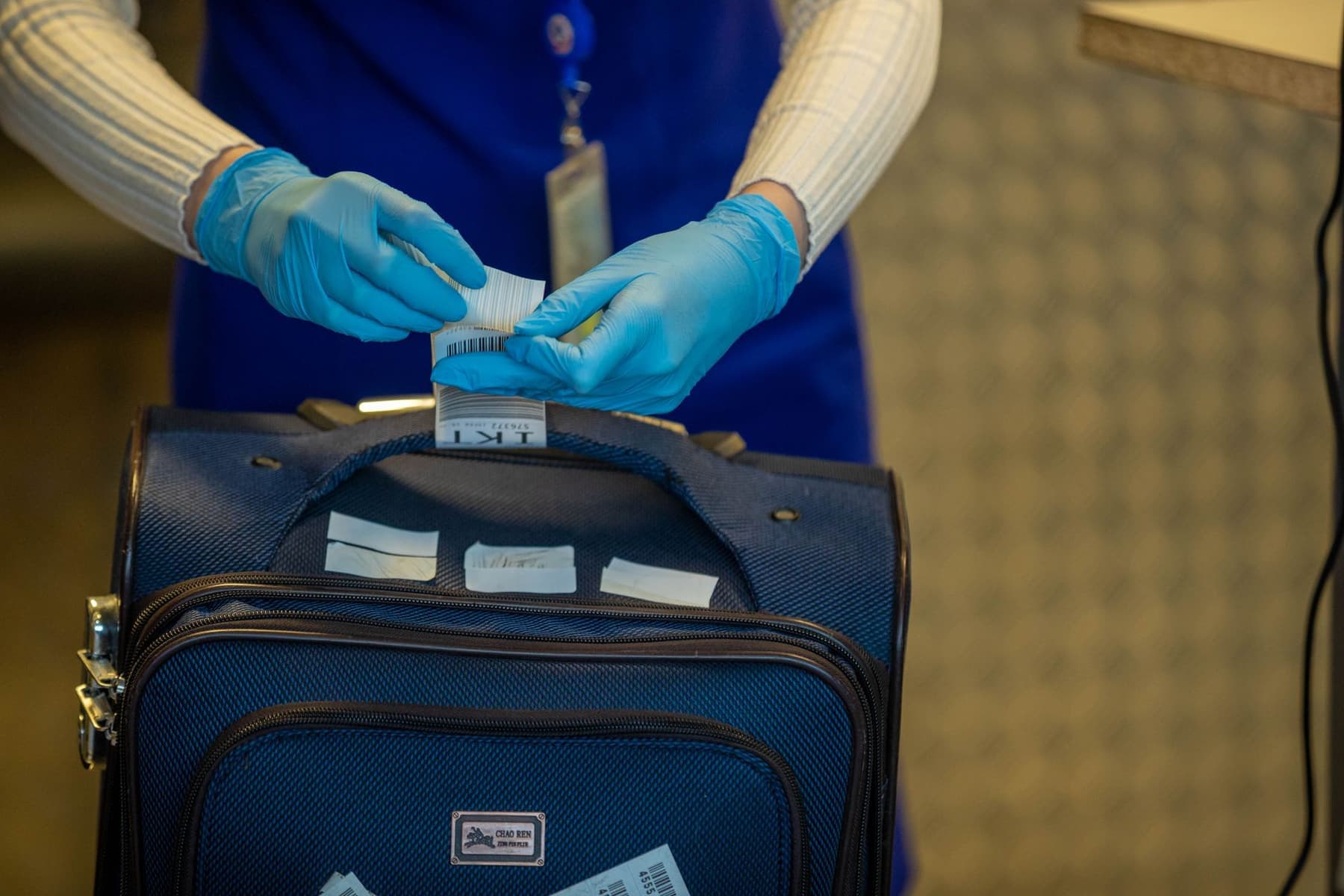
Yes. TSA lists headphones as allowed in both carry-on bags and checked bags, with the usual caveat that the final decision rests with the TSA officer at the checkpoint. Separately, the FAA states that devices containing lithium metal or lithium ion batteries should be carried in carry-on baggage, so a wireless pair belongs in the bag you keep with you — and a spare battery or power bank is prohibited in checked baggage entirely.
The screening answer
What TSA says about headphones
On TSA’s own What Can I Bring listing, headphones are marked allowed for carry-on bags and allowed for checked bags. There is no size limit, no quantity limit and no special handling. The listing carries TSA’s standard note that the final decision rests with the TSA officer on whether an item is allowed through the checkpoint, and it points travelers to the FAA for the rules on portable electronic devices with batteries.
Do you have to take them out of your bag?
Not as a rule. Headphones are not in the category that has to be screened separately the way a laptop often is, so in standard screening lanes they stay in the bag. What actually happens is more mundane: a bulky over-ear in a hard case can read as a dense object and trigger a bag check, so putting it in flat and on its own, rather than wedged between a charger and a book, is worth doing.
Can you wear them through the metal detector?
You will be asked to take them off, and you should expect to. Officers need to speak to you, and a headphone with a wire running into a bag is an obstruction. Take them off before you reach the front of the line rather than at the divestment table.
TSA decides whether the object can fly. The FAA decides which bag the battery rides in. They are different questions with different answers.
The battery answer
The FAA rules that actually matter
Every wireless headphone is a portable electronic device with a lithium battery, which puts it under the FAA’s PackSafe guidance rather than just TSA’s. The relevant provisions, in the FAA’s own words:
- Devices should travel with you. Devices containing lithium metal or lithium ion batteries should be carried in carry-on baggage. The FAA’s stated reason is that flight crews are trained to recognize and respond to lithium battery fires in the cabin.
- If a device is checked, it must be off and protected. When portable electronic devices powered by lithium batteries are in checked baggage, they must be completely powered off and protected to prevent unintentional activation or damage. Sleep mode is not off.
- Spare batteries are never checked. Spare, uninstalled lithium metal and lithium ion batteries are always prohibited in checked baggage and must be placed in carry-on. This is the rule that catches people, because it covers power banks and battery charging cases, not just loose cells.
- Gate-checking changes things. When a carry-on bag is checked at the gate or at planeside, any spare lithium batteries must be removed from the bag and kept with the passenger in the aircraft cabin.
- Spares must be protected. Spare batteries must be protected from damage and short circuit, which the FAA references to 49 CFR 175.10(a)(18).
- Damaged or recalled batteries cannot fly. Damaged or recalled batteries and battery-powered devices which are likely to create sparks or generate a dangerous evolution of heat must not be carried aboard an aircraft, in carry-on or checked baggage, unless the battery has been removed or otherwise made safe.
For a pair of headphones none of this is onerous. The battery is installed, it is small, and the only real takeaway is: keep them with you, and keep the power bank with you too.
The decision table
Where each thing in your bag should ride
| Item | Carry-on | Checked | Why |
|---|---|---|---|
| Wireless headphones or earbuds | Yes, and recommended | Allowed, but not advised | Lithium device; FAA says devices should be in carry-on |
| Wired headphones | Yes | Yes | No battery, so no lithium rules apply |
| Charging case (earbuds) | Yes | No | FAA treats a battery charging case as a spare battery |
| Power bank | Yes | No | Spare uninstalled battery, always prohibited in checked |
| Bluetooth transmitter (e.g. AirFly) | Yes, and recommended | Allowed, but not advised | Has its own rechargeable lithium cell |
| Airline jack adapter, cables | Yes | Yes | Passive; no battery |
| Damaged or recalled battery device | No | No | Prohibited aboard unless made safe |
Once you are on board
A different set of rules again
Getting headphones through a checkpoint is not the same question as being allowed to use them in flight, and the in-flight rules are about Bluetooth rather than batteries. Those are covered in can you use noise-cancelling headphones on a plane, and the specific question of whether they will work with the seatback screen is in Bluetooth headphones and in-flight entertainment.
Two practical notes that follow from the battery rules rather than the screening rules:
- Charge before you fly, not during. If the power bank has to stay with you and the outlet in your seat may not work, the headphone’s own rated battery is your budget for the trip. Figures for every model are compared in headphone battery life for long-haul flights.
- Pack it so it cannot switch itself on. That is the FAA’s own standard for a checked device, and it is good practice in a carry-on too — a headphone that powers up inside a bag arrives flat. How to pack headphones for travel covers the method.
International
Does this apply outside the United States?
TSA screening rules apply at United States checkpoints only. The lithium-battery provisions are different: they derive from international dangerous-goods rules that most national authorities and airlines implement in broadly the same shape, which is why spare batteries in the cabin and devices with you is the near-universal pattern.
Broadly the same is not the same, and individual airlines add their own conditions. If you are flying a carrier you have not used before, its dangerous-goods page is the authority, not this one. We are not going to summarize rules for carriers we have not read.
In short
Key takeaways
- TSA lists headphones as allowed in both carry-on and checked bags.
- The final decision at a checkpoint rests with the TSA officer, on any item.
- FAA: devices containing lithium batteries should be carried in carry-on baggage.
- A checked lithium device must be completely powered off and protected against activation or damage.
- Spare batteries, power banks and battery charging cases are always prohibited in checked baggage.
- Gate-check a carry-on and you must remove any spare lithium batteries and keep them with you.
At a glance
Quick picks
Scores are our editorial judgment from published specifications and cited third-party measurements, not our own testing. The rubric is published in full. Tap any row for the full write-up.
| # | Product | Best for | Score | Price |
|---|---|---|---|---|
| 1 | 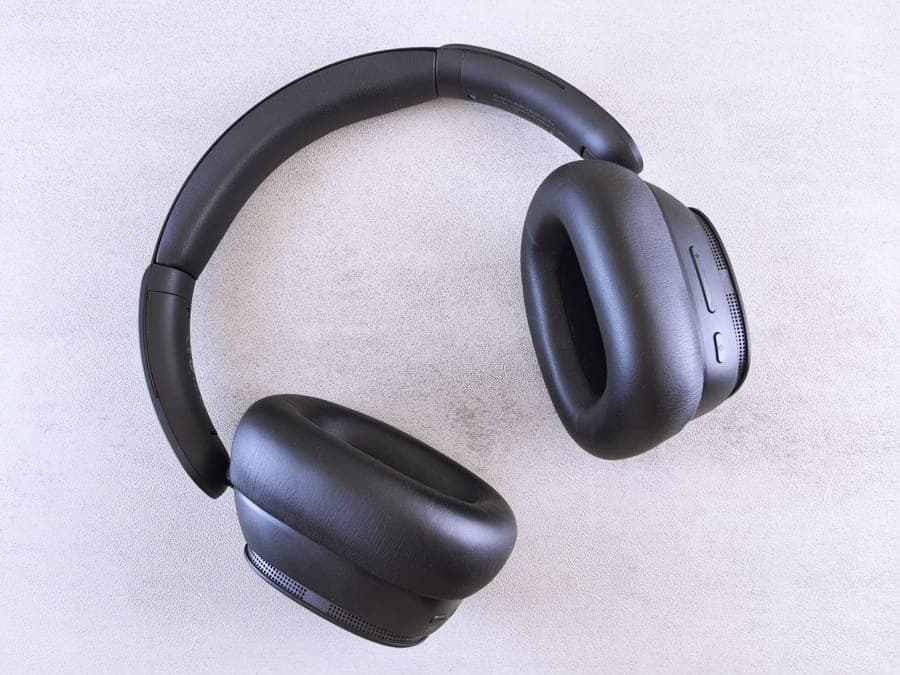 Sony WH-1000XM6The most complete travel headphone on sale: 254 g, 30 rated hours with noise canceling on, and it folds into a case small enough to stop being a decision. | Best for getting through a checkpoint cleanly | 9.19.1 out of 10, our editorial score | |
| 2 | 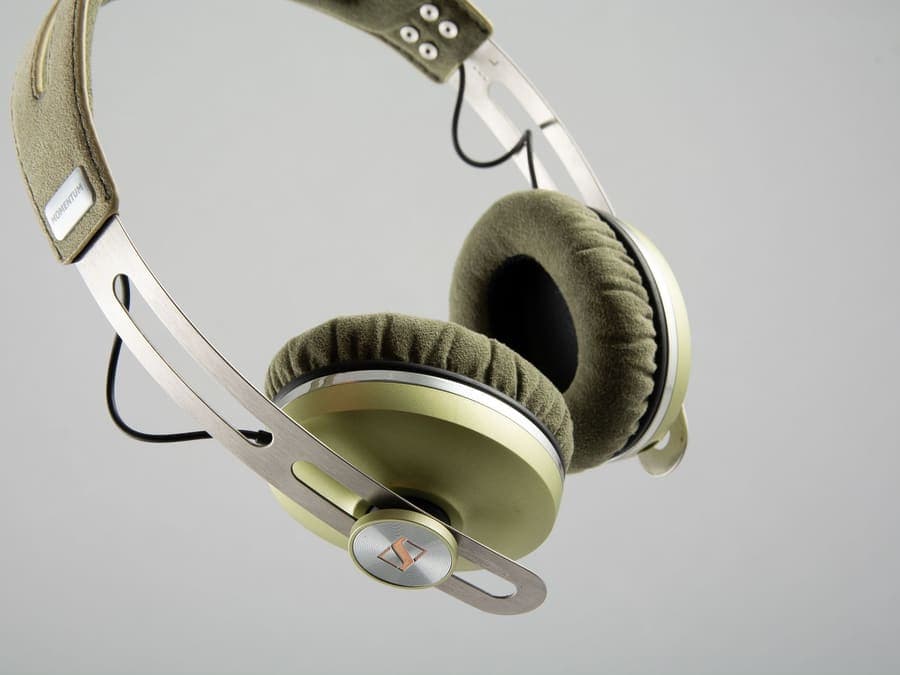 Koss Porta ProListed at $49.99 with a limited lifetime warranty, which means the cheapest headphone here is also the one least likely to need replacing. | Best if you want no battery rules at all | 7.47.4 out of 10, our editorial score | |
| 3 | 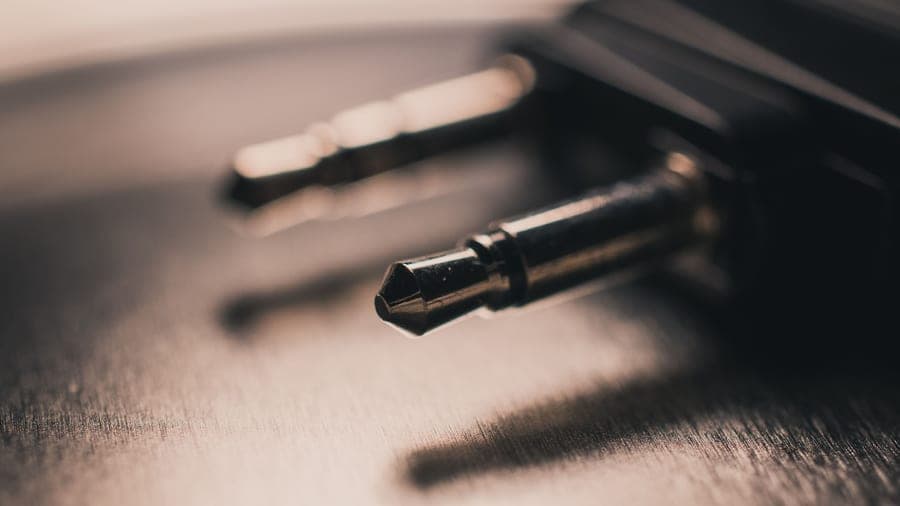 Twelve South AirFly Pro 2The single accessory that makes any wireless headphone work with a seatback screen: plug it into the airline jack and it sends the audio to your headphones over Bluetooth. | The accessory people forget is also a battery | 9.09.0 out of 10, our editorial score |
#ad Amazon links are affiliate links. No live price is shown anywhere on this site, so every button reads “Check price on Amazon”. How this is funded.
The picks in full
Every pick, in detail
1. Best for getting through a checkpoint cleanly
Sony WH-1000XM6
The most complete travel headphone on sale: 254 g, 30 rated hours with noise canceling on, and it folds into a case small enough to stop being a decision.
Our editorial score: 9.1 / 10
#ad Live price not shown. How this is funded
Also sold direct by Sony — we earn nothing there, so check both.
The practical answer to the screening question is a headphone that folds into its own case, because a cased headphone comes out of the bag and goes back in as one object rather than as a tangle. Sony publishes that the earcups fold into a magnetic-closure case.
Approximately 254 g, up to 30 rated hours with canceling on and 40 with it off, about 3.5 hours to a full charge, Bluetooth 5.3, and SBC, AAC, LDAC and LC3.
Its rechargeable cell makes it a lithium device, so it belongs in the bag you keep with you — which is what the FAA advises for every portable electronic device with a lithium battery.
What works on a plane
- Folds, which halves the space it takes in a personal item
- 254 g is light for a flagship over-ear, and weight is what you feel at hour four
- LDAC plus LC3 means it is not locked to one phone ecosystem
- 30 rated hours with noise canceling on covers almost any single routing
What does not
- You pay a flagship price for the last increment of noise canceling
- The folding hinge is one more mechanism to eventually wear out
- No airline two-prong adapter in the box
How it scores against the five travel axes
Published specifications
| Spec | Figure | Source |
|---|---|---|
| Weight | Approx. 254 g (9 oz) | Sony Help Guide specifications |
| Battery, NC on | Up to 30 hours | Sony specifications |
| Battery, NC off | Up to 40 hours | Sony specifications |
| Full charge | Approx. 3.5 hours | Sony Help Guide specifications |
| Bluetooth | 5.3 | Sony Help Guide specifications |
| Codecs | SBC, AAC, LDAC, LC3 | Sony Help Guide specifications |
| Wired response | 4 Hz - 40,000 Hz (IEC) | Sony Help Guide specifications |
| Folds | Yes, into a magnetic-closure case | Sony |
2. Best if you want no battery rules at all
Koss Porta Pro
Listed at $49.99 with a limited lifetime warranty, which means the cheapest headphone here is also the one least likely to need replacing.
Our editorial score: 7.4 / 10
#ad Live price not shown. How this is funded
Also sold direct by Koss — we earn nothing there, so check both.
$49.99 at the time of writing, wired, with no battery in it. That means none of the lithium rules on this page apply: it can ride anywhere, it cannot be a damaged-battery problem, and it cannot be flat when you board.
15 Hz to 25,000 Hz, 60 ohms, 101 dB SPL/1mW sensitivity, a 4 ft straight dual-entry cable with a 3.5 mm plug, and a limited lifetime warranty. No noise canceling at all.
It is also the simplest thing to plug into a seatback screen, since the socket is a plain 3.5 mm plug. On a loud cabin it is the wrong product; as a backup in a jacket pocket it is a good one.
What works on a plane
- A limited lifetime warranty on a $49.99 headphone, which is not a normal thing to find
- Wired, so there is no battery to degrade and nothing to charge
- Collapses flat into a bag with no case and no hinge to snap
- The 3.5 mm plug works with a seatback screen directly, no transmitter required
What does not
- Open-backed on-ear, so it blocks very little and leaks sound to your neighbor
- No noise canceling whatsoever — this is the wrong purchase for engine drone
- Foam pads wear out, though replacements are cheap and easy to fit
How it scores against the five travel axes
3. The accessory people forget is also a battery
Twelve South AirFly Pro 2
The single accessory that makes any wireless headphone work with a seatback screen: plug it into the airline jack and it sends the audio to your headphones over Bluetooth.
Our editorial score: 9.0 / 10
#ad Live price not shown. How this is funded
Also sold direct by Twelve South — we earn nothing there, so check both.
The transmitter that plugs into a 3.5 mm seatback socket and sends the audio to your wireless headphones over Bluetooth. 25+ rated hours, about two hours to a full charge over USB-C, Bluetooth 5.3 with aptX HD Adaptive, transmitter and receiver modes, and it can pair two sets of headphones at once.
It belongs on this page because it has its own rechargeable cell, which makes it another lithium device in your bag. Same rule: keep it with you.
It is small, which is the trade. It is one more object to lose at a checkpoint, and it needs charging independently of your headphones.
What works on a plane
- 25+ rated hours outlasts any single flight you will ever take
- Pairs two sets of headphones, so two people can watch one screen
- Receiver mode makes it useful in a rental car with only an aux input
- Works with any Bluetooth headphone, so it outlives whatever you own now
What does not
- One more small object to charge and not lose
- Adds a small amount of latency, which shows on lip sync for some people
- A single 3.5 mm plug, so older twin-socket seats still want a two-prong adapter
How it scores against the five travel axes
Published specifications
| Spec | Figure | Source |
|---|---|---|
| Battery | 25+ hours | Twelve South |
| Full charge | About 2 hours via USB-C | Twelve South |
| Bluetooth | 5.3, aptX HD Adaptive | Twelve South |
| Modes | Transmitter and receiver | Twelve South |
| Pairing | Two sets of headphones at once | Twelve South |
| Connection | 3.5 mm AUX | Twelve South |
Questions
Common questions
Can you bring headphones through TSA?
Yes. TSA’s What Can I Bring listing marks headphones as allowed in carry-on bags and in checked bags, with the standard note that the final decision rests with the TSA officer at the checkpoint.
Do you have to take headphones out of your bag at security?
Not as a requirement. They are not in the category that must be screened separately. A bulky over-ear in a hard case can read as a dense object and prompt a bag check, so packing it flat and not wedged against other electronics is worth doing.
Can wireless headphones go in checked baggage?
TSA allows it, but the FAA advises against it: devices containing lithium batteries should be carried in carry-on baggage. If a device is checked, the FAA requires it to be completely powered off and protected to prevent unintentional activation or damage.
Can you put a power bank or charging case in a checked bag?
No. The FAA states that spare, uninstalled lithium batteries — which includes power banks and cell phone battery charging cases — are always prohibited in checked baggage and must be placed in carry-on. If your carry-on is checked at the gate, you have to take the spares out and keep them with you in the cabin.
Can you wear headphones through the metal detector?
Expect to take them off. Officers need to be able to speak to you, and a cable running into a bag is an obstruction. Nothing in a headphone normally sets off a walk-through detector, but that is not the reason you are asked.
Do the same rules apply on international flights?
TSA screening rules apply at United States checkpoints only. The lithium-battery provisions come from international dangerous-goods rules that most authorities implement similarly, which is why the pattern is near-universal. Individual carriers add conditions, so check your airline’s dangerous-goods page.
Sources
Where these figures come from
- TSA, What Can I Bring: headphones (carry-on: yes; checked: yes; final decision rests with the TSA officer)
- TSA, What Can I Bring: batteries (devices containing lithium metal or lithium ion batteries should be carried in carry-on baggage)
- FAA PackSafe, Portable Electronic Devices Containing Batteries (carry-on recommendation, checked-device requirements, spare battery prohibition, gate-check rule, 49 CFR 175.10(a)(18), damaged and recalled batteries)
- Sony WH-1000XM6 Help Guide specifications (weight, battery, charge time, codecs)
- Koss Porta Pro product page (list price $49.99, frequency response, impedance, sensitivity, cable, warranty)
- Twelve South AirFly Pro 2 product page (25+ hours, charge time, Bluetooth 5.3 aptX HD Adaptive, modes, dual pairing)
Read next
Related reading
- Can you use noise-cancelling headphones on a plane?
The in-flight rules, which are about Bluetooth rather than batteries.
- How to pack headphones for travel
Packing so the headphone cannot switch itself on in the bag.
- Headphone battery life for long-haul flights
Your battery budget, once the power bank has to stay in the cabin.
- Airplane headphone jack adapters
The passive and powered options, and which bag each belongs in.