Buy the Space One if you travel: the earcups rotate and fold, and a travel pouch and an aux cable are in the box. Buy the Space 2 if battery or the radio decides it: up to 50 rated hours with canceling on and 70 with it off against the Space One’s 40 and 55, plus Bluetooth 6.1 and a published SBC, AAC and LDAC codec list, in a body that weighs the same to within a gram but has no published folding specification.
The short answer
Three differences, and only two of them matter
These two headphones share a brand, a driver size, a quick-charge figure, a weight to within a gram, three microphones, app EQ and a multipoint implementation. Strip out everything they have in common and you are left with this:
- Battery. The Space 2 is rated ten hours longer with canceling on and fifteen longer with it off. Real, and the main reason to pay for it.
- A published folding hinge. The Space One rotates, folds and ships in a pouch. Soundcore publishes no folding specification for the Space 2. Real, and the main reason not to.
- The radio. Bluetooth 6.1 on the Space 2 against an unpublished version on the Space One, with LDAC stated for both.
Everything else — adaptive canceling, 40 mm drivers, a five-minute charge for four hours, custom EQ in the app, dual-device connection — is on both.
One of these is a travel headphone that happens to have good battery. The other is a battery and a newer radio that happen to be a headphone.
The matrix
Three Soundcore models on the published figures
| Space One | Space 2 | Q20i | |
|---|---|---|---|
| Battery, canceling on | up to 40 h | up to 50 h | up to 40 h |
| Battery, normal mode | up to 55 h | up to 70 h | up to 60 h |
| Quick charge | 5 min = 4 h | 5 min = 4 h | 5 min = 4 h |
| Weight | 265 g (9.35 oz) | 264 g (9.31 oz) | Not published |
| Drivers | 40 mm | 40 mm double-layer | 40 mm dynamic |
| Folds | Earcups rotate and fold | Not published | Not published |
| In the box | Travel pouch, aux cable | Carrying case, charging cable | Not published |
| Aux input | Yes | Yes | Not published |
| Codecs | LDAC | SBC, AAC, LDAC | Not published here |
| Microphones | 3 with AI enhancement | 3 with AI enhancement | 2 internal, 2 external |
| Bluetooth | Not published here | 6.1 | 5.0 |
| Multipoint | Yes, on by default | Yes, on by default | Not published |
Pick by use
Which one for which situation
Flights and carry-on travel: Space One
The folding hinge decides this on its own. A headphone you can fold into a pouch goes in the bag; a headphone with no published folding specification gets left at home after the second trip. Forty rated hours with canceling on covers almost any single routing anyway. This is why it is the pick on the lightest canceling headphones at this price level.
A desk, an open-plan office or working from home: Space 2
Nothing about fold size matters at a desk, and fifty rated hours with canceling on is the difference between charging it weekly and charging it fortnightly. Bluetooth 6.1 with dual-device connection on by default is the other desk argument: a laptop and a phone at once, without a menu. See the open-plan office roundup for how it fares against the field.
Calls: nothing separates them
Three published microphones with AI enhancement on each, and nothing else on paper to tell them apart. We are not going to invent a winner. If calls are the main job, neither of these is the answer — the office-calls roundup is the right page.
Replacing a broken pair on a budget: Q20i
Up to 60 rated hours in normal mode, for less money than either, is better value than both — as long as you understand that the canceling is a step down and the radio is Bluetooth 5.0.
The honest gaps
What Soundcore does not publish
Soundcore is unusually generous with specifications at this price — it publishes weight, codecs and multipoint behavior that premium brands routinely withhold. Three gaps remain.
- No comparable canceling figure. The Space 2 carries a -37 dB depth measured in Anker’s own laboratory; the Space One carries no equivalent number. Neither is a certified rating, so a confident ranking between them on canceling depth would be invented.
- No folding specification for the Space 2. The Space One explicitly rotates and folds. The Space 2 page we could verify says only that it is compact, so this page does not claim a hinge it cannot see.
- No pad material or clamping force for either. The specs that decide hour four, unpublished as usual across the whole category.
In short
Key takeaways
- Space One: 265 g, rotates and folds, travel pouch and aux cable, up to 40 h canceling on and 55 in normal mode.
- Space 2: 264 g, up to 50 h canceling on and 70 off, Bluetooth 6.1, SBC / AAC / LDAC, carrying case, no published folding spec.
- Both share adaptive canceling, 40 mm drivers, a five-minute charge for four hours, three microphones, app EQ and dual-device connection.
- The Space One is the only one of the two with a published folding hinge, which is the one axis the older model wins.
- Soundcore Q20i is rated up to 60 hours in normal mode, longer than the Space One, for less money and with weaker canceling.
- Travel points to the Space One; a desk points to the Space 2.
At a glance
Quick picks
Scores are our editorial judgment from published specifications and cited third-party measurements, not our own testing. The rubric is published in full. Tap any row for the full write-up.
| # | Product | Best for | Score | Price |
|---|---|---|---|---|
| 1 | 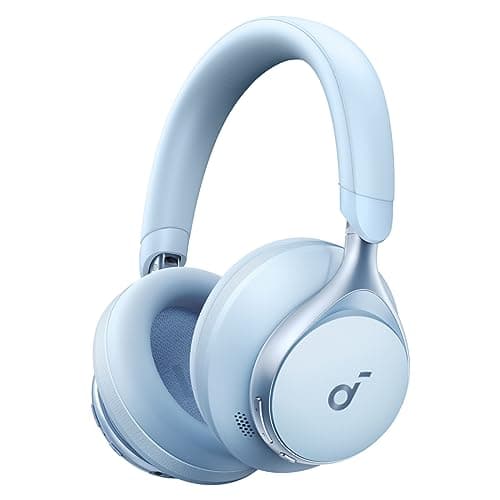 Soundcore Space OneThe budget specification sheet that is genuinely hard to argue with: 40 rated hours with canceling on, LDAC, 40 mm drivers, a folding hinge and an aux cable in the box. | Best for carrying and for flying | 8.58.5 out of 10, our editorial score | |
| 2 | 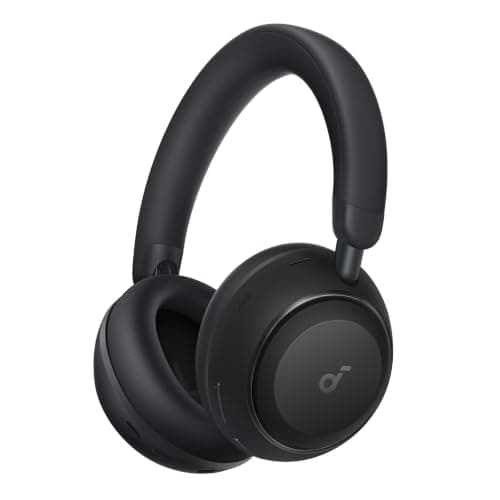 Soundcore Space 2Fifty rated hours with canceling on, a 3.5 mm input and a case in the box, at a fraction of flagship money. The compromise is in the last 10 percent of quiet, not the first 80. | Best for battery and for a desk | 8.28.2 out of 10, our editorial score | |
| 3 | 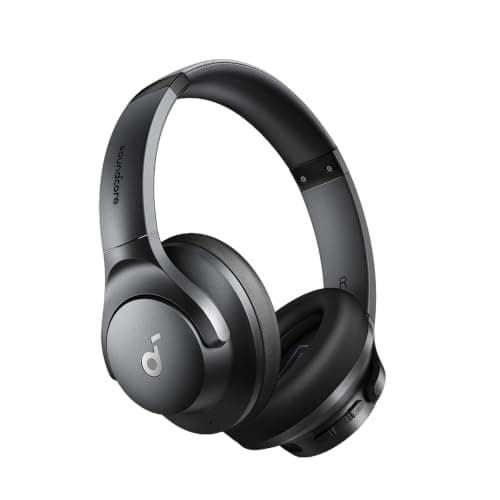 Soundcore Q20iThe cheapest over-ear on this site with hybrid canceling and a real specification sheet: 40 rated hours with canceling on and 40 mm drivers. | Best if you want to spend less again | 7.87.8 out of 10, our editorial score |
#ad Amazon links are affiliate links. Prices come from Amazon’s own data on the date stamped under the buttons above; where we have no current figure the button reads “Check price on Amazon” instead of guessing. How this is funded.
The picks in full
Every pick, in detail
1. Best for carrying and for flying
Soundcore Space One
The budget specification sheet that is genuinely hard to argue with: 40 rated hours with canceling on, LDAC, 40 mm drivers, a folding hinge and an aux cable in the box.
Our editorial score: 8.5 / 10
#ad Price as of November 27, 2026. How this is funded
265 g (9.35 oz), and the earcups rotate and fold. The folding hinge is the reason this is the pick for a traveler: the two weigh the same to within a gram, and this is the only one of them Soundcore publishes a folding specification for.
Up to 40 rated hours with canceling on and up to 55 in normal mode, five minutes of charge for four hours, 40 mm drivers, LDAC, three microphones with AI enhancement, and multipoint that Soundcore says is enabled automatically. A travel pouch and an aux cable are in the box, so the seatback screen is covered.
Soundcore publishes a Hear ID customized EQ for it; the Space 2 gets custom EQ in the same app. On this site the Space One is the winner of best headphones under $100, and the reason is this paragraph rather than the canceling.
What works on a plane
- 40 rated hours with canceling on, from a headphone in the budget tier
- LDAC at this price is unusual, and it is the codec Android users actually want
- Folds and ships with an aux cable, so the seatback screen is covered
- 265 g is not heavy, and the pouch means it travels without a hard case
What does not
- The 98 percent noise-reduction claim is marketing, not a published measurement
- A pouch is not a hard case, so it needs care in a crushed bag
- Pads are the first thing that gives at this price, well before the electronics
How it scores against the five travel axes
Published specifications
| Spec | Figure | Source |
|---|---|---|
| Battery, ANC on | Up to 40 hours | Soundcore |
| Battery, normal mode | Up to 55 hours | Soundcore |
| Quick charge | 5 minutes for 4 hours | Soundcore |
| Weight | 265 g (9.35 oz) | Soundcore |
| Drivers | 40 mm | Soundcore |
| Codecs | LDAC | Soundcore |
| Folds | Yes, ear cups rotate and fold | Soundcore |
| In the box | Travel pouch and aux cable | Soundcore |
2. Best for battery and for a desk
Soundcore Space 2
Fifty rated hours with canceling on, a 3.5 mm input and a case in the box, at a fraction of flagship money. The compromise is in the last 10 percent of quiet, not the first 80.
Our editorial score: 8.2 / 10
#ad Price as of November 27, 2026. How this is funded
The endurance model, and the newer one. Up to 50 rated hours with canceling on and up to 70 with it off, against the Space One’s 40 and 55. Ten extra rated hours with canceling on is a real margin on a multi-leg trip, and at a desk it means you charge it twice a month.
It is also the more current specification: 264 g (9.31 oz), 40 mm double-layer drivers, Bluetooth 6.1 with dual-device connection on by default, SBC, AAC and LDAC, three microphones with AI enhancement, and a canceling depth Soundcore puts at -37 dB in its own laboratory. A carrying case is in the box and there is a 3.5 mm aux input on the headphone.
One thing it does not do as well. Soundcore publishes no folding specification for it, where the Space One explicitly rotates and folds — so for a packed personal item the older model is still the safer answer.
What works on a plane
- Up to 50 rated hours with canceling on, which beats every flagship here
- A 3.5 mm input and a case in the box, so nothing else to buy for a seatback screen
- Five minutes of charge buys four hours, which covers a gate-side mistake
- The cheapest way here to get genuinely useful drone reduction on a plane
What does not
- The -37 dB canceling figure is Anker's own laboratory number, not an independent measurement, and the gap to Bose is audible
- Plainer pad materials than the Sennheiser, so hour four is less comfortable
- Plastic build will not survive being crushed in an overhead bin the way the metal Apple would
How it scores against the five travel axes
Published specifications
| Spec | Figure | Source |
|---|---|---|
| Battery, ANC on | Up to 50 hours | soundcore |
| Battery, ANC off | Up to 70 hours | soundcore |
| Quick charge | 5 minutes gives 4 hours | soundcore |
| Full charge | Approx. 2 hours | soundcore support specifications |
| Weight | 264 g (9.31 oz) | soundcore |
| Bluetooth | 6.1 | soundcore |
| Microphones | 3, with AI enhancement for calls | soundcore |
| Codecs | SBC, AAC, LDAC | soundcore support specifications |
| Drivers | 40 mm double-layer diaphragm | soundcore |
| Canceling depth | -37 dB, measured in Anker's own laboratory | soundcore support specifications |
| In the box | Headphones, charging cable, carrying case | soundcore |
| Wired | 3.5 mm input, Hi-Res in wired mode | soundcore |
3. Best if you want to spend less again
Soundcore Q20i
The cheapest over-ear on this site with hybrid canceling and a real specification sheet: 40 rated hours with canceling on and 40 mm drivers.
Our editorial score: 7.8 / 10
#ad Price as of November 27, 2026. How this is funded
The rung below both. Up to 40 rated hours with canceling on and up to 60 in normal mode, five minutes of charge for four hours, 40 mm dynamic drivers, and hybrid canceling with two internal and two external microphones.
Sixty hours in normal mode is a longer figure than the Space One’s fifty-five, for less money, which is worth knowing before you assume the ladder is a straight line. Bluetooth 5.0, which is the oldest radio of the three.
What you give up is canceling quality, pad material and LDAC. This is the right buy if you are replacing wired headphones and the main requirement is that it works, not that it is quiet.
What works on a plane
- Active canceling with ANC, Normal and Transparency modes, at a price where canceling is usually a sticker
- 40 rated hours with canceling on is more than most flagships
- Quick charge gives four hours from five minutes, which covers a forgotten charge
- 40 mm drivers and a published spec sheet, rather than an unbranded decibel claim
What does not
- Priced above a strict fifty-dollar ceiling, so it is not the rock-bottom option
- Bluetooth 5.0 and no LDAC — the codec list is basic, and soundcore lists only a single microphone
- Plastic build and thin pads, which is exactly where the money was saved
How it scores against the five travel axes
Published specifications
| Spec | Figure | Source |
|---|---|---|
| Battery, ANC on | Up to 40 hours | Soundcore |
| Battery, normal mode | Up to 60 hours | Soundcore |
| Quick charge | 5 minutes for 4 hours | Soundcore |
| Drivers | 40 mm dynamic | Soundcore |
| Modes | ANC / Normal / Transparency | Soundcore |
| Microphone | Single mic | Soundcore |
| Weight | 246 g | Soundcore |
| Bluetooth | 5.0 | Soundcore |
How we decide
How these picks were chosen
We do not run a test lab and we do not claim to have flown with these units. Every verdict on this page is one of three things: a measurement published by somebody who does own a test rig and is credited by name, a manufacturer specification we quote and then interpret against what a long flight actually demands, or a plainly-labeled editorial judgment. The five axes we score on — cabin-noise reduction, battery on a long-haul, pack size, comfort past hour three, and wired fallback — are the ones that decide a travel purchase, and the weighting is published in full.
Questions
Common questions
What is the difference between the Soundcore Space One and Space 2?
Battery and packability. The Space 2 is rated up to 50 hours with canceling on and 70 with it off, against the Space One’s 40 and 55, and it runs Bluetooth 6.1. The two weigh the same to within a gram, but the Space One’s earcups rotate and fold into a travel pouch and Soundcore publishes no folding specification for the Space 2.
Which Soundcore headphone is better for flights?
The Space One. It folds, and the travel pouch and aux cable are in the box, which covers the seatback screen. Forty rated hours with canceling on covers a long-haul plus a layover.
Does the Space 2 fold?
Soundcore does not publish a folding specification for it — the product page says only that it is compact, and a carrying case is in the box. The Space One explicitly rotates and folds.
Is the Space 2 worth more than the Space One?
Only if battery or the radio is your constraint. Ten extra rated hours with canceling on, fifteen with it off, and Bluetooth 6.1 are the whole upgrade; you pay for it by giving up a published folding hinge.
Do both support LDAC?
Yes. Soundcore publishes LDAC for the Space One, and SBC, AAC and LDAC for the Space 2. If high-bitrate streaming matters to you, LDAC versus AAC for travel sets out what it is worth on a plane.
Sources
Where these figures come from
- Soundcore Space One product page (55 h / 40 h, 265 g, 40 mm drivers, LDAC, 3 mics, multipoint, travel pouch and aux cable)
- soundcore Space 2 product page (70 h / 50 h, 264 g, Bluetooth 6.1, LDAC, 3 mics, aux in, carrying case)
- soundcore Space 2 support specifications (Bluetooth 6.1, SBC / AAC / LDAC, -37 dB canceling depth, 2 h charge, 5 min = 4 h)
- Soundcore Q20i product page (60 h / 40 h, quick charge, 40 mm drivers, hybrid canceling, Bluetooth 5.0)
Read next
Related reading
- Best headphones under $100
Where the Space One wins, and what it beats.
- Soundcore Space One review
The full read on the travel side of this comparison.
- Soundcore Space 2 review
The full read on the 65-hour side.
- Best budget noise-cancelling headphones for flights
Both of these against the wider budget field.