Noise-canceling headphones are expensive because the price covers six separate systems that all have to work together: a microphone array, a digital signal processor and its tuning, a radio with codec licensing, a battery and charging circuit, an app with years of firmware support, and the pads, hinges and case that keep the thing alive. Only canceling depth, tuning and microphone quality are things you can hear, and the curve flattens well below flagship prices.
The six costs
What the money is actually spent on
One: the microphone array and the processor
Canceling is a real-time control problem. The Sony WF-1000XM6, for example, publishes an HD Noise Canceling Processor QN3e with dual processors and eight microphones. More microphones and faster processing buy accuracy at higher frequencies, and that is the single most expensive part of the product to do well.
Two: the tuning, per unit
A canceling system has to be matched to the specific acoustics of the earcup it sits in, and the quality of that matching is what separates a system that sounds like silence from one that hisses. This is engineering time, not a component, which is why it does not get cheaper with scale the way a driver does.
Three: the radio and the codecs
Supporting SBC, AAC, LDAC and LC3, as the Sony WH-1000XM6 does, means licensing, testing and certification across all of them. Codec support is a cost line, and it is one of the first things cut at the bottom of the market — LDAC versus AAC for travel covers whether you will hear the difference.
Four: battery, charging and safety
A rechargeable cell, its protection circuitry, quick-charge handling and the regulatory testing that goes with putting a lithium cell on an aircraft. Interestingly, this is the cost that scales worst with price: a budget product can publish a bigger battery number than a flagship simply by fitting a bigger cell in a plainer shell.
Five: software, for years
The app, the firmware, the multipoint stack and the updates that fix things after launch are all paid for by the price of the headphones. A product sold once and supported for four years has to recover four years of engineering from that single transaction.
Six: the parts that wear out
Pads, headband padding, hinges and the case. Bose publishes removable protein-leather cushions on the QuietComfort Headphones, and a replaceable pad is the difference between a five-year product and a two-year one — how long canceling headphones last goes into which parts fail first.
Rated battery hours are cheap. Canceling depth, pad comfort and a hinge that survives three years are not.
Price bands
What each band adds
| Band | What you get | What is still missing |
|---|---|---|
| Around $50 | Hybrid canceling, 40 mm drivers, 40+ rated hours, quick charge | Materials, pad comfort, canceling depth, call quality |
| Around $100 | Deeper canceling, LDAC, folding earcups, a case and a cable in the box | The last few decibels at the bottom, pads past hour four |
| Around $200 | Better pads and build, stronger microphone arrays, longer software support | Best-in-class low-frequency reduction |
| Flagship | Deepest canceling, best tuning, best calls, best hinge and case | Diminishing returns on everything except canceling and comfort |
Where it flattens
The honest answer about diminishing returns
Between roughly $50 and $100 the improvement is large and obvious. Between $100 and $200 it is real but narrower, concentrated in pads and canceling depth. Above that you are buying the last few decibels, the best microphone performance and the build that survives weekly flying.
Which means the price is justified for a frequent flyer and much harder to justify for someone who listens at a desk. That argument is made in full in are canceling headphones worth it for flying, and choosing for home use makes the opposite case for a room.
Not the reason
Four things that are not why they cost this much
- Driver size. A 40 mm driver appears at every price point on this site. It is not where the money goes.
- Battery capacity. Budget models publish higher rated hours than flagships. Capacity is cheap; running canceling well is not.
- Brand alone. Convenient to believe, but the measurable gaps in canceling depth and microphone performance between price bands are real.
- Spatial audio. A processing mode, not a cost driver, and one that costs you battery — Bose publishes up to 23 hours with Immersive Audio against up to 30 without.
In short
Key takeaways
- The price covers six systems: microphone array, processor and tuning, radio and codecs, battery, software support, and the parts that wear out.
- Only canceling depth, tuning and microphone quality are things you can actually hear.
- Rated battery hours are among the cheapest specifications to buy, which is why budget models often beat flagships on them.
- The improvement from around $50 to around $100 is large. From $100 to flagship it narrows to pads and the last few decibels.
- Replaceable pads are a genuine value feature: they turn a two-year product into a five-year one.
- Driver size, battery capacity and spatial audio are not where the money goes.
At a glance
Quick picks
Scores are our editorial judgment from published specifications and cited third-party measurements, not our own testing. The rubric is published in full. Tap any row for the full write-up.
| # | Product | Best for | Score | Price |
|---|---|---|---|---|
| 1 | 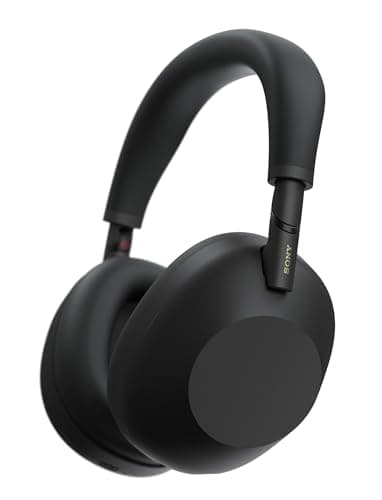 Sony WH-1000XM6The most complete travel headphone on sale: 254 g, 30 rated hours with noise canceling on, and it folds into a case small enough to stop being a decision. | What flagship money actually buys | 9.19.1 out of 10, our editorial score | |
| 2 | 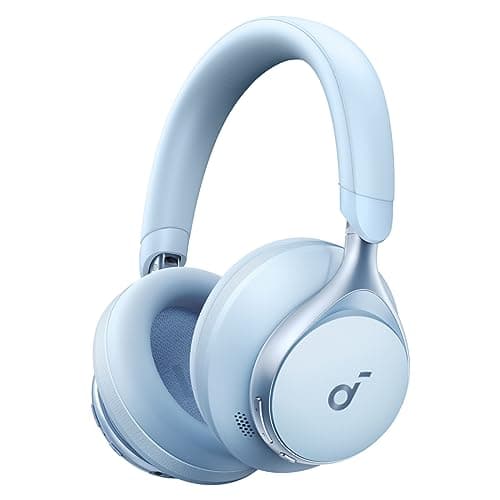 Soundcore Space OneThe budget specification sheet that is genuinely hard to argue with: 40 rated hours with canceling on, LDAC, 40 mm drivers, a folding hinge and an aux cable in the box. | Where the curve flattens | 8.58.5 out of 10, our editorial score | |
| 3 | 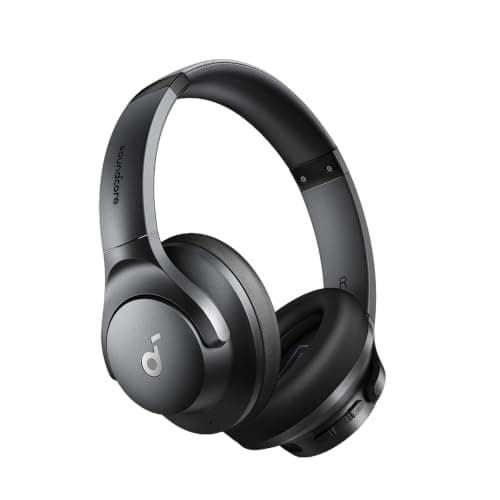 Soundcore Q20iThe cheapest over-ear on this site with hybrid canceling and a real specification sheet: 40 rated hours with canceling on and 40 mm drivers. | What the bottom of the market gives up | 7.87.8 out of 10, our editorial score |
#ad Amazon links are affiliate links. Prices come from Amazon’s own data on the date stamped under the buttons above; where we have no current figure the button reads “Check price on Amazon” instead of guessing. How this is funded.
The picks in full
Every pick, in detail
1. What flagship money actually buys
Sony WH-1000XM6
The most complete travel headphone on sale: 254 g, 30 rated hours with noise canceling on, and it folds into a case small enough to stop being a decision.
Our editorial score: 9.1 / 10
#ad Price as of November 11, 2026. How this is funded
A useful way to read the price is as a list of things that do not go wrong. Approximately 254 g, up to 30 rated hours with canceling on and 40 with it off, SBC, AAC, LDAC and LC3 over Bluetooth 5.3, and a wired response quoted at 4 Hz to 40,000 Hz.
It folds into a magnetic-closure case, which is a hinge and a case that cost real money to engineer and are the first things to fail on cheap products. Multipoint, firmware support and app development are also ongoing costs recovered in the price.
What the money does not buy is a cable, which Sony does not supply. On the three things you can hear — canceling depth, tuning and microphone quality — this is near the top of the market, which is exactly why it is near the top of the price list.
What works on a plane
- Folds, which halves the space it takes in a personal item
- 254 g is light for a flagship over-ear, and weight is what you feel at hour four
- LDAC plus LC3 means it is not locked to one phone ecosystem
- 30 rated hours with noise canceling on covers almost any single routing
What does not
- You pay a flagship price for the last increment of noise canceling
- The folding hinge is one more mechanism to eventually wear out
- No airline two-prong adapter in the box
How it scores against the five travel axes
Published specifications
| Spec | Figure | Source |
|---|---|---|
| Weight | Approx. 254 g (9 oz) | Sony Help Guide specifications |
| Battery, NC on | Up to 30 hours | Sony specifications |
| Battery, NC off | Up to 40 hours | Sony specifications |
| Full charge | Approx. 3.5 hours | Sony Help Guide specifications |
| Bluetooth | 5.3 | Sony Help Guide specifications |
| Codecs | SBC, AAC, LDAC, LC3 | Sony Help Guide specifications |
| Wired response | 4 Hz - 40,000 Hz (IEC) | Sony Help Guide specifications |
| Folds | Yes, into a magnetic-closure case | Sony |
| In the box | Headset, headphone cable, USB-C cable, carrying case, documents | Sony Help Guide, Included items |
2. Where the curve flattens
Soundcore Space One
The budget specification sheet that is genuinely hard to argue with: 40 rated hours with canceling on, LDAC, 40 mm drivers, a folding hinge and an aux cable in the box.
Our editorial score: 8.5 / 10
#ad Price as of November 11, 2026. How this is funded
The product that answers the question in the title most directly: at around a quarter of flagship money it does four of the six things a flagship does, and two of them better. Up to 40 rated hours with canceling on and up to 55 in normal mode, five minutes of charge for four hours.
265 g, 40 mm drivers, LDAC, folding earcups, and a travel pouch and aux cable in the box — which is more than the Sony above supplies.
What you do not get is the last few decibels of low-frequency reduction, pad quality that survives hour four, and microphone performance for calls. If you fly twice a year rather than twice a month, that is the right set of things to give up.
What works on a plane
- 40 rated hours with canceling on, from a headphone in the budget tier
- LDAC at this price is unusual, and it is the codec Android users actually want
- Folds and ships with an aux cable, so the seatback screen is covered
- 265 g is not heavy, and the pouch means it travels without a hard case
What does not
- The 98 percent noise-reduction claim is marketing, not a published measurement
- A pouch is not a hard case, so it needs care in a crushed bag
- Pads are the first thing that gives at this price, well before the electronics
How it scores against the five travel axes
Published specifications
| Spec | Figure | Source |
|---|---|---|
| Battery, ANC on | Up to 40 hours | Soundcore |
| Battery, normal mode | Up to 55 hours | Soundcore |
| Quick charge | 5 minutes for 4 hours | Soundcore |
| Weight | 265 g (9.35 oz) | Soundcore |
| Drivers | 40 mm | Soundcore |
| Codecs | LDAC | Soundcore |
| Folds | Yes, ear cups rotate and fold | Soundcore |
| In the box | Travel pouch and aux cable | Soundcore |
3. What the bottom of the market gives up
Soundcore Q20i
The cheapest over-ear on this site with hybrid canceling and a real specification sheet: 40 rated hours with canceling on and 40 mm drivers.
Our editorial score: 7.8 / 10
#ad Price as of November 11, 2026. How this is funded
The entry level, and a genuinely instructive one. Up to 40 rated hours with canceling on and up to 60 in normal mode — battery figures that match the Space One above, which proves that rated hours is one of the cheapest specifications to buy.
40 mm dynamic drivers, hybrid canceling with two internal and two external microphones, Bluetooth 5.0, and the same five-minutes-for-four-hours quick charge.
What falls away at this price is materials and tuning: the plastic is noticeable, the pads are thin, and the canceling is shallower. The lesson is that price buys build, comfort and canceling depth, and it does not buy battery.
What works on a plane
- Active canceling with ANC, Normal and Transparency modes, at a price where canceling is usually a sticker
- 40 rated hours with canceling on is more than most flagships
- Quick charge gives four hours from five minutes, which covers a forgotten charge
- 40 mm drivers and a published spec sheet, rather than an unbranded decibel claim
What does not
- Priced above a strict fifty-dollar ceiling, so it is not the rock-bottom option
- Bluetooth 5.0 and no LDAC — the codec list is basic, and soundcore lists only a single microphone
- Plastic build and thin pads, which is exactly where the money was saved
How it scores against the five travel axes
Published specifications
| Spec | Figure | Source |
|---|---|---|
| Battery, ANC on | Up to 40 hours | Soundcore |
| Battery, normal mode | Up to 60 hours | Soundcore |
| Quick charge | 5 minutes for 4 hours | Soundcore |
| Drivers | 40 mm dynamic | Soundcore |
| Modes | ANC / Normal / Transparency | Soundcore |
| Microphone | Single mic | Soundcore |
| Weight | 246 g | Soundcore |
| Bluetooth | 5.0 | Soundcore |
Questions
Common questions
Why are noise cancelling headphones so expensive?
Because the price covers a microphone array, a signal processor and the engineering time to tune it to the specific earcup, a radio with licensed codecs, a battery and its safety circuitry, years of app and firmware support, and the pads, hinges and case that keep the product usable. Only three of those are audible.
Are expensive noise cancelling headphones worth it?
For a frequent flyer, usually yes — the last few decibels of low-frequency reduction and the pad comfort past hour four are exactly what a long-haul punishes. For listening at a desk, the improvement over a mid-priced pair is much harder to justify.
Are cheap noise cancelling headphones any good?
At around $100, genuinely yes. A product like the Soundcore Space One publishes up to 40 rated hours with canceling on, LDAC, folding earcups and a cable in the box. What it gives up is canceling depth at the very bottom of the range, pad quality and call performance.
Why do cheap headphones have better battery life?
Because battery capacity is one of the cheapest things to add. A plainer shell with a bigger cell and a less power-hungry canceling system can publish a larger number than a flagship, which is why rated hours is a poor proxy for overall quality.
Where do diminishing returns start?
Around the $100 mark the curve flattens sharply. Above it you are buying pad quality, microphone performance, build durability and the last few decibels of canceling. Those are worth real money to someone who flies often and very little to someone who does not.
Sources
Where these figures come from
- Sony WH-1000XM6 specifications (weight, battery, codecs, Bluetooth, wired response)
- Sony WF-1000XM6 specifications (processor, dual processors, eight microphones)
- Soundcore Space One product page (battery, weight, drivers, LDAC, box contents)
- Soundcore Q20i product page (battery, drivers, canceling microphones, Bluetooth)
- Bose QuietComfort Headphones product page (removable protein-leather cushions, battery)
- Bose QuietComfort Ultra Headphones (2nd Gen) product page (30 h, 45 h and 23 h Immersive Audio figures)
Read next
Related reading
- Are noise-canceling headphones worth it for flying?
The same money, judged against what a cabin actually does to you.
- How long do noise-canceling headphones last?
Which parts fail first, and what that does to cost per year.
- Best headphones under $100
Where the price curve flattens, with picks.
- How to compare noise-canceling headphones
How to tell which of the six costs a given product spent money on.