
For a college student, the Soundcore Space 2 is the best pick: up to 50 published hours with canceling on, LDAC, a carrying case and a 3.5 mm input that covers library computers, labs and seatback screens. For stronger canceling in a loud building, the Bose QuietComfort Headphones add removable cushions you can replace. The budget pick is the Soundcore Q20i, the cheapest over-ear here with real canceling and up to 40 rated hours. Prices come from Amazon’s own data and are stamped with the date inside each buy button.
Four rooms
The same pair has to survive four different problems
Most headphone advice assumes one use. A student purchase does not get that luxury, and the reason an expensive, specialized headphone is often the wrong student buy is that it is excellent at one of these rows and indifferent at the rest.
| The room | The problem | The specification that fixes it |
|---|---|---|
| Lecture hall | Hearing a recording, not blocking | Transparency mode, light weight |
| Library | Low-level chatter and keyboards | Canceling plus a good seal |
| Shared room or dorm | A roommate, a corridor, a wall | Deep low-band canceling |
| Gym and walking | Sweat and a headband | An IP rating, earbuds |
| The flight home | Engine drone, seatback screen | Canceling plus a 3.5 mm input |
| Four years of it | Pads, cables, being dropped | Replaceable parts, a warranty |
The student question is not which headphone is best. It is which headphone is never actively wrong in any of the five rooms you will use it in.
The single-room versions of this are at best noise-canceling headphones for studying and best noise-canceling headphones for dorm rooms, and the flight-home half is at best headphones for airplanes.
Four years
Buy for the repair, not just the purchase
- Removable ear cushions are the most valuable durability feature at this price. Pads are always the first thing to fail, and on most budget headphones they are not replaceable, which turns a $20 part into a new headphone.
- A wired fallback outlives the battery. Every lithium cell degrades. A 3.5 mm input means year four is still a working headphone, just a tethered one.
- Assume one will be lost or stolen. That is an argument for the cheaper pick rather than a reason to buy nothing, and it is why the budget pick on this page is a serious recommendation rather than a consolation prize.
- USB-C, not a proprietary cable. All four picks here charge over USB-C, which means the cable you already own for your laptop and phone.
The longer version is at how long do noise-canceling headphones last? and how to clean headphone ear pads, which is the cheapest way to make a pair last the degree.
Where to put the money
What each step up actually buys a student
Under about $50
Real canceling, a published spec sheet and a 40-hour battery. You give up pads, microphones and codecs. See best over-ear headphones under $100 for the band in full.
Around $100 to $150
The sweet spot for this buyer: 50 hours, LDAC, a case and a wired input. This is where the top pick sits, and best over-ear headphones under $200 shows what the next step adds.
Above that
You are buying the last ten percent of quiet and better materials, which is a real improvement and rarely the best use of a student’s money. The reason the curve flattens is explained at why noise-canceling headphones cost what they do.
No price is written into this page. Today’s figure sits inside each buy button, read from Amazon’s own data and stamped with the date it was read, per how we choose.
In short
Key takeaways
- Soundcore Space 2: up to 50 rated hours with canceling on, LDAC, a case and a 3.5 mm input. The best single pair for a student.
- Bose QuietComfort Headphones for a loud building, with removable protein-leather cushions and a published 0.520 lb weight.
- Budget pick: Soundcore Q20i, the cheapest over-ear here with real canceling, a transparency mode and up to 40 rated hours.
- Soundcore P40i as a second, cheap pair for the gym and walking: IPX5, 50 hours with the case.
- Buy for the repair as well as the purchase: replaceable pads, a 3.5 mm fallback and USB-C charging are what make a pair last four years.
At a glance
Quick picks
Scores are our editorial judgment from published specifications and cited third-party measurements, not our own testing. The rubric is published in full. Tap any row for the full write-up.
| # | Product | Best for | Score | Price |
|---|---|---|---|---|
| 1 | 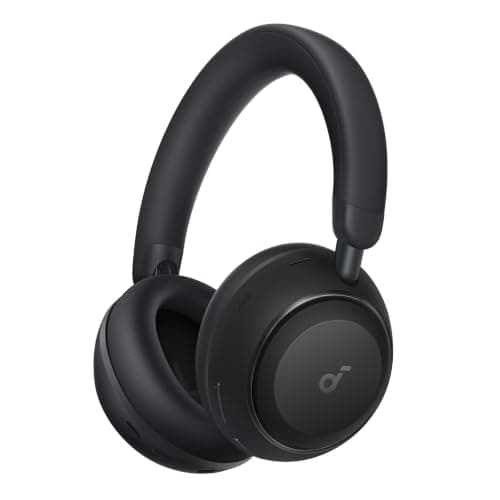 Soundcore Space 2Fifty rated hours with canceling on, a 3.5 mm input and a case in the box, at a fraction of flagship money. The compromise is in the last 10 percent of quiet, not the first 80. | Best overall for a student | 8.28.2 out of 10, our editorial score | |
| 2 | 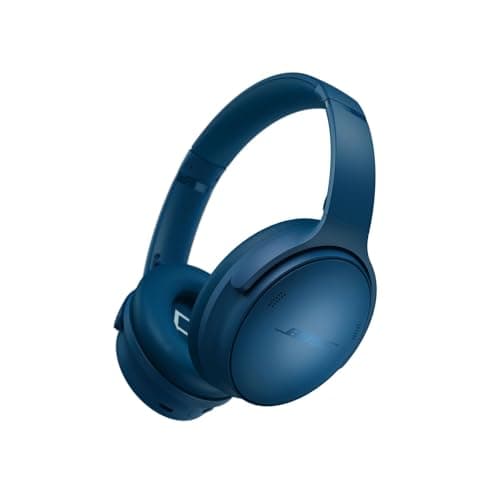 Bose QuietComfort HeadphonesThe non-Ultra Bose: the same brand's canceling philosophy at 24 rated hours, with the audio cable and carry case included and no Immersive Audio to drain the battery. | Best canceling you can justify as a student | 8.58.5 out of 10, our editorial score | |
| 3 | 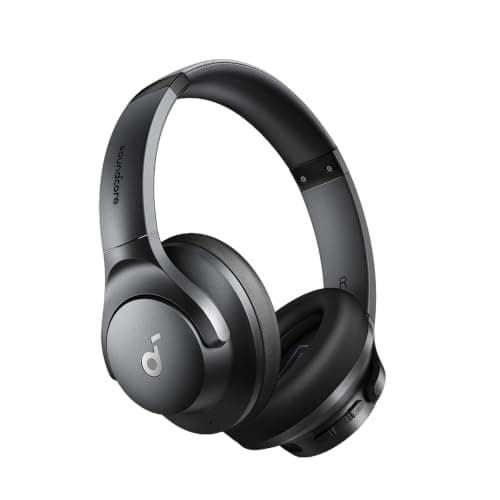 Soundcore Q20iThe cheapest over-ear on this site with hybrid canceling and a real specification sheet: 40 rated hours with canceling on and 40 mm drivers. | Budget pick: the cheapest that does the job | 7.87.8 out of 10, our editorial score | |
| 4 | 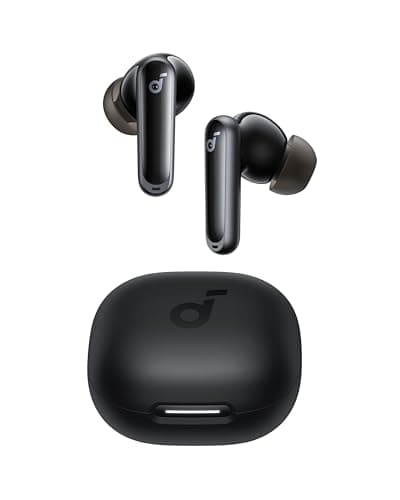 Soundcore P40iA budget earbud rated at 12 hours a charge and 60 with the case, with adaptive canceling and a case that folds out into a phone stand. | Best earbud for lectures and the gym | 8.08.0 out of 10, our editorial score |
#ad Amazon links are affiliate links. Prices come from Amazon’s own data on the date stamped under the buttons above; where we have no current figure the button reads “Check price on Amazon” instead of guessing. How this is funded.
The picks in full
Every pick, in detail
1. Best overall for a student
Soundcore Space 2
Fifty rated hours with canceling on, a 3.5 mm input and a case in the box, at a fraction of flagship money. The compromise is in the last 10 percent of quiet, not the first 80.
Our editorial score: 8.2 / 10
#ad Price as of November 11, 2026. How this is funded
For the student who wants one pair to do everything and is not prepared to spend flagship money on it. Soundcore publishes up to 50 hours with canceling on and 70 with it off — more than any flagship on this site — with a 2-hour full charge and five minutes buying four hours.
The specification that makes it a four-room headphone is the 3.5 mm input: that is the library computer, the lab, a friend’s amp and the seatback screen on the flight home, none of which Bluetooth alone covers. A carrying case is in the box, and 264 g with 40 mm drivers and LDAC is a genuinely complete sheet at this price.
State the limit plainly: the −37 dB canceling figure is Anker’s own laboratory number, not an independent measurement, and the gap to Bose is audible. The plastic build will not survive a crushed bag the way a metal one would.
What works on a plane
- Up to 50 rated hours with canceling on, which beats every flagship here
- A 3.5 mm input and a case in the box, so nothing else to buy for a seatback screen
- Five minutes of charge buys four hours, which covers a gate-side mistake
- The cheapest way here to get genuinely useful drone reduction on a plane
What does not
- The -37 dB canceling figure is Anker's own laboratory number, not an independent measurement, and the gap to Bose is audible
- Plainer pad materials than the Sennheiser, so hour four is less comfortable
- Plastic build will not survive being crushed in an overhead bin the way the metal Apple would
How it scores against the five travel axes
Published specifications
| Spec | Figure | Source |
|---|---|---|
| Battery, ANC on | Up to 50 hours | soundcore |
| Battery, ANC off | Up to 70 hours | soundcore |
| Quick charge | 5 minutes gives 4 hours | soundcore |
| Full charge | Approx. 2 hours | soundcore support specifications |
| Weight | 264 g (9.31 oz) | soundcore |
| Bluetooth | 6.1 | soundcore |
| Microphones | 3, with AI enhancement for calls | soundcore |
| Codecs | SBC, AAC, LDAC | soundcore support specifications |
| Drivers | 40 mm double-layer diaphragm | soundcore |
| Canceling depth | -37 dB, measured in Anker's own laboratory | soundcore support specifications |
| In the box | Headphones, charging cable, carrying case | soundcore |
| Wired | 3.5 mm input, Hi-Res in wired mode | soundcore |
2. Best canceling you can justify as a student
Bose QuietComfort Headphones
The non-Ultra Bose: the same brand's canceling philosophy at 24 rated hours, with the audio cable and carry case included and no Immersive Audio to drain the battery.
Our editorial score: 8.5 / 10
#ad Price as of November 11, 2026. How this is funded
For the student whose actual problem is a roommate, a corridor or a building. This is the non-Ultra Bose: the same brand’s canceling philosophy without the Ultra premium, rated at up to 24 hours with canceling on and a 2.5-hour charge.
Two specifications matter for a four-year purchase. Bose publishes removable protein-leather cushions, so worn pads are a replacement rather than a new headphone — the single most useful durability feature at this price. And Bose publishes 0.520 lb, about 236 g, which makes it lighter on paper than any canceling flagship here.
Twenty-four rated hours is the shortest figure on this page and under half the Soundcore’s. Bose also contradicts itself on the audio cable: the specification block says none is included while the box list on the same page includes a 3.5 mm-to-2.5 mm cable. We report both readings rather than picking the flattering one.
What works on a plane
- The audio cable with in-line mic is in the box, so seatback screens work out of the bag
- Bose canceling philosophy without paying the Ultra premium
- No Immersive Audio means no mode that quietly halves your battery
- Carry case included
- Bose publishes 0.520 lb for it — lighter than any canceling flagship here — and publishes no weight at all for the Ultra
What does not
- 24 rated hours is six fewer than the Ultra and half the Sennheiser
- Canceling is a step behind the QuietComfort Ultra
- No USB-C lossless audio input, unlike the Ultra
- Bose's own specification block says no audio cable is included while its box list includes one
How it scores against the five travel axes
Published specifications
| Spec | Figure | Source |
|---|---|---|
| Battery, ANC on | Up to 24 hours | Bose |
| Battery charge time | 2.5 hours via USB | Bose |
| Dimensions | 7.68" H x 6.18" W x 3.15" D | Bose |
| Ear cushions | Removable, protein leather | Bose |
| In the box | Carry case, USB-C cable, audio cable with in-line mic | Bose |
| Immersive Audio | Not supported | Bose |
| Weight | 0.520 lb (approx. 236 g) | Bose |
3. Budget pick: the cheapest that does the job
Soundcore Q20i
The cheapest over-ear on this site with hybrid canceling and a real specification sheet: 40 rated hours with canceling on and 40 mm drivers.
Our editorial score: 7.8 / 10
#ad Price as of November 11, 2026. How this is funded
The cheapest over-ear on this site with real active canceling and a published specification sheet, which makes it the honest answer for a student with a genuinely tight budget: up to 40 rated hours with canceling on, 60 in normal mode, 40 mm drivers, 246 g, with ANC, Normal and Transparency modes.
It is also the pick for a headphone you expect to lose. In a shared house, a library and a gym bag, a cheap pair that gets replaced is a better plan than an expensive pair you worry about.
soundcore lists a single microphone and Bluetooth 5.0 with no LDAC, so it is a poor choice if you are also on a lot of calls, and the pads are thin.
What works on a plane
- Active canceling with ANC, Normal and Transparency modes, at a price where canceling is usually a sticker
- 40 rated hours with canceling on is more than most flagships
- Quick charge gives four hours from five minutes, which covers a forgotten charge
- 40 mm drivers and a published spec sheet, rather than an unbranded decibel claim
What does not
- Priced above a strict fifty-dollar ceiling, so it is not the rock-bottom option
- Bluetooth 5.0 and no LDAC — the codec list is basic, and soundcore lists only a single microphone
- Plastic build and thin pads, which is exactly where the money was saved
How it scores against the five travel axes
Published specifications
| Spec | Figure | Source |
|---|---|---|
| Battery, ANC on | Up to 40 hours | Soundcore |
| Battery, normal mode | Up to 60 hours | Soundcore |
| Quick charge | 5 minutes for 4 hours | Soundcore |
| Drivers | 40 mm dynamic | Soundcore |
| Modes | ANC / Normal / Transparency | Soundcore |
| Microphone | Single mic | Soundcore |
| Weight | 246 g | Soundcore |
| Bluetooth | 5.0 | Soundcore |
4. Best earbud for lectures and the gym
Soundcore P40i
A budget earbud rated at 12 hours a charge and 60 with the case, with adaptive canceling and a case that folds out into a phone stand.
Our editorial score: 8.0 / 10
#ad Price as of November 11, 2026. How this is funded
For walking across campus, the gym and the one lecture where a headband is awkward. Soundcore rates it at 10 hours per charge with canceling on and 50 with the case, with six microphones and an AI call algorithm for group calls, IPX5 for rain, and a case that folds out into a phone stand.
Many students end up with a cheap over-ear and a cheap earbud rather than one mid-priced pair, and at these prices that is usually the better spend. The canceling is well behind the premium set and there is no LDAC; the tip selection is narrow, and tip seal is what decides earbud canceling.
What works on a plane
- 60 rated hours with the case, from an earbud in the budget tier
- IPX5 means sweat and rain are not a worry on a commute
- The fold-out case stand is a genuinely useful thing on a tray table
- Adaptive canceling at a price where fixed canceling is the norm
What does not
- Canceling depth is a long way behind the premium earbuds, especially in the low band
- No LDAC, so Android listeners do not get the better codec
- The stock tip selection is narrow, and the seal is what decides earbud canceling
How it scores against the five travel axes
Published specifications
| Spec | Figure | Source |
|---|---|---|
| Battery, canceling off | 12 hours per charge, 60 hours with the case | Soundcore |
| Battery, canceling on | 10 hours per charge, 50 hours with the case | Soundcore |
| Noise canceling | Adaptive ANC | Soundcore |
| Drivers | 11 mm composite | Soundcore |
| Water resistance | IPX5 | Soundcore |
| Microphones | 6, with an AI call algorithm | Soundcore |
| Case | Doubles as a phone stand | Soundcore |
How we decide
How these picks were chosen
We do not run a test lab and we do not claim to have flown with these units. Every verdict on this page is one of three things: a measurement published by somebody who does own a test rig and is credited by name, a manufacturer specification we quote and then interpret against what a long flight actually demands, or a plainly-labeled editorial judgment. The five axes we score on — cabin-noise reduction, battery on a long-haul, pack size, comfort past hour three, and wired fallback — are the ones that decide a travel purchase, and the weighting is published in full.
Questions
Common questions
How much should a student spend on headphones?
The useful answer is a range rather than a number. Under about $50 buys genuine canceling, a 40-hour battery and a published spec sheet, which is enough for a library. Around $100 to $150 buys 50 hours, a case, LDAC and a wired input, which covers every room a student uses. Above that you are paying for the last ten percent of quiet and better materials.
Over-ear or earbuds for college?
Over-ear if you only buy one: more canceling per dollar, far longer battery, better for a library and a long flight home. Earbuds for the gym, walking between classes and a lecture where a headband is awkward. At these prices, one cheap over-ear plus one cheap earbud is often a better spend than one mid-priced pair.
Do I need noise canceling in a library?
It helps more than people expect, because the noise that breaks concentration in a library is usually low-level and continuous — air handling, keyboards, distant conversation — which is exactly the band canceling handles. What it will not do is remove the person talking next to you. Canceling plus something quiet playing works far better than either alone.
What should a student look for if the headphones have to last four years?
Three things: removable ear cushions, because pads fail first and on most cheap headphones they cannot be replaced; a 3.5 mm input, because it keeps working after the battery has degraded; and USB-C charging rather than a proprietary cable. The Bose on this page publishes removable cushions, and the two Soundcore picks both have a wired path.
Sources
Where these figures come from
Read next
Related reading
- Best noise-canceling headphones for studying
The library half of this decision, in depth.
- Best noise-canceling headphones for dorm rooms
When the roommate is the problem.
- Best over-ear headphones under $100
The band most student budgets land in.
- Best headphones for online classes
If your seminars run through a microphone.
- How long do noise-canceling headphones last?
What fails first, and what can be replaced.