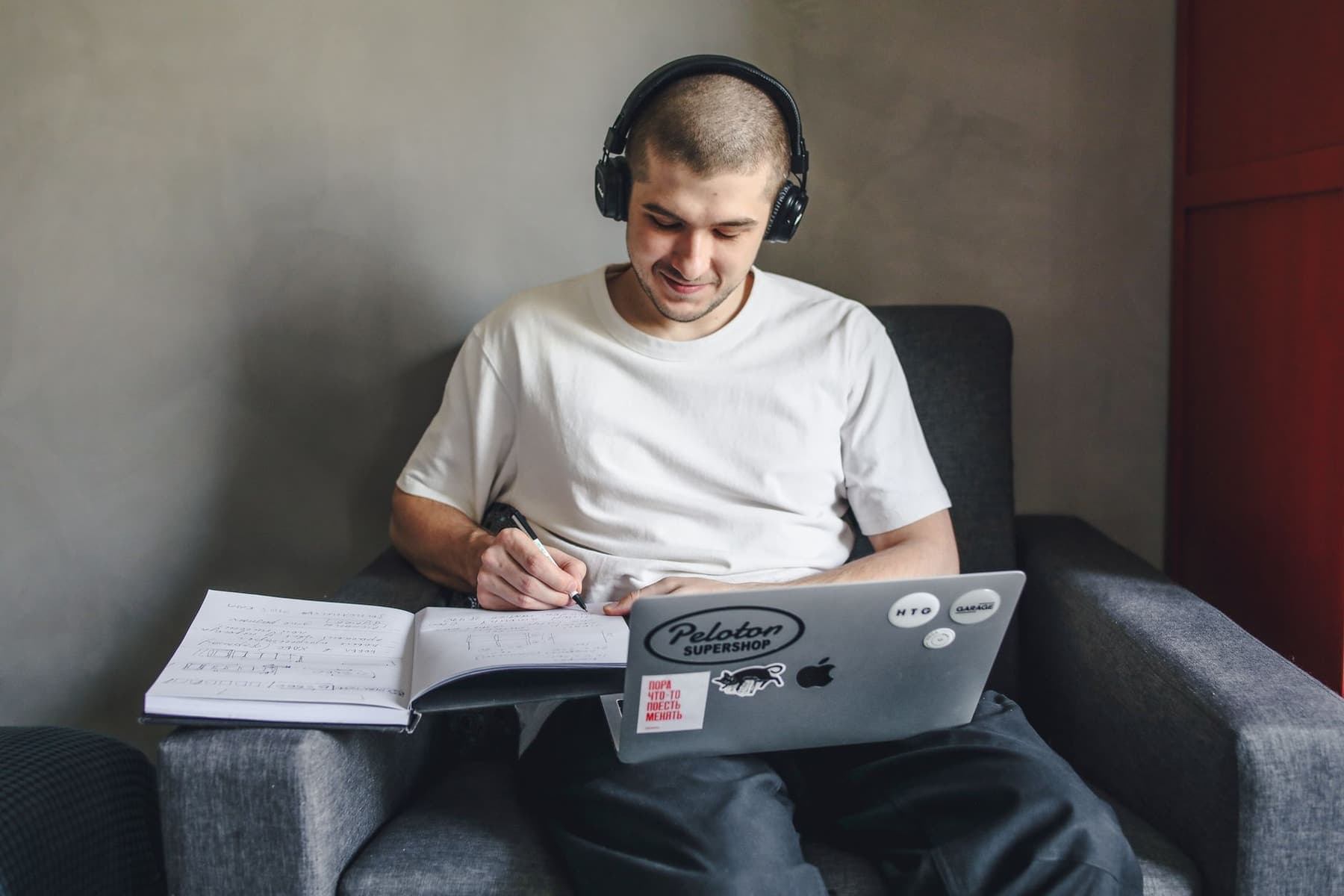
For a dorm room the Soundcore Space One is the best pick: up to 40 rated hours with canceling on, 265 g, folding earcups and a price a student can defend. If the problem is bass through a shared wall, the Bose QuietComfort Ultra Headphones have the deepest low-frequency reduction here; the EarFun Air Pro 4 is the pick for sleeping in a shared room, and the Soundcore Q20i is the cheapest pair worth owning.
A different room
A dorm is not a library, and not an office
Three things make this room its own buying problem. The noise is structural: music, a subwoofer, footsteps and doors arrive through a floor or a wall as low-frequency energy rather than as clear sound in the air. The timing is wrong: the worst of it happens at midnight when you want to sleep, not at 2 p.m. when you want to concentrate. And the budget is real in a way it is not for a business traveller.
That inverts the usual ranking. Low-frequency reduction matters more here than in the studying roundup, which is built around a desk and a library, and comfort lying down matters more than comfort sitting up.
What canceling will not do for you
It will not remove a conversation in the corridor. Speech is mid-frequency, irregular and the hardest thing for an active system to predict — do canceling headphones block voices explains why. What reduces a voice is a physical seal plus something playing. Canceling is for the bass line, the extractor fan and the corridor door.
Masking does the rest
Pure silence is not actually the goal in a shared building, because every residual thump then stands out against it. A low broadband sound — rain, fan noise, pink noise — raises the floor so the thumps stop registering. Canceling headphones and white noise goes through how to combine the two.
In a dorm the enemy is not volume. It is a bass line at midnight and a door at 2 a.m.
The matrix
The four picks on the figures that matter in halls
| Soundcore Space One | Bose QC Ultra | EarFun Air Pro 4 | Soundcore Q20i | |
|---|---|---|---|---|
| Battery, canceling on | up to 40 h | up to 30 h | 11 h per charge | up to 40 h |
| Battery, canceling off | up to 55 h | up to 45 h | 52 h with case | up to 60 h |
| Quick charge | 5 min = 4 h | Not published | Not published | 5 min = 4 h |
| Weight | 265 g (9.35 oz) | approx. 264 g as reported | Not published | Not published |
| Form | Over-ear, folds | Over-ear, rotates flat | Earbuds | Over-ear |
| Wired input | Aux cable supplied | 2.5 mm-to-3.5 mm supplied | None | Not published |
| Usable lying down | No | No | Yes | No |
By problem
Buy for the noise you actually have
Music through the wall
Deep canceling, and over-ear rather than in-ear. This is the one case where the Bose earns the extra money, because the energy you are fighting is all below 300 Hz.
A roommate on a different schedule
You need something you can wear in bed, which means earbuds, and something that does not glow or beep when you move. This is also the case where the sleeping-earbud constraints apply directly — shallow insertion and a low profile matter more than canceling depth.
Corridor voices while you work
A good physical seal plus audio playing. Canceling helps at the margins; the seal and the content do the work. Any of the three over-ears here is adequate.
Your own typing and a shared desk
Nothing on this page fixes this, and it is worth saying so. A sealed over-ear makes your own keyboard louder by conduction through the headband, not quieter.
What to look for
Four checks before you buy for a dorm
- Over-ear for the wall, earbuds for the bed. Most people in halls end up wanting both, and the cheap earbud is the one to buy second.
- Rated hours in normal mode, not just canceling-on. A shared socket is a contested resource, and 55 or 60 hours means you rarely compete for it.
- Does it fold? This pair lives in a backpack between a room, a library and a lecture hall every single day. A rigid non-folding design is the wrong shape.
- Replaceable pads. Four years of daily wear destroys ear cushions, and a pair you can re-pad lasts the whole degree. Cleaning and replacing pads is the cheapest upgrade there is.
A dorm is one room in a shared building, which is a narrower problem than the one most renters have. Best noise-canceling headphones for small apartments covers the party-wall version, and best headphones for college students judges the same purchase across a whole timetable rather than one room.
In short
Key takeaways
- Soundcore Space One: up to 40 rated hours with canceling on, 265 g, folds, and priced for a student.
- Bose QuietComfort Ultra Headphones: the deepest low-frequency reduction here, which is what bass through a wall needs.
- EarFun Air Pro 4: 11 h per charge and 52 with the case, and the only pick you can sleep in.
- Soundcore Q20i: up to 40 h with canceling on for the least money, and expendable in a first year.
- Dorm noise is structural and low-frequency, so canceling helps more here than it does against library chatter.
- Canceling will not remove corridor conversation. A physical seal plus a masking sound will.
At a glance
Quick picks
Scores are our editorial judgment from published specifications and cited third-party measurements, not our own testing. The rubric is published in full. Tap any row for the full write-up.
| # | Product | Best for | Score | Price |
|---|---|---|---|---|
| 1 | 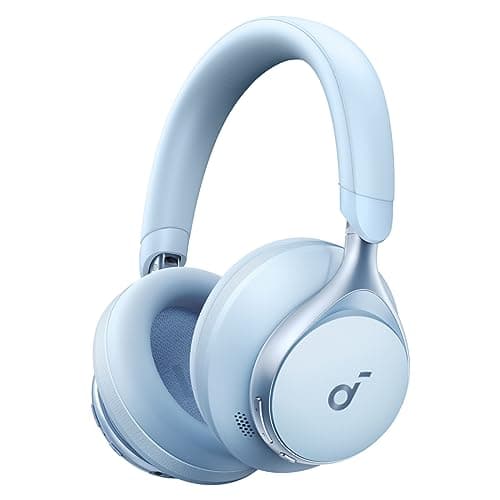 Soundcore Space OneThe budget specification sheet that is genuinely hard to argue with: 40 rated hours with canceling on, LDAC, 40 mm drivers, a folding hinge and an aux cable in the box. | Best overall for a dorm room | 8.58.5 out of 10, our editorial score | |
| 2 | 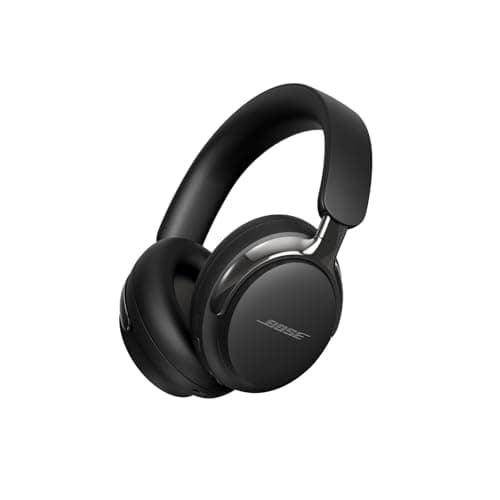 Bose QuietComfort Ultra Headphones (2nd Gen)The quietest cabin of anything here, and the only over-ear in this group whose box already contains the audio cable a seatback screen needs. | Best against bass through a wall | 9.09.0 out of 10, our editorial score | |
| 3 | 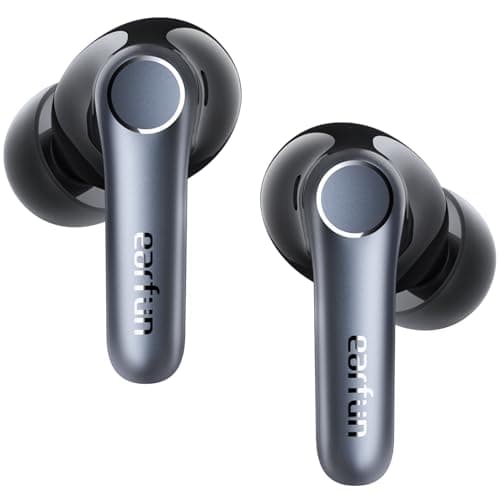 EarFun Air Pro 4Eleven rated hours per bud and 52 with the case, plus LDAC and aptX Lossless, for a small fraction of flagship money. It buys most of the quiet for a little of the price. | Best for sleeping and for a shared room | 8.08.0 out of 10, our editorial score | |
| 4 | 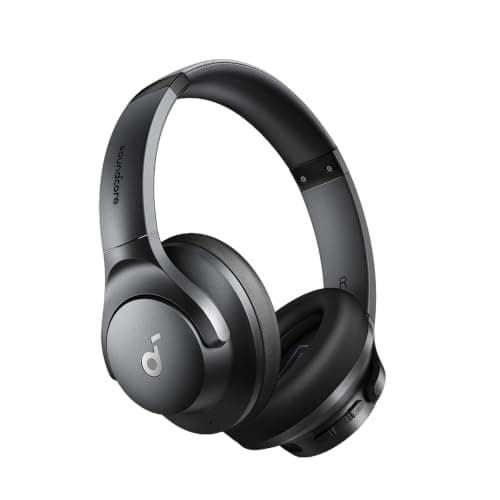 Soundcore Q20iThe cheapest over-ear on this site with hybrid canceling and a real specification sheet: 40 rated hours with canceling on and 40 mm drivers. | Cheapest pair worth owning | 7.87.8 out of 10, our editorial score |
#ad Amazon links are affiliate links. Prices come from Amazon’s own data on the date stamped under the buttons above; where we have no current figure the button reads “Check price on Amazon” instead of guessing. How this is funded.
The picks in full
Every pick, in detail
1. Best overall for a dorm room
Soundcore Space One
The budget specification sheet that is genuinely hard to argue with: 40 rated hours with canceling on, LDAC, 40 mm drivers, a folding hinge and an aux cable in the box.
Our editorial score: 8.5 / 10
#ad Price as of November 11, 2026. How this is funded
The right default for this room at this budget. Up to 40 rated hours with canceling on and up to 55 in normal mode, which on a shared power strip with three laptops already on it is a genuine advantage — you charge it twice a month.
265 g, 40 mm drivers, LDAC, and five minutes of charge buying four hours for the morning you forgot. The earcups rotate and fold, so it goes in a backpack between the room, the library and a lecture hall without a hard case.
It is not the deepest canceling here, and the pads run warm past hour four. For a room where the problem is corridor noise and a neighbour’s speaker rather than a jet engine, that is the correct place to save the money.
What works on a plane
- 40 rated hours with canceling on, from a headphone in the budget tier
- LDAC at this price is unusual, and it is the codec Android users actually want
- Folds and ships with an aux cable, so the seatback screen is covered
- 265 g is not heavy, and the pouch means it travels without a hard case
What does not
- The 98 percent noise-reduction claim is marketing, not a published measurement
- A pouch is not a hard case, so it needs care in a crushed bag
- Pads are the first thing that gives at this price, well before the electronics
How it scores against the five travel axes
Published specifications
| Spec | Figure | Source |
|---|---|---|
| Battery, ANC on | Up to 40 hours | Soundcore |
| Battery, normal mode | Up to 55 hours | Soundcore |
| Quick charge | 5 minutes for 4 hours | Soundcore |
| Weight | 265 g (9.35 oz) | Soundcore |
| Drivers | 40 mm | Soundcore |
| Codecs | LDAC | Soundcore |
| Folds | Yes, ear cups rotate and fold | Soundcore |
| In the box | Travel pouch and aux cable | Soundcore |
2. Best against bass through a wall
Bose QuietComfort Ultra Headphones (2nd Gen)
The quietest cabin of anything here, and the only over-ear in this group whose box already contains the audio cable a seatback screen needs.
Our editorial score: 9.0 / 10
#ad Price as of November 11, 2026. How this is funded
If the specific problem is music through a shared wall or a party two doors down, this is the product with the deepest low-frequency reduction on the site. Bass is the part of a neighbour’s sound system that travels through building structure, and it is exactly the band active canceling is best at.
Up to 30 rated hours with canceling on, up to 45 with it off, up to 23 with Immersive Audio, approximately 264 g as reported. Earcups rotate flat into a hard case, a 2.5 mm-to-3.5 mm cable is in the box, and USB-C audio accepts 16-bit 44.1 or 48 kHz lossless input from a laptop.
The objection is price: this is the most expensive thing on this page by a wide margin, and it is hard to justify for four years of a shared room unless the noise is genuinely the thing wrecking your sleep. If you also fly home every term, the case is easier to make.
What works on a plane
- The best low-frequency canceling in this group, which is exactly the band engine drone lives in
- The 2.5 mm-to-3.5 mm cable is in the box, so a seatback screen needs nothing extra
- Compact hard case for a full-size over-ear
- Up to 45 hours with canceling off, if you only want isolation on a train
What does not
- Immersive Audio costs you a third of the battery, dropping to 23 rated hours
- Heavier than the Sony by roughly 10 g, and clamp is firmer out of the box
- The hard case is compact but still rigid, so it will not squash into a full bag
How it scores against the five travel axes
Published specifications
| Spec | Figure | Source |
|---|---|---|
| Battery, ANC on | Up to 30 hours | Bose |
| Battery, ANC off | Up to 45 hours | Bose |
| Battery, Immersive Audio on | Up to 23 hours | Bose |
| Weight | Approx. 264 g (9.3 oz) as reported | Published reviews |
| USB-C audio | 16-bit, 44.1 or 48 kHz lossless input | Bose support |
| In the box | Hard case, USB-C cable, 2.5 mm-to-3.5 mm audio cable | Bose |
| Folds | Earcups rotate flat into a compact hard case | Bose |
Read the full Bose QuietComfort Ultra Headphones (2nd Gen) review
3. Best for sleeping and for a shared room
EarFun Air Pro 4
Eleven rated hours per bud and 52 with the case, plus LDAC and aptX Lossless, for a small fraction of flagship money. It buys most of the quiet for a little of the price.
Our editorial score: 8.0 / 10
#ad Price as of November 11, 2026. How this is funded
The pick for the half of dorm life that happens lying down. An over-ear is close to unwearable on your side; a small sealed earbud is the only form factor that works in a bunk.
11 hours per charge and 52 with the case, Qualcomm QCC3091, Bluetooth 5.4, aptX Lossless, LDAC, AAC and SBC, 10 mm composite dynamic drivers, and EarFun’s own QuietSmart 3.0 claim of up to 50 dB — a vendor figure, read as one.
Two honest limits. Falling asleep in earbuds means they are still in your ear at 8 a.m. and the charge is gone, and a sealed tip pressed against a pillow is uncomfortable for some people regardless of the product. How to sleep with headphones on covers the workarounds.
What works on a plane
- Eleven rated hours per bud is longer than any premium earbud here
- 52 hours with the case means a two-week trip without a charger thought
- aptX Lossless and LDAC at this price is genuinely unusual
- Losing one on a plane is an annoyance rather than a disaster
What does not
- The 50 dB figure is EarFun's own rating, not an independent measurement, and the gap to Bose is clear
- Adaptive canceling is less steady than the flagships when cabin noise changes
- App polish and firmware support are a step behind the majors
How it scores against the five travel axes
4. Cheapest pair worth owning
Soundcore Q20i
The cheapest over-ear on this site with hybrid canceling and a real specification sheet: 40 rated hours with canceling on and 40 mm drivers.
Our editorial score: 7.8 / 10
#ad Price as of November 11, 2026. How this is funded
The entry point. Up to 40 rated hours with canceling on and up to 60 in normal mode, which matches the Space One’s canceling-on figure for noticeably less money.
40 mm dynamic drivers, hybrid canceling with two internal and two external microphones, Bluetooth 5.0, and the same five-minutes-for-four-hours quick charge.
What the step down costs you is canceling depth, build and pad comfort — this is a product you will notice the plastic on. For a first year in halls where something will get sat on, dropped or borrowed, that is a reasonable thing to buy deliberately.
What works on a plane
- Active canceling with ANC, Normal and Transparency modes, at a price where canceling is usually a sticker
- 40 rated hours with canceling on is more than most flagships
- Quick charge gives four hours from five minutes, which covers a forgotten charge
- 40 mm drivers and a published spec sheet, rather than an unbranded decibel claim
What does not
- Priced above a strict fifty-dollar ceiling, so it is not the rock-bottom option
- Bluetooth 5.0 and no LDAC — the codec list is basic, and soundcore lists only a single microphone
- Plastic build and thin pads, which is exactly where the money was saved
How it scores against the five travel axes
Published specifications
| Spec | Figure | Source |
|---|---|---|
| Battery, ANC on | Up to 40 hours | Soundcore |
| Battery, normal mode | Up to 60 hours | Soundcore |
| Quick charge | 5 minutes for 4 hours | Soundcore |
| Drivers | 40 mm dynamic | Soundcore |
| Modes | ANC / Normal / Transparency | Soundcore |
| Microphone | Single mic | Soundcore |
| Weight | 246 g | Soundcore |
| Bluetooth | 5.0 | Soundcore |
How we decide
How these picks were chosen
We do not run a test lab and we do not claim to have flown with these units. Every verdict on this page is one of three things: a measurement published by somebody who does own a test rig and is credited by name, a manufacturer specification we quote and then interpret against what a long flight actually demands, or a plainly-labeled editorial judgment. The five axes we score on — cabin-noise reduction, battery on a long-haul, pack size, comfort past hour three, and wired fallback — are the ones that decide a travel purchase, and the weighting is published in full.
Questions
Common questions
What are the best noise cancelling headphones for a dorm room?
The Soundcore Space One, for up to 40 rated hours with canceling on, 265 g, folding earcups and a price that makes sense on a student budget. If the specific problem is bass through a shared wall, the Bose QuietComfort Ultra Headphones have the deepest low-frequency reduction on this site.
Do noise cancelling headphones block out a loud roommate?
Partly. Speech is mid-frequency and irregular, which is the hardest thing for an active system to cancel, so a voice at conversational level will still come through. A good physical seal plus something playing is what actually reduces it.
Can you sleep in noise cancelling headphones in a dorm?
Not in over-ear headphones, which are impractical on your side. A low-profile sealed earbud is the workable option, with two caveats: battery rarely covers a whole night, and a tip pressed against a pillow is uncomfortable for some people.
Are cheap noise cancelling headphones good enough for a dorm?
For this room, mostly yes. The Soundcore Q20i publishes the same up-to-40-hour canceling-on figure as the Space One for less money. What you lose is canceling depth at the bottom of the range, build quality and pad comfort past hour four.
Over-ear or earbuds for student accommodation?
Over-ear for working at a desk and for blocking a neighbour, because the seal is larger and the battery is much bigger. Earbuds for sleeping, for a shared bunk and for walking to lectures. Most people in halls eventually own one of each.
Sources
Where these figures come from
- Soundcore Space One product page (battery, weight, drivers, quick charge, fold)
- Bose QuietComfort Ultra Headphones (2nd Gen) product page (battery modes, weight, box contents, USB-C audio)
- EarFun Air Pro 4 product page (battery, chipset, codecs, drivers, ANC claim)
- Soundcore Q20i product page (battery, drivers, canceling microphones, Bluetooth)
Read next
Related reading
- Best noise-canceling headphones for studying
The desk-and-library version of this purchase.
- Best earbuds for renters
The same thin-wall problem, in a flat rather than a hall of residence.
- Do noise-canceling headphones block voices?
Why a corridor conversation survives canceling, and what does work.
- Best headphones under $100
The whole field at the budget most of this page assumes.