
For truck drivers, the Sennheiser MOMENTUM 4 Wireless is the best pick: up to 60 published hours of playback, the most relaxed long-session listen here, and a 3.5 mm cable in the box. If you need your ears left open for the road, the Shokz OpenRun Pro 2 is the pick instead — 30.3 g, bone conduction, up to 12 rated hours. The budget pick is the Soundcore Space One, the cheapest headphone here that still cuts real cab drone. Prices come from Amazon’s own data, stamped with the date inside each buy button.
Before anything else
Check your state’s rules before you wear anything at the wheel
Headphone use while driving is regulated at state level in the United States and the rules are not consistent: some states restrict both ears, some restrict any headphone, some do not address it. We are not going to print a state-by-state table we cannot keep current, and you should not take a buying page’s word for a traffic law. Check your own state’s statute, and your carrier’s policy, which is often stricter than the law.
What follows from that practically: an open-ear design or a single bud is the usual shape of a compliant setup, and a sealed, canceling over-ear is for the bunk, the dock and the terminal rather than for the road. That is why this page ranks an open-ear headphone second rather than last.
The cab is loud in the band canceling is best at. It is also the one place on this site where blocking noise completely is the wrong goal.
What a driving day asks for
Four specifications that actually decide this
| Published battery | Awareness | Wired path | Weather | |
|---|---|---|---|---|
| Sennheiser MOMENTUM 4 | Up to 60 h | Sealed over-ear | 3.5 mm cable in box | None stated |
| Shokz OpenRun Pro 2 | Up to 12 h | Ear canal left open | None | IP55 |
| Soundcore Space One | Up to 40 h ANC on | Sealed over-ear | Aux cable in box | None stated |
| Soundcore P40i | 10 h bud, 50 h case | One bud in is an option | None | IPX5 |
- Battery in days, not hours. A fourteen-hour duty day plus a night in the bunk is the unit of use. The 60-hour figure is the single most valuable number on this page.
- A microphone dispatch can hear. A cab at highway speed is a hostile microphone environment. The P40i publishes six microphones with a call algorithm; a boom microphone, as on the certified protectors, beats any of them if you can live with the bulk.
- Awareness that is a design choice, not a mode. Transparency mode is software and can be switched off by mistake. An open ear canal cannot be.
- Rain and dust. IPX5 and IP55 are the ratings here. Both handle a walk round a trailer in weather; neither is submersion.
Which one
Pick by where you listen
Mostly in the bunk and on your reset
Take the Sennheiser for the battery and the pads, or the Soundcore Space One if the budget is the constraint. Both are sealed canceling over-ears, which is also what best headphones for road trips recommends for the same reason.
Mostly at the wheel, where the law allows it
Take the Shokz. Nothing else on this site leaves your hearing intact by construction rather than by setting, and the argument for that design is in are bone-conduction headphones good for flying? — a page that concludes the opposite for a cabin and for the same reason it concludes this for a cab.
Mostly on calls
Take the P40i for one-bud flexibility, or read best noise-canceling headphones for office calls, which is the page built entirely around microphone performance.
No price is written into this page. Today’s figure is inside each buy button, read from Amazon’s own data and stamped with the date, per how we choose.
In short
Key takeaways
- Sennheiser MOMENTUM 4 Wireless: up to 60 published hours, the most comfortable very long wear here, 3.5 mm cable included.
- Shokz OpenRun Pro 2: 30.3 g, bone conduction, up to 12 rated hours, IP55, multipoint. The only pick that leaves your ear canal open by construction.
- Budget pick: Soundcore Space One, up to 40 rated hours with canceling on and an aux cable in the box.
- Soundcore P40i for one-bud calls at a dock: six microphones, IPX5, 50 hours with the case.
- Headphone use while driving is regulated state by state. Check your state and your carrier policy before you choose a sealed design.
At a glance
Quick picks
Scores are our editorial judgment from published specifications and cited third-party measurements, not our own testing. The rubric is published in full. Tap any row for the full write-up.
| # | Product | Best for | Score | Price |
|---|---|---|---|---|
| 1 | 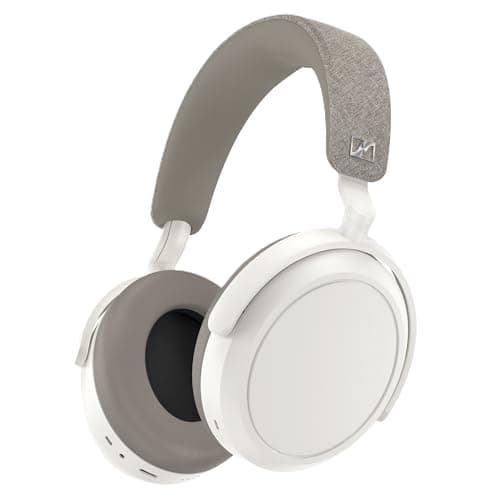 Sennheiser MOMENTUM 4 WirelessSennheiser publishes up to 60 hours. That is the difference between charging at the gate and not thinking about a charger for an entire two-week trip. | Best overall for a long driving day | 8.88.8 out of 10, our editorial score | |
| 2 | 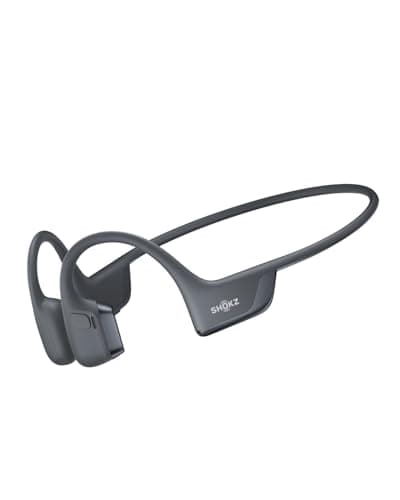 Shokz OpenRun Pro 2An open-ear headphone that leaves your ear canal empty, so you hear the traffic behind you as well as the playlist. The point of it is the opposite of noise canceling. | Best for keeping your ears open | 8.58.5 out of 10, our editorial score | |
| 3 | 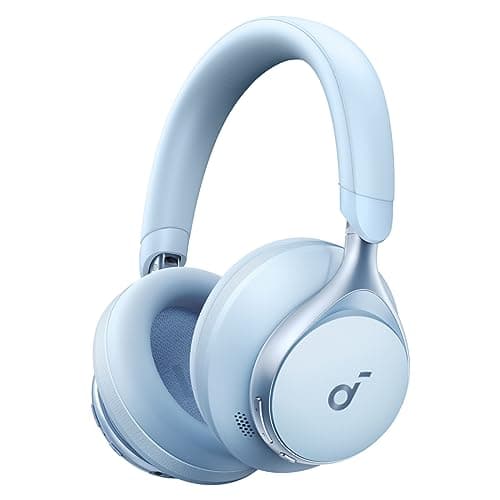 Soundcore Space OneThe budget specification sheet that is genuinely hard to argue with: 40 rated hours with canceling on, LDAC, 40 mm drivers, a folding hinge and an aux cable in the box. | Budget pick: the cheapest that does the job | 8.58.5 out of 10, our editorial score | |
| 4 | 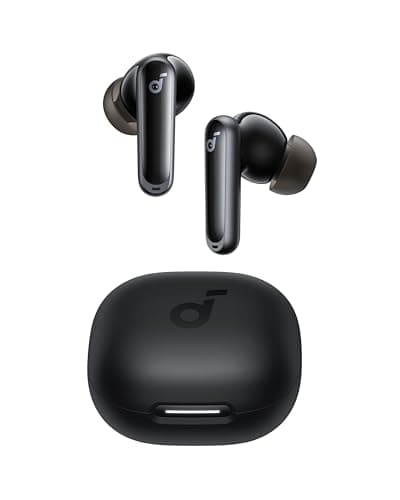 Soundcore P40iA budget earbud rated at 12 hours a charge and 60 with the case, with adaptive canceling and a case that folds out into a phone stand. | Best cheap earbud for calls and quick stops | 8.08.0 out of 10, our editorial score |
#ad Amazon links are affiliate links. Prices come from Amazon’s own data on the date stamped under the buttons above; where we have no current figure the button reads “Check price on Amazon” instead of guessing. How this is funded.
The picks in full
Every pick, in detail
1. Best overall for a long driving day
Sennheiser MOMENTUM 4 Wireless
Sennheiser publishes up to 60 hours. That is the difference between charging at the gate and not thinking about a charger for an entire two-week trip.
Our editorial score: 8.8 / 10
#ad Price as of November 11, 2026. How this is funded
For the driver who listens in the bunk and at the dock rather than behind the wheel. Sennheiser publishes up to 60 hours of playback, which on a driving schedule is the difference between a nightly charging ritual and plugging in on your reset.
The 42 mm transducer is the most relaxed listen here over a very long session, and comfort past hour three is the axis that decides a purchase measured in days. The 1.2 m 3.5 mm cable is in the box, so an older cab head unit or a motel TV is a cable rather than an accessory.
Published measurements consistently put its canceling a step behind the Bose, and the case is broad — slim but wide — so it eats shelf space rather than depth. Neither matters much in a cab.
What works on a plane
- Up to 60 rated hours, roughly double the flagship norm
- The 1.2 m 3.5 mm cable is in the box, so seatback screens work straight out of the bag
- Fold-flat earcups make the carry case slim rather than deep
- The 42 mm transducer is the most relaxed listen here over a very long session
What does not
- Published measurements consistently place its noise canceling a step behind the Bose
- The case is broad, so it eats width in a personal item even though it is slim
- Fold-flat is not fold-up, so the footprint is larger than the Sony's
How it scores against the five travel axes
Published specifications
| Spec | Figure | Source |
|---|---|---|
| Battery | Up to 60 hours playback | Sennheiser |
| Weight | Approx. 293-295 g | Sennheiser / published reviews |
| Transducer | 42 mm | Sennheiser |
| In the box | Carry case, USB-C cable, 1.2 m 3.5 mm auxiliary cable | Sennheiser |
| Folds | Fold-flat earcups | Sennheiser |
2. Best for keeping your ears open
Shokz OpenRun Pro 2
An open-ear headphone that leaves your ear canal empty, so you hear the traffic behind you as well as the playlist. The point of it is the opposite of noise canceling.
Our editorial score: 8.5 / 10
#ad Price as of November 11, 2026. How this is funded
For the driver who wants audio while still hearing the engine, the CB, the yard and the person at the window. Bone conduction leaves the ear canal completely empty, which is the opposite of what the rest of this site is built around and exactly right here.
It weighs 30.3 g on a titanium band, Shokz rates it at up to 12 hours with five minutes of charge buying 2.5, and it supports multipoint so the phone and a tablet can both stay connected. IP55 shrugs off sweat and a rainy walk around the trailer.
Bone conduction gives up bass depth against a sealed earbud and no firmware fixes that. Treat the open design as the feature you are buying, not a compromise you are tolerating.
What works on a plane
- Your ear canal stays open, so road and trail awareness is not a compromise
- 30.3 g on a titanium band means it stops registering as something you are wearing
- IP55 shrugs off sweat, which is the failure mode that kills running earbuds
- 12 rated hours covers a marathon block without a mid-week charge
What does not
- Bone conduction gives up bass depth against a sealed earbud, and no firmware fixes physics
- IP55 is splash resistance, not submersion — this is not a swimming headphone
- Open by design, so it is the wrong tool on a plane or in an open-plan office
How it scores against the five travel axes
Published specifications
| Spec | Figure | Source |
|---|---|---|
| Weight | 30.3 g | Shokz OpenRun Pro 2 specifications |
| Battery | Up to 12 hours | Shokz OpenRun Pro 2 specifications |
| Quick charge | 5 minutes for 2.5 hours | Shokz OpenRun Pro 2 specifications |
| Full charge | 1 hour | Shokz OpenRun Pro 2 specifications |
| Bluetooth | 5.3 | Shokz OpenRun Pro 2 specifications |
| Water resistance | IP55 (sweat and splashes, not swimming) | Shokz OpenRun Pro 2 specifications |
| Drivers | Bone conduction plus an 18 x 11 mm air-conduction low-frequency unit | Shokz OpenRun Pro 2 specifications |
| Multipoint | Yes | Shokz OpenRun Pro 2 specifications |
3. Budget pick: the cheapest that does the job
Soundcore Space One
The budget specification sheet that is genuinely hard to argue with: 40 rated hours with canceling on, LDAC, 40 mm drivers, a folding hinge and an aux cable in the box.
Our editorial score: 8.5 / 10
#ad Price as of November 11, 2026. How this is funded
The cheapest over-ear on this site that genuinely reduces the low-frequency road and engine drone a cab is full of. Soundcore publishes up to 40 hours with canceling on, 55 in normal mode, 40 mm drivers, LDAC, 265 g and an aux cable plus a pouch in the box.
It is the right pick for a driver who wants real canceling in the bunk at a truck-stop budget. The pads are where the money was saved, so it is better at a long evening than at an eighteen-hour wear, and the pouch is not a hard case.
What works on a plane
- 40 rated hours with canceling on, from a headphone in the budget tier
- LDAC at this price is unusual, and it is the codec Android users actually want
- Folds and ships with an aux cable, so the seatback screen is covered
- 265 g is not heavy, and the pouch means it travels without a hard case
What does not
- The 98 percent noise-reduction claim is marketing, not a published measurement
- A pouch is not a hard case, so it needs care in a crushed bag
- Pads are the first thing that gives at this price, well before the electronics
How it scores against the five travel axes
Published specifications
| Spec | Figure | Source |
|---|---|---|
| Battery, ANC on | Up to 40 hours | Soundcore |
| Battery, normal mode | Up to 55 hours | Soundcore |
| Quick charge | 5 minutes for 4 hours | Soundcore |
| Weight | 265 g (9.35 oz) | Soundcore |
| Drivers | 40 mm | Soundcore |
| Codecs | LDAC | Soundcore |
| Folds | Yes, ear cups rotate and fold | Soundcore |
| In the box | Travel pouch and aux cable | Soundcore |
4. Best cheap earbud for calls and quick stops
Soundcore P40i
A budget earbud rated at 12 hours a charge and 60 with the case, with adaptive canceling and a case that folds out into a phone stand.
Our editorial score: 8.0 / 10
#ad Price as of November 11, 2026. How this is funded
For the driver who wants one bud in at a dock, a usable microphone for dispatch, and no headband under a cap. Soundcore rates it at 10 hours per charge with canceling on and 50 with the case, with six microphones and an AI call algorithm, IPX5 for rain, and a case that folds out into a phone stand.
Canceling depth is a long way behind the premium earbuds and there is no LDAC. The stock tip selection is narrow, and tip seal is what decides earbud canceling, so budget a little for aftermarket tips.
What works on a plane
- 60 rated hours with the case, from an earbud in the budget tier
- IPX5 means sweat and rain are not a worry on a commute
- The fold-out case stand is a genuinely useful thing on a tray table
- Adaptive canceling at a price where fixed canceling is the norm
What does not
- Canceling depth is a long way behind the premium earbuds, especially in the low band
- No LDAC, so Android listeners do not get the better codec
- The stock tip selection is narrow, and the seal is what decides earbud canceling
How it scores against the five travel axes
Published specifications
| Spec | Figure | Source |
|---|---|---|
| Battery, canceling off | 12 hours per charge, 60 hours with the case | Soundcore |
| Battery, canceling on | 10 hours per charge, 50 hours with the case | Soundcore |
| Noise canceling | Adaptive ANC | Soundcore |
| Drivers | 11 mm composite | Soundcore |
| Water resistance | IPX5 | Soundcore |
| Microphones | 6, with an AI call algorithm | Soundcore |
| Case | Doubles as a phone stand | Soundcore |
How we decide
How these picks were chosen
We do not run a test lab and we do not claim to have flown with these units. Every verdict on this page is one of three things: a measurement published by somebody who does own a test rig and is credited by name, a manufacturer specification we quote and then interpret against what a long flight actually demands, or a plainly-labeled editorial judgment. The five axes we score on — cabin-noise reduction, battery on a long-haul, pack size, comfort past hour three, and wired fallback — are the ones that decide a travel purchase, and the weighting is published in full.
Questions
Common questions
Can truck drivers legally wear headphones?
It depends on the state, and in many cases on your carrier’s own policy, which is often stricter than the statute. Some states restrict wearing headphones in both ears, some restrict any headphone while driving, and some do not address it. Check the rule where you drive rather than relying on a buying guide, and remember a policy violation can cost you a job even where the law allows it.
Is noise canceling a good idea in a truck cab?
In the bunk, at a dock or in a terminal, yes — cab and road noise is dominated by the low-frequency band canceling is best at. At the wheel it is the wrong tool, because the point of the feature is to remove exactly the sounds you need. That is the case for an open-ear design on this page.
What battery life should a driver look for?
Enough that charging is a weekly thought rather than a daily one. The published figures on this page run from 12 hours on the Shokz to 60 on the Sennheiser, and the 40-hour-plus tier covers a full duty cycle with margin. Quick charge is worth as much as total capacity: the Space One gives four hours from five minutes.
Over-ear or earbuds for a driving job?
Over-ear for the bunk and anywhere you sit still: better pads, far longer battery and more canceling per dollar. Earbuds for a cap, a dock and a single bud on a call. Many drivers end up with a cheap earbud alongside one good over-ear, which at these prices is a sensible way to cover both.
Sources
Where these figures come from
Read next
Related reading
- Best headphones for road trips
The same cab, judged for a passenger rather than a driver.
- Best headphones for audiobooks
What a very long spoken-word day actually needs.
- Best headphones for hearing protection
If the dock is louder than the drive.
- Best multipoint Bluetooth headphones
Keeping the phone and the tablet connected at once.
- Best headphones for walking
The other case for leaving your ears open.