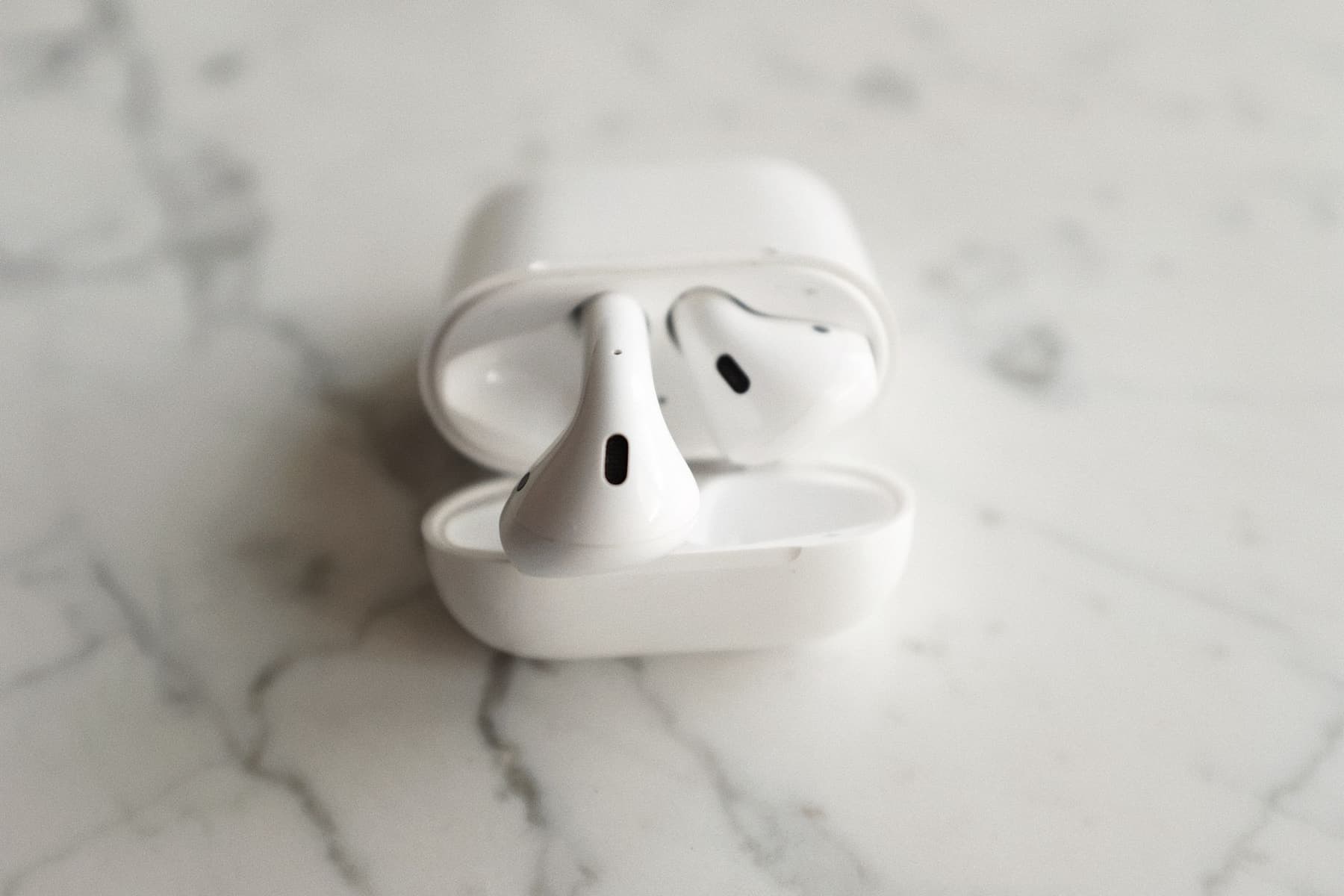
Buy the EarFun Air Pro 4 at $89.99 if sound quality or two-device switching decides it: aptX Lossless, LDAC, AAC and SBC on a Qualcomm QCC3091 chipset with Bluetooth 5.4. Buy the Soundcore P40i at $79.99 if durability or battery decides it: IPX5, 12 rated hours per charge and 60 hours with the case, against the EarFun’s 11 and 52.
Opposite designs
Two different ideas about what $80 should buy
EarFun spent the budget on the radio and the chipset. A QCC3091, Bluetooth 5.4 and a codec list that includes aptX Lossless and LDAC is a specification you normally pay flagship money for, and it is the single most unusual thing about this product.
Soundcore spent it on the things that break. IPX5, six microphones and a 60-hour case are answers to the questions a budget earbud actually fails on: it got wet, the call was unintelligible, or it was flat when you needed it. Neither approach is wrong; they just serve different buyers.
One of these is built so it sounds better. The other is built so it survives you.
The matrix
The published figures, side by side
| EarFun Air Pro 4 | Soundcore P40i | Sony WF-1000XM6 | |
|---|---|---|---|
| List price | $89.99 | $79.99 | Not quoted here |
| Battery, buds | 11 h | 12 h | up to 8 h per bud |
| Total with case | 52 h | 60 h | up to 24 h |
| Water resistance | Not published | IPX5 | IPX4 |
| Drivers | 10 mm composite dynamic | 11 mm composite | 8.4 mm |
| Chipset or processor | Qualcomm QCC3091 | Not published | HD NC Processor QN3e, dual |
| Bluetooth | 5.4 | Not published | 5.3 |
| Codecs | aptX Lossless, LDAC, AAC, SBC | Not published | SBC, AAC, LDAC, LC3 |
| Microphones | Not published | 6, with AI call algorithm | 8 |
| Canceling claim | QuietSmart 3.0, up to 50 dB (EarFun's own) | Adaptive ANC | No figure published |
| Case extras | USB-C and wireless charging | Doubles as a phone stand | Not published here |
| Two devices at once | Yes, stated by EarFun | Not published | Not published here |
Pick by use
Which one for which situation
Flights: the EarFun, narrowly
Not for the canceling claim, which is unverified, but because a long flight is the one place a high-bitrate codec has time to matter and where two-device switching between a phone and a tablet is genuinely useful. Neither of these has a wired fallback, so neither solves the seatback screen — see best wired earbuds for flights if that is the requirement.
Commuting and weather: the P40i
IPX5 and a 60-hour case. A commute means rain, a pocket and forgetting to charge, which is precisely the failure set Soundcore engineered against. It is the pick in the budget canceling earbuds roundup for that reason.
Calls: the P40i, on published evidence
Six microphones with an AI call algorithm against no published microphone count at all. That is a thin margin built on a weak proxy, but it is the only published evidence either way. If calls are the job, the earbud calls roundup judges on that axis alone.
Small ears: check before you buy either
Neither manufacturer publishes a nozzle diameter or an insertion depth, which is the specification that decides whether a sealed bud is wearable for you at all. Best earbuds for small ears covers what little data exists.
What to look for
Four checks before you buy a sub-$100 canceling earbud
- Treat a decibel canceling claim as marketing. No consumer canceling product carries a certified reduction rating. EarFun’s 50 dB is EarFun’s figure.
- Read the IP rating, or note its absence. This is the one durability number that is genuinely standardized, and only one of these two publishes it.
- Read the total case reserve, not the per-bud figure. 52 hours and 60 hours is the number you live with; 11 and 12 is the number you forget.
- Decide whether you will ever use a high-bitrate codec. If your phone and your streaming service do not both support it, the EarFun’s best argument does not apply to you.
In short
Key takeaways
- EarFun Air Pro 4 at $89.99: aptX Lossless, LDAC, AAC and SBC on a QCC3091 with Bluetooth 5.4.
- Soundcore P40i at $79.99: IPX5, 12 rated hours per charge and 60 hours with the case.
- EarFun publishes no water-resistance rating for the Air Pro 4; Soundcore publishes no codec list for the P40i.
- EarFun's up-to-50 dB canceling figure is the manufacturer's own, not a certified rating.
- The P40i wins on published microphones (6) and on total reserve; the EarFun wins on radio and codecs.
- Stepping up to the Sony WF-1000XM6 buys canceling and call processing, and costs you two thirds of the battery reserve.
At a glance
Quick picks
Scores are our editorial judgment from published specifications and cited third-party measurements, not our own testing. The rubric is published in full. Tap any row for the full write-up.
| # | Product | Best for | Score | Price |
|---|---|---|---|---|
| 1 | 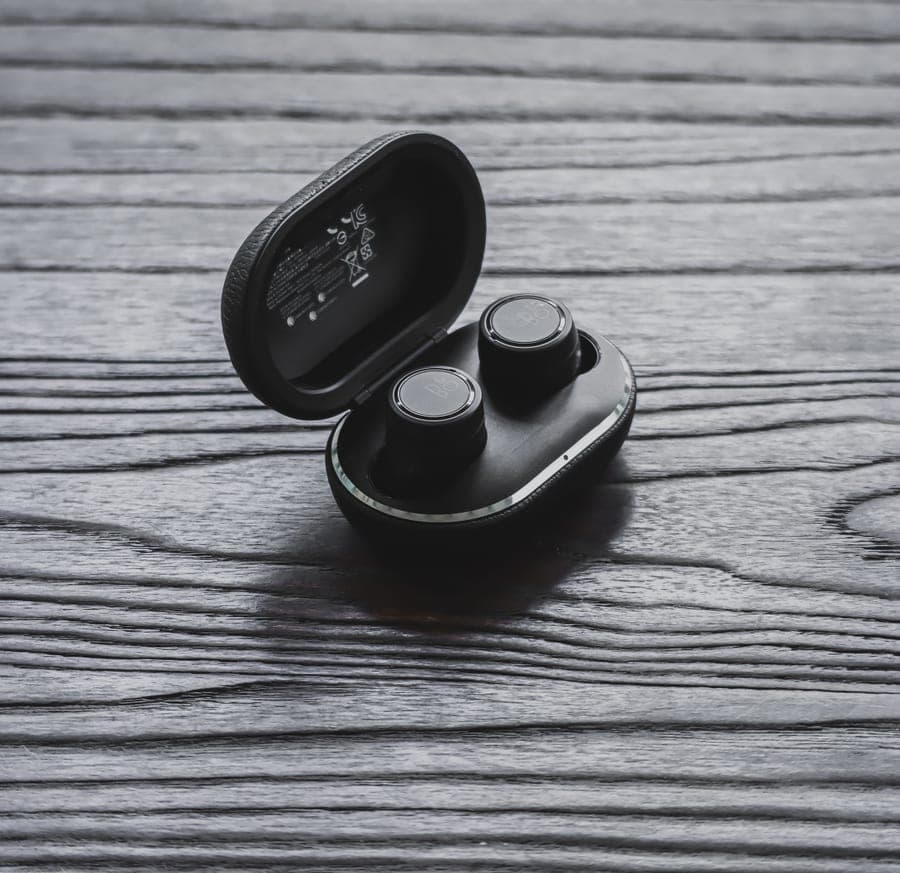 EarFun Air Pro 4Eleven rated hours per bud and 52 with the case, plus LDAC and aptX Lossless, for a small fraction of flagship money. It buys most of the quiet for a little of the price. | Best for sound and for two devices | 8.08.0 out of 10, our editorial score | |
| 2 | 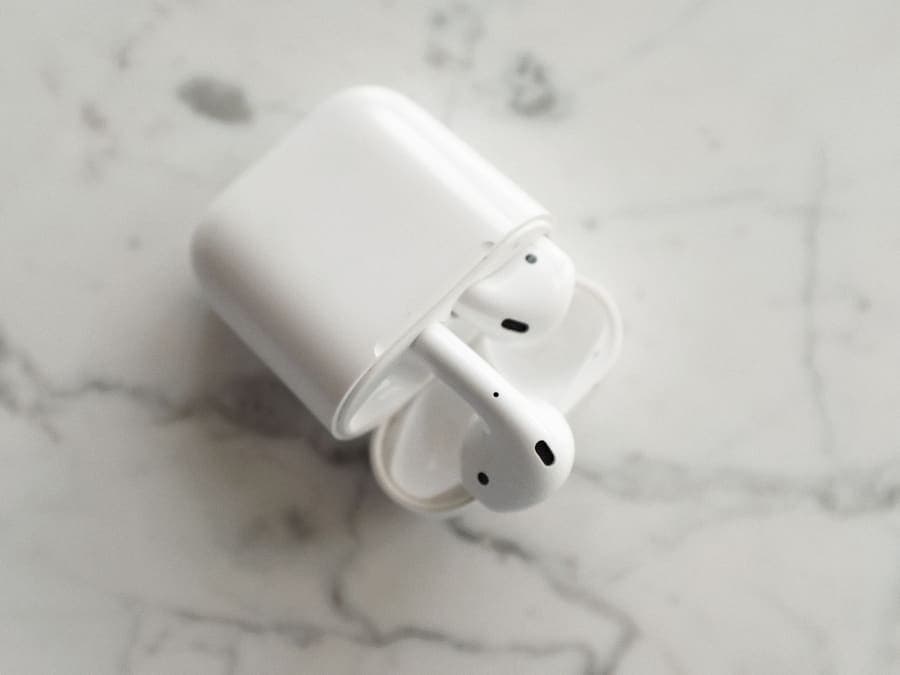 Soundcore P40iA $79.99 earbud rated at 12 hours a charge and 60 with the case, with adaptive canceling and a case that folds out into a phone stand. | Best for durability and endurance | 8.08.0 out of 10, our editorial score | |
| 3 | 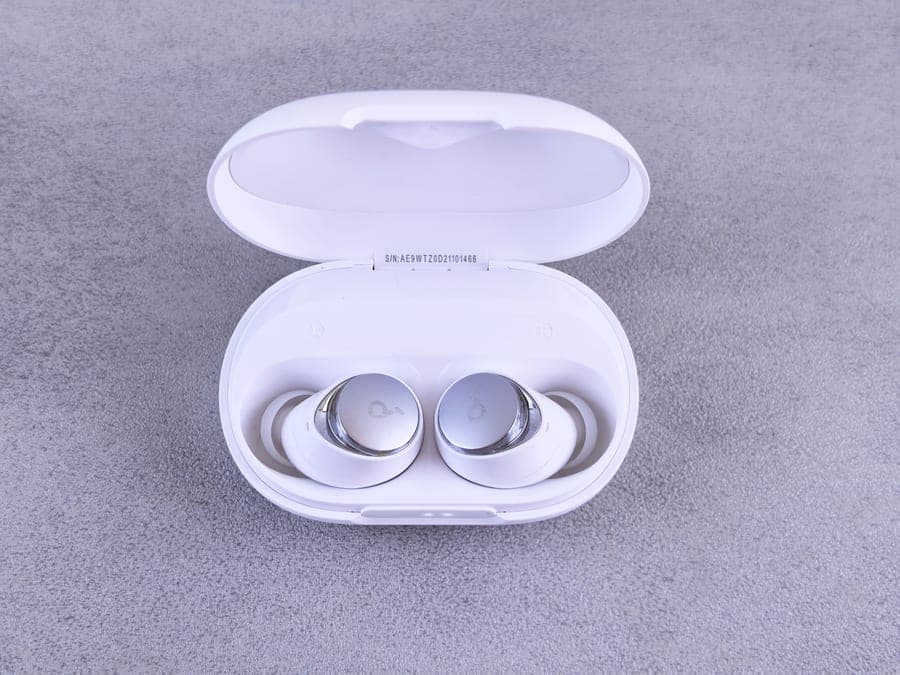 Sony WF-1000XM6Eight rated hours per bud and 24 with the case, at roughly 6.5 g each. The most sensible premium earbud for a flight, because you never have to plan around the battery. | What the extra money actually buys | 8.98.9 out of 10, our editorial score |
#ad Amazon links are affiliate links. No live price is shown anywhere on this site, so every button reads “Check price on Amazon”. How this is funded.
The picks in full
Every pick, in detail
1. Best for sound and for two devices
EarFun Air Pro 4
Eleven rated hours per bud and 52 with the case, plus LDAC and aptX Lossless, for a small fraction of flagship money. It buys most of the quiet for a little of the price.
Our editorial score: 8.0 / 10
#ad Live price not shown. How this is funded
$89.99 at the time of writing, and the reason to pay the extra ten dollars is the codec list: aptX Lossless, LDAC, AAC and SBC. That is the broadest set of any product on this site, premium models included, and it means the buds are not locked to one phone platform at high bitrate.
The hardware behind it is a Qualcomm QCC3091 chipset, Bluetooth 5.4 and 10 mm composite dynamic drivers. Battery is 11 rated hours in the buds and 52 with the case, with USB-C and wireless charging. EarFun states the buds connect to two devices simultaneously, allowing audio switching between a phone and a laptop.
EarFun rates its QuietSmart 3.0 canceling at up to 50 dB. That is the manufacturer’s own figure and not a certified rating, so read it as marketing with a number attached rather than as a measurement. EarFun does not publish a water-resistance rating for this model on the page we could verify.
What works on a plane
- Eleven rated hours per bud is longer than any premium earbud here
- 52 hours with the case means a two-week trip without a charger thought
- aptX Lossless and LDAC at this price is genuinely unusual
- Losing one on a plane is an annoyance rather than a disaster
What does not
- The 50 dB figure is EarFun's own rating, not an independent measurement, and the gap to Bose is clear
- Adaptive canceling is less steady than the flagships when cabin noise changes
- App polish and firmware support are a step behind the majors
How it scores against the five travel axes
2. Best for durability and endurance
Soundcore P40i
A $79.99 earbud rated at 12 hours a charge and 60 with the case, with adaptive canceling and a case that folds out into a phone stand.
Our editorial score: 8.0 / 10
#ad Live price not shown. How this is funded
Also sold direct by Soundcore — we earn nothing there, so check both.
$79.99 at the time of writing, 12 rated hours per charge and 60 hours with the case — the longest total reserve of the two, and the longest per-charge figure as well. On a long trip the case is a sealed power bank dedicated to one device, and 60 hours is most of a week.
IPX5 is the specification that actually separates these two. It is a published resistance rating for a low-pressure water jet, which is more than splash protection, and EarFun publishes nothing equivalent for the Air Pro 4. If the buds will be in a jacket pocket in the rain or on a bike, this is the one to buy.
Adaptive canceling, 11 mm composite drivers, six microphones with an AI call algorithm, and a case that doubles as a phone stand. Soundcore does not publish a codec list for it, so if high-bitrate streaming matters, the EarFun wins that argument outright.
What works on a plane
- 60 rated hours with the case, from an earbud listed at $79.99
- IPX5 means sweat and rain are not a worry on a commute
- The fold-out case stand is a genuinely useful thing on a tray table
- Adaptive canceling at a price where fixed canceling is the norm
What does not
- Canceling depth is a long way behind the premium earbuds, especially in the low band
- No LDAC, so Android listeners do not get the better codec
- The stock tip selection is narrow, and the seal is what decides earbud canceling
How it scores against the five travel axes
Published specifications
| Spec | Figure | Source |
|---|---|---|
| List price | $79.99 at the time of writing | Soundcore |
| Battery | 12 hours per charge, 60 hours with the case | Soundcore |
| Noise canceling | Adaptive ANC | Soundcore |
| Drivers | 11 mm composite | Soundcore |
| Water resistance | IPX5 | Soundcore |
| Microphones | 6, with an AI call algorithm | Soundcore |
| Case | Doubles as a phone stand | Soundcore |
3. What the extra money actually buys
Sony WF-1000XM6
Eight rated hours per bud and 24 with the case, at roughly 6.5 g each. The most sensible premium earbud for a flight, because you never have to plan around the battery.
Our editorial score: 8.9 / 10
#ad Live price not shown. How this is funded
Also sold direct by Sony — we earn nothing there, so check both.
Worth putting on the same table, because the honest question under $100 is not which of two budget buds is better — it is whether either is enough.
The Sony brings the HD Noise Canceling Processor QN3e, dual processors and eight microphones, approximately 6.5 g per bud with the medium tips, an 8.4 mm driver, Bluetooth 5.3, SBC, AAC, LDAC and LC3, and IPX4.
What it does not bring is battery. Up to 8 rated hours per bud and up to 24 with the case, which is a third of the P40i’s reserve. You are paying several times the price for canceling and call processing, and taking a meaningful battery cut to get them.
What works on a plane
- Eight rated hours per charge clears most short-haul flights without touching the case
- 24 hours total with the case is the strongest reserve in the premium earbud set
- LDAC means it is not tied to one phone platform
- Roughly 6.5 g per bud effectively disappears when you are trying to sleep on your side
What does not
- Canceling is excellent but the Bose still takes the low-frequency band
- No wired fallback at all, so a seatback screen needs a transmitter
- IPX4 is splash resistance, not weather resistance
How it scores against the five travel axes
Published specifications
| Spec | Figure | Source |
|---|---|---|
| Battery, earbuds | Up to 8 hours | Sony |
| Total with case | Up to 24 hours (16 from the case) | Sony |
| Weight | Approx. 6.5 g per bud with M tips | Sony |
| Driver | 8.4 mm | Sony |
| Bluetooth | 5.3 | Sony |
| Codecs | SBC, AAC, LDAC, LC3 | Sony |
| Water resistance | IPX4 | Sony |
| Processor | HD Noise Canceling Processor QN3e, dual processors, eight microphones | Sony |
How we decide
How these picks were chosen
We do not run a test lab and we do not claim to have flown with these units. Every verdict on this page is one of three things: a measurement published by somebody who does own a test rig and is credited by name, a manufacturer specification we quote and then interpret against what a long flight actually demands, or a plainly-labeled editorial judgment. The five axes we score on — cabin-noise reduction, battery on a long-haul, pack size, comfort past hour three, and wired fallback — are the ones that decide a travel purchase, and the weighting is published in full.
Questions
Common questions
Is the EarFun Air Pro 4 or the Soundcore P40i better?
The EarFun Air Pro 4 if sound quality or two-device switching matters, for its aptX Lossless and LDAC support on a Qualcomm QCC3091 chipset. The Soundcore P40i if durability or battery matters, for its IPX5 rating and 60 hours of reserve in the case.
Which has better battery life?
The Soundcore P40i, on both figures: 12 rated hours per charge against 11, and 60 hours with the case against 52.
Are these waterproof?
Neither is waterproof. The Soundcore P40i is rated IPX5, which covers a low-pressure water jet and therefore sustained rain. EarFun does not publish a water-resistance rating for the Air Pro 4 on the product page we could verify, so treat it as unrated.
Does the EarFun Air Pro 4 really cancel 50 dB of noise?
That is EarFun’s own published claim for QuietSmart 3.0, not an independent or certified measurement. No consumer canceling product carries a certified reduction rating the way a hearing protector carries an NRR, so the figure is not comparable to anything.
Is it worth spending more than $100 on canceling earbuds?
If canceling depth or call quality is the point, yes — the processing in a flagship is a real step up. If battery and durability are the point, no: the P40i’s 60-hour reserve and IPX5 rating beat most flagships outright.
Sources
Where these figures come from
- EarFun Air Pro 4 product page (list price $89.99, 11 h and 52 h, 10 mm drivers, QCC3091, Bluetooth 5.4, codecs, QuietSmart 3.0 50 dB claim, two devices)
- Soundcore P40i product page (list price $79.99, 12 h and 60 h, adaptive ANC, 11 mm drivers, IPX5, 6 microphones, case stand)
- Sony WF-1000XM6 specifications (battery, weight per bud, driver, codecs, IPX4, processor and microphones)
Read next
Related reading
- Best budget noise-cancelling earbuds
Both of these against the rest of the sub-$100 field.
- EarFun Air Pro 4 review
The full read on the codec-first side of this comparison.
- Best earbuds for calls
If how you sound is the deciding factor.
- AirPods Pro 3 vs Sony WF-1000XM6
The same argument at four times the price.