Buy the Apple AirPods Pro 3 if your phone is an iPhone: the same 8 rated hours and 24 with the case as the Sony, plus five silicone tip sizes from XXS to L and IP57 on both buds and case. Buy the Sony WF-1000XM6 on Android, for calls, or if you sleep on your side: SBC, AAC, LDAC and LC3, Advanced Voice Pickup with bone conduction sensors, and roughly 6.5 g per bud. Battery is a tie, so the platform you own decides it. Neither has any wired fallback for a seatback screen.
The matrix
Side by side on the published figures
| Apple AirPods Pro 3 | Sony WF-1000XM6 | |
|---|---|---|
| Battery, canceling on | up to 8 h | up to 8 h |
| Total with case | up to 24 h | up to 24 h (16 from the case) |
| Transparency / other mode | up to 10 h in Transparency with Hearing Aid | Not published separately |
| Quick charge | 5 min in the case for around 1 h | Not published |
| Weight per bud | Not published | approx. 6.5 g with M tips |
| Driver | Not published | 8.4 mm |
| Bluetooth | Not published as a version | 5.3 |
| Codecs | AAC and SBC — no LDAC | SBC, AAC, LDAC, LC3 |
| Call hardware | Dual beamforming mics plus an inward-facing mic; Voice Isolation | Advanced Voice Pickup: bone conduction sensors, beamforming mics, AI noise reduction |
| Processing | Not published as a mic count | QN3e, dual processors, eight microphones |
| Ear tips | Silicone, five sizes (XXS, XS, S, M, L) | Not published as a count |
| Water and dust | IP57, buds and case | IPX4, buds only |
| Wired fallback | None | None |
Apple publishes less raw engineering detail than Sony does and more about outcomes; Sony is the opposite. That asymmetry is itself informative, and it is why several cells read “Not published” on the Apple side. We would rather leave a gap than fill it with a figure we did not measure.
Battery is a tie, canceling is close, and the deciding specification is the phone already in your pocket.
The usual decider
Battery, for once, settles nothing
This site normally resolves earbud comparisons on runtime, because on a long-haul that is what you feel. Here both are rated at up to 8 hours with canceling on and up to 24 total with the case, so the axis is dead. Sony adds the detail that 16 of its 24 come from the case, which tells you the reserve is in the case rather than the bud; Apple quotes five minutes in the case for around an hour, which is the more useful number in a 40-minute connection.
Both expect a mid-flight top-up on a long leg, and both can do it while you eat, which is the quiet advantage earbuds hold over any over-ear. Headphone battery life for long-haul flights does the arithmetic against real routings if you want to check a specific itinerary.
The real decider
Platform, which is not a soft factor
On an iPhone, Apple wins on friction
Automatic switching across signed-in devices, Find My on an individual bud, Spatial Audio with head tracking, and Live Translation that works the moment you land somewhere you do not speak the language. None of this is audio quality, and all of it is what you notice on a travel day.
On Android, Sony wins outright
LDAC is the headline, and LC3 matters for the next generation of phones. But the simpler point is that the Apple’s best features are unavailable to you, so you would be paying a premium for an ordinary earbud. Best noise-canceling earbuds for Android covers the wider field if you are on that side of the fence.
Fit and durability
Five tip sizes against 6.5 grams, and IP57 against IPX4
Tip fit is not a comfort footnote, it is the largest single variable in how much canceling you experience. A bud that does not seal leaks the low frequencies the canceling is there to remove, and it also puts the microphone array out of its designed position. Apple’s five silicone sizes from XXS to L is the widest published range in the class, and it is the reason the Apple is more likely to work properly first time for an unusual ear.
Sony answers with mass instead: roughly 6.5 g a bud is so light that a tip has very little to hold up, which is its own route to all-day comfort and a clear win if you sleep on one side. Best earbuds for sleeping on a plane goes into that case specifically, and best earbuds for small ears helps you work out which fit family you are in.
Durability is the least discussed and most practical gap between these two. IP57 covers dust and immersion-grade water resistance on both the buds and the case; IPX4 covers splashes on the buds only, with the Sony case unrated. If your travel involves rain, humidity or a gym bag, that is a real difference rather than a spec-sheet one.
Calls
Where Sony has the clearer hardware argument
Both publish beamforming microphones. Only Sony publishes a non-acoustic voice sensor — bone conduction pickup that registers your jaw and skull vibrating — which gives the processor a way to tell your voice from a room that merely sounds like a voice. Apple’s Voice Isolation is a strong software stage and the dual beamforming mics plus an inward-facing mic per bud are a sound design, but the Sony has one more category of information to work with.
If calls are most of why you are buying, the best earbuds for calls ranks both of these against four others on microphone layout alone, and explains why canceling depth is the wrong thing to shop on for that job.
What neither does
The gap they share
Neither has a wired option of any kind. On a plane, that means the seatback screen is a separate purchase whichever you choose: a Bluetooth transmitter in the airline jack, which is one more small object to charge and not lose. Airplane headphone jack adapters covers what to look for, and it is the one area where a cheap over-ear with a 3.5 mm socket beats both of these outright.
Neither publishes a decibel-reduction figure we can compare, either, so we are not going to present one. What is consistent across published measurements is the ranking at the very bottom of the frequency range, and both of these sit behind the Bose there rather than ahead of it.
Verdict by scenario
Which one, for which trip
| Scenario | Verdict | Why |
|---|---|---|
| Your phone is an iPhone | AirPods Pro 3 | Switching, Find My and Live Translation, at the same battery rating. |
| Your phone is Android | Sony WF-1000XM6 | LDAC and LC3; the Apple's best features are unavailable to you. |
| Calls are the main use | Sony WF-1000XM6 | Bone conduction voice sensing on top of beamforming microphones. |
| You have never found a tip that fits | AirPods Pro 3 | Five silicone sizes from XXS to L is the widest published range. |
| You sleep on your side | Sony WF-1000XM6 | Roughly 6.5 g a bud sits flat against a window or pillow. |
| Rain, humidity or a gym bag | AirPods Pro 3 | IP57 on buds and case, against IPX4 on the buds only. |
| Absolute quiet is the priority | Neither — Bose QC Ultra Earbuds | Deepest low-frequency canceling in an earbud, at a real battery cost. |
| You need in-flight entertainment audio | Neither alone | No wired fallback on either. Budget for a transmitter. |
Context
How this fits the rest of the comparison set
This is the third leg of the premium earbud triangle, and the other two are already settled here. AirPods Pro 3 vs Bose QuietComfort Ultra Earbuds is the Apple against the quietest option, and Bose QC Ultra Earbuds vs Sony WF-1000XM6 is the one where battery does decide it. Read together, the three pages agree on an order that depends entirely on which axis you care about, which is the honest answer rather than a single winner.
If you want the long-form case for either product on its own, the AirPods Pro 3 review and the Sony WF-1000XM6 review judge each against all five of this site’s travel criteria. And if you are still deciding between earbuds and a full-size headphone for flying, earbuds vs over-ear for flying is the prior question.
- Do not choose on canceling claims. Apple’s 2x figure is measured against its own previous model; Sony publishes no comparable number.
- Do not choose on codecs if you own an iPhone. iOS does not use LDAC, so the Sony’s codec advantage is inert on an iPhone.
- Do choose on water and dust rating if your trips are wet. IP57 against IPX4 is the biggest undisputed gap on the whole page.
In short
Key takeaways
- Battery is a tie: both are rated up to 8 hours with canceling on and up to 24 with the case.
- AirPods Pro 3 wins on an iPhone, on tip range (five silicone sizes, XXS to L) and on IP57 covering buds and case.
- Sony WF-1000XM6 wins on Android with SBC, AAC, LDAC and LC3, and on calls with bone conduction voice sensing.
- Roughly 6.5 g a bud makes the Sony the better choice for sleeping on your side.
- IPX4 on the Sony buds, with an unrated case, is the clearest durability gap between them.
- Neither has a wired fallback, so a seatback screen needs a Bluetooth transmitter either way.
- If absolute quiet is the goal, the Bose QuietComfort Ultra Earbuds beats both — at 6 rated hours.
At a glance
Quick picks
Scores are our editorial judgment from published specifications and cited third-party measurements, not our own testing. The rubric is published in full. Tap any row for the full write-up.
| # | Product | Best for | Score | Price |
|---|---|---|---|---|
| 1 | 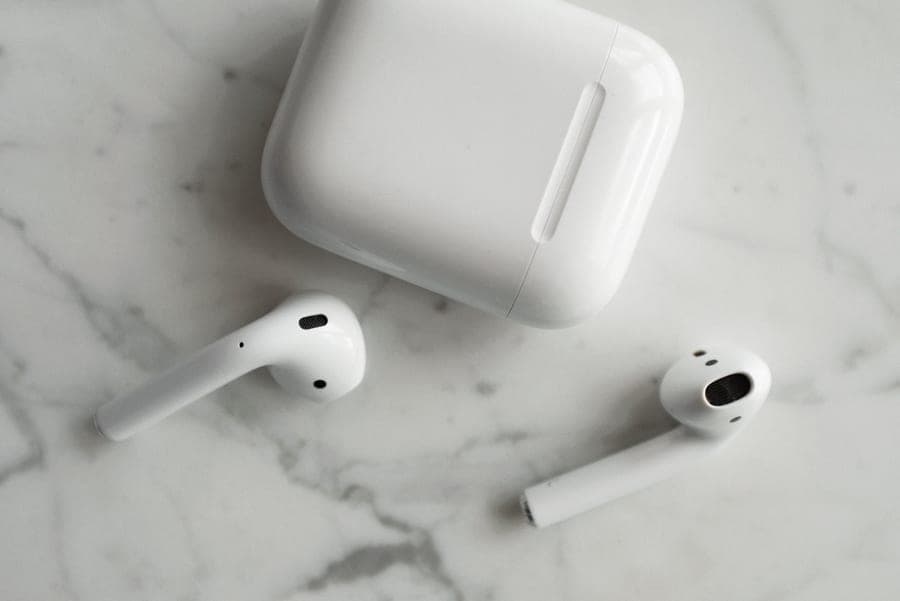 Apple AirPods Pro 3Eight rated hours with canceling on, foam tips in five sizes and an IP57 rating. If your phone is an iPhone this is the least friction of anything here. | Better if your phone is an iPhone | 8.88.8 out of 10, our editorial score | |
| 2 | 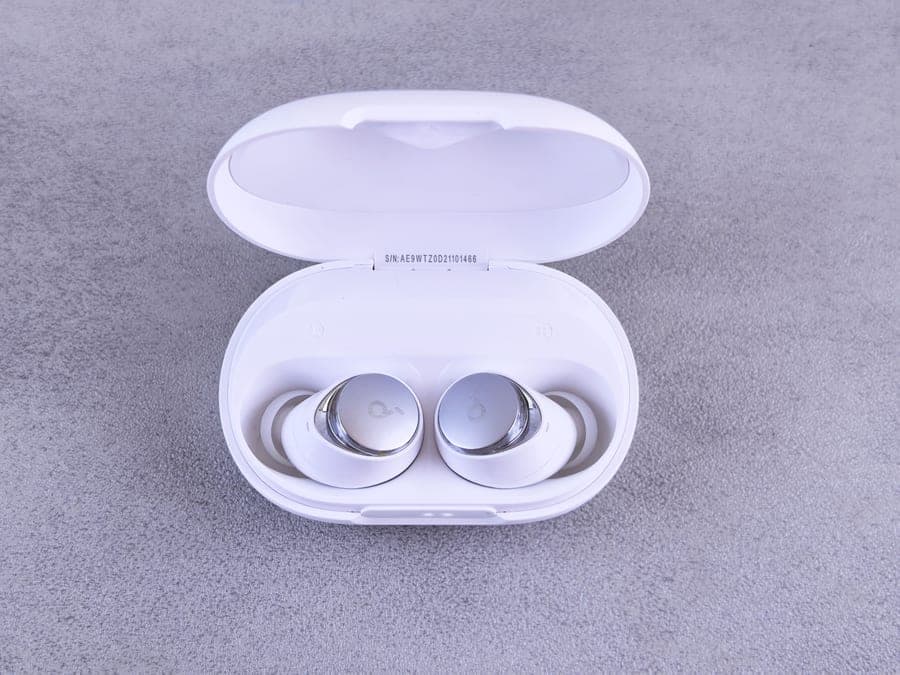 Sony WF-1000XM6Eight rated hours per bud and 24 with the case, at roughly 6.5 g each. The most sensible premium earbud for a flight, because you never have to plan around the battery. | Better on Android, and better for calls | 8.98.9 out of 10, our editorial score | |
| 3 | 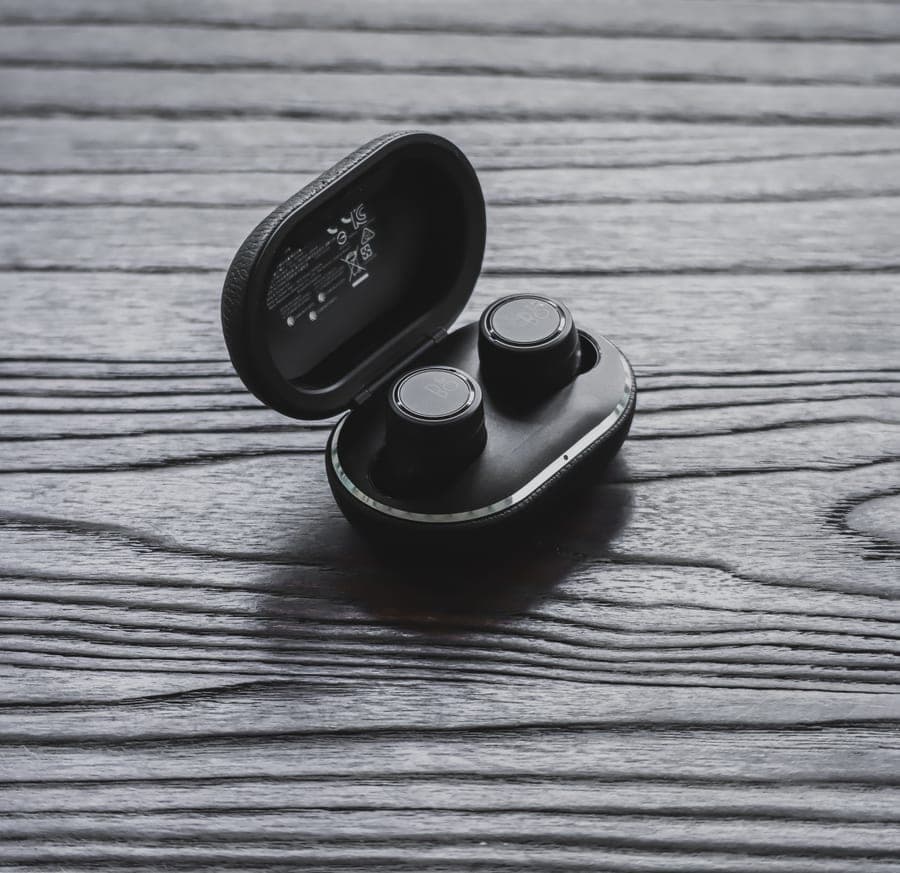 Bose QuietComfort Ultra Earbuds (2nd Gen)The quietest earbuds you can put in a pocket, with the shortest single-charge runtime of the premium set: six rated hours, four with Immersive Audio on. | If canceling depth outranks everything else | 8.48.4 out of 10, our editorial score |
#ad Amazon links are affiliate links. No live price is shown anywhere on this site, so every button reads “Check price on Amazon”. How this is funded.
The picks in full
Every pick, in detail
1. Better if your phone is an iPhone
Apple AirPods Pro 3
Eight rated hours with canceling on, foam tips in five sizes and an IP57 rating. If your phone is an iPhone this is the least friction of anything here.
Our editorial score: 8.8 / 10
#ad Live price not shown. How this is funded
Also sold direct by Apple — we earn nothing there, so check both.
The case for the Apple is not the audio, it is the absence of friction. Moving a film from an iPad to an iPhone mid-flight happens without opening a Bluetooth menu, a bud lost down the side of a seat is findable, and the whole thing behaves like part of the phone rather than an accessory attached to it.
Two published specs go further than Sony’s. Silicone tips in five sizes — XXS, XS, S, M and L — is the widest fit range in the premium earbud class, and tip fit is the single biggest determinant of how much canceling you actually get. IP57 on both the buds and the case is the toughest rating of the two by a clear margin: dust as well as water, and the case covered too.
Battery is up to 8 hours of listening with Active Noise Cancellation on a charge, up to 24 total with the case, and five minutes in the case gives around an hour. Apple also publishes up to 10 hours in Transparency using the Hearing Aid feature.
Honest cons: on Android you lose most of what you are paying for. There is no LDAC and no wired fallback. And Apple’s headline canceling number — up to twice the noise removed versus AirPods Pro 2 — is a manufacturer claim measured against its own predecessor rather than an independent result.
What works on a plane
- Eight rated hours and 24 with the case, matching the best of the premium earbuds
- Foam tips in five sizes solve the fit problem that ruins canceling on most buds
- IP57 on both buds and case is the toughest rating in this group
- Live Translation and heart-rate sensing are genuinely useful abroad, not spec-sheet filler
What does not
- Apple's 2x noise figure is a manufacturer claim measured against its own predecessor, not an independent measurement
- The best features need an iPhone; on Android it is a good but ordinary earbud
- No wired option, so in-flight entertainment needs a transmitter
How it scores against the five travel axes
Published specifications
| Spec | Figure | Source |
|---|---|---|
| Battery, ANC on | 8 hours listening | Apple tech specs |
| Battery, Transparency | Up to 10 hours | Apple tech specs |
| Total with case | Up to 24 hours with ANC | Apple tech specs |
| Quick charge | 5 minutes in the case gives around 1 hour | Apple tech specs |
| Ear tips | Foam tips in five sizes | Apple |
| Water resistance | IP57, buds and case | Apple |
| Apple's ANC claim | Removes up to 2x more noise than AirPods Pro 2 | Apple newsroom |
2. Better on Android, and better for calls
Sony WF-1000XM6
Eight rated hours per bud and 24 with the case, at roughly 6.5 g each. The most sensible premium earbud for a flight, because you never have to plan around the battery.
Our editorial score: 8.9 / 10
#ad Live price not shown. How this is funded
Also sold direct by Sony — we earn nothing there, so check both.
Sony matches the Apple on the headline numbers — up to 8 rated hours a bud with canceling on, up to 24 total with the case, 16 of which come from the case itself — and then wins the things Apple deliberately does not do. SBC, AAC, LDAC and LC3 means it is not tied to one phone platform, and LDAC is the codec an Android buyer actually wants.
It is also the better call earbud of the two, and not marginally. Sony pairs beamforming microphones with bone conduction sensors that detect your jaw vibrating, under the name Advanced Voice Pickup, giving the processor a signal that exists only when you are speaking. The QN3e processor runs dual processors and eight microphones.
Roughly 6.5 g per bud with the medium tips fitted, an 8.4 mm driver and Bluetooth 5.3. That weight is the reason it is the better of the two for sleeping on one side: there is almost nothing pressed between your ear and the window.
Honest cons: IPX4 is splash resistance only and the case is not rated, which is a genuine step down from IP57. Sony does not publish a tip-size count to match Apple’s five. And like the Apple, there is no wired option at all.
What works on a plane
- Eight rated hours per charge clears most short-haul flights without touching the case
- 24 hours total with the case is the strongest reserve in the premium earbud set
- LDAC means it is not tied to one phone platform
- Roughly 6.5 g per bud effectively disappears when you are trying to sleep on your side
What does not
- Canceling is excellent but the Bose still takes the low-frequency band
- No wired fallback at all, so a seatback screen needs a transmitter
- IPX4 is splash resistance, not weather resistance
How it scores against the five travel axes
Published specifications
| Spec | Figure | Source |
|---|---|---|
| Battery, earbuds | Up to 8 hours | Sony |
| Total with case | Up to 24 hours (16 from the case) | Sony |
| Weight | Approx. 6.5 g per bud with M tips | Sony |
| Driver | 8.4 mm | Sony |
| Bluetooth | 5.3 | Sony |
| Codecs | SBC, AAC, LDAC, LC3 | Sony |
| Water resistance | IPX4 | Sony |
| Processor | HD Noise Canceling Processor QN3e, dual processors, eight microphones | Sony |
3. If canceling depth outranks everything else
Bose QuietComfort Ultra Earbuds (2nd Gen)
The quietest earbuds you can put in a pocket, with the shortest single-charge runtime of the premium set: six rated hours, four with Immersive Audio on.
Our editorial score: 8.4 / 10
#ad Live price not shown. How this is funded
Also sold direct by Bose — we earn nothing there, so check both.
Worth naming because it resolves this comparison for one specific buyer. If the only thing you want is the quietest earbud, neither of the two above is it — Bose takes the deepest part of the low-frequency band, which is exactly where cabin drone sits.
It also uses a shallow fit braced by three stabilizer band sizes rather than wedging into the canal, which for some ears is far more tolerable over five hours than either of the in-canal designs here.
Honest cons: the battery is the weakest of the three by a wide margin — up to 6 rated hours with Immersive Audio off, 4 with it on, up to 18 total with the case — and Bose publishes no microphone count or call-processing feature, so it is the least documented of the three for calls. IPX4, and no wired fallback.
What works on a plane
- Canceling that genuinely rivals a full-size over-ear, in something pocketable
- The shallow fit is far more tolerable than deep-insertion buds on a long flight
- Wireless case charging is one fewer cable in the bag
What does not
- Six rated hours means a case top-up mid-flight on any long-haul
- Immersive Audio cuts that to four, so on a plane you will mostly leave it off
- 18 hours total with the case is the weakest reserve in the premium earbud set
How it scores against the five travel axes
Published specifications
| Spec | Figure | Source |
|---|---|---|
| Battery, Immersive off | Up to 6 hours | Bose support |
| Battery, Immersive on | Up to 4 hours | Bose support |
| Total with case | Up to 18 hours | Bose support |
| Case charging | USB-C and wireless | Bose support |
| Water resistance | IPX4 | Bose support |
| Fit | Three stabilizer band sizes, shallow insertion | Bose |
Read the full Bose QuietComfort Ultra Earbuds (2nd Gen) review
How we decide
How these picks were chosen
We do not run a test lab and we do not claim to have flown with these units. Every verdict on this page is one of three things: a measurement published by somebody who does own a test rig and is credited by name, a manufacturer specification we quote and then interpret against what a long flight actually demands, or a plainly-labeled editorial judgment. The five axes we score on — cabin-noise reduction, battery on a long-haul, pack size, comfort past hour three, and wired fallback — are the ones that decide a travel purchase, and the weighting is published in full.
Questions
Common questions
Which is better, AirPods Pro 3 or Sony WF-1000XM6?
Whichever matches your phone. Both are rated at up to 8 hours with canceling on and up to 24 with the case, so the usual decider is a tie. On an iPhone the Apple wins on switching, Find My and Live Translation; on Android the Sony wins on LDAC and LC3. For calls, the Sony has the better published hardware either way.
Do the AirPods Pro 3 work properly with Android?
They pair and play, but you lose automatic device switching, Find My on an individual bud, Live Translation and the rest of the ecosystem features — which is most of what the price buys. There is no LDAC either. On Android the Sony is the better purchase.
Which has better noise canceling?
Neither publishes a decibel-reduction figure we can compare, so we will not give you one. Both sit behind the Bose QuietComfort Ultra Earbuds in the deepest part of the low frequency band, which is where cabin drone lives. In practice tip fit changes your result more than the difference between these two.
Which is more comfortable for a long flight?
It depends which problem you have. If no tip has ever sealed properly for you, the Apple’s five silicone sizes from XXS to L is the better bet. If the issue is pressure in the canal over hours, the Sony’s roughly 6.5 g a bud gives a tip very little to hold up and sits flatter if you lean on a window.
Which is better for calls?
The Sony. Apple publishes dual beamforming microphones plus an inward-facing microphone and Voice Isolation; Sony publishes the same beamforming approach plus bone conduction sensors that detect your jaw vibrating, which is a signal that only exists when you are actually speaking. That extra category of information is the difference.
Can either one plug into an airplane seatback screen?
No. Neither has any wired option, so the airline jack needs a Bluetooth transmitter plugged into it. It is a small extra purchase that then works with any Bluetooth headphone you own afterwards.
Sources
Where these figures come from
- Apple AirPods Pro 3 tech specs (battery, Transparency with Hearing Aid, five silicone tip sizes, IP57, dual beamforming and inward-facing microphones, Voice Isolation)
- Apple newsroom, AirPods Pro 3 introduction (the up-to-2x noise removal claim against AirPods Pro 2)
- Sony press release, WF-1000XM6 launch (Advanced Voice Pickup: bone conduction sensors, beamforming microphones, AI noise reduction; battery)
- Bose QuietComfort Ultra Earbuds (2nd Gen) specifications (battery with Immersive Audio on and off, case charging, IPX4)
Read next
Related reading
- Best earbuds for calls
Both of these ranked on microphone layout, against four others.
- Bose QC Ultra Earbuds vs Sony WF-1000XM6
The leg of the triangle where battery does decide it.
- AirPods Pro 3 vs Bose QuietComfort Ultra Earbuds
The Apple against the quietest earbud on sale.
- Sony WF-1000XM6 review
All five travel criteria, scored in full.
- Best noise-canceling earbuds for flights
Where both sit against the wider field.