For business travel the Bose QuietComfort Ultra Headphones (2nd Gen) is the best pick: up to 30 rated hours with canceling on, 16-bit lossless audio over USB-C for a locked-down company laptop, and a 2.5 mm-to-3.5 mm cable in the box for the seatback screen. The JBL Tour One M3 is the choice if you refuse to pack a charger, at up to 70 rated hours with a Smart Tx transmitter, and the Sony WF-1000XM6 is the answer when bag space is the real constraint.
Different trip
What a work trip asks for that a holiday does not
You take calls where you cannot pick the room
A gate, a taxi, a hotel corridor, a conference breakout. The thing that decides a call in those places is not how much noise you hear — it is how much noise the other person hears, which is a microphone array problem and almost nothing to do with canceling. Mic counts and processor names are the published proxies, and the Sony’s eight microphones are the strongest figure in this group. If calls are the whole job, read the office-calls roundup next, which judges on that axis alone.
Two devices, and they are not both yours
A personal phone and a company laptop is the standard business-travel setup, and the company laptop is the one with a managed Bluetooth policy and a conferencing client that owns the audio device. A headphone with a working wired or USB-C path is worth more here than a headphone with a better codec, because the wired path is the one that cannot be administered away.
No charger, or no outlet
Nobody charges a headphone in a middle seat on a regional jet. Rated battery with canceling on is the number to read, and it should cover your whole routing plus the return, because that is how travel actually goes. 70 hours and 20 hours are different products, not different grades.
Carry-on only
Folded footprint and case bulk. An over-ear that folds costs you perhaps a third of the space of one that does not, and a case that does not fold is why people stop taking the headphone they paid most for.
On a holiday you optimize for the flight. On a work trip you optimize for the fourteen hours either side of it.
The matrix
The five picks on the business-travel figures
| Bose QC Ultra | JBL Tour One M3 | Sony WF-1000XM6 | AirPods Pro 3 | Space One | |
|---|---|---|---|---|---|
| Battery, canceling on | up to 30 h | up to 40 h | up to 8 h per bud | 8 h | up to 40 h |
| Battery, canceling off | up to 45 h | up to 70 h (Bluetooth) | - | up to 10 h transparency | up to 55 h |
| Total with case | - | - | up to 24 h | up to 24 h | - |
| Quick charge | - | 5 min = 5 h | - | 5 min = approx. 1 h | 5 min = 4 h |
| Wired or USB-C audio | USB-C 16-bit lossless, 2.5-3.5 mm cable | USB-C-to-3.5 mm plus Smart Tx | None | None | Aux cable |
| Weight | approx. 264 g as reported | 278 g | approx. 6.5 g per bud | Not published | 265 g |
| Water resistance | Not published | Not published | IPX4 | IP57 | Not published |
| List price | Not quoted here | Not quoted here | Not quoted here | Not quoted here | $99.99 |
What to look for
Five checks before you expense one
- A wired or USB-C audio path that works without an app. This is the business-travel spec. It covers a seatback screen, a managed laptop and a dead battery in one feature.
- Rated battery with canceling on, across the whole itinerary. Not the headline figure, which is usually the canceling-off one.
- Published microphone detail. How you sound is the half of a call you cannot hear. Mic counts and named processors are the only published proxies.
- Folded size, with the case. Measure it against the personal item you actually travel with, not the one in the airline diagram.
- Two-device switching, if you carry two devices. Most flagships support it. Confirm it for your specific pair before you rely on it mid-trip.
Adjacent pages
Where to go instead, depending on the trip
If the trip is one very long leg rather than four short ones, best headphones for long-haul flights weighs battery and comfort differently. If the work is mostly at a desk in a hotel room or at home between trips, the right page is best noise-cancelling headphones for remote work. And if you want the general field without the work-trip framing, start at best travel headphones.
One more practical note that catches business travelers in particular: a headphone with a rechargeable battery is a lithium device, and the rules on where it rides are not optional. Can you bring headphones through TSA covers that, including the part about checked bags that trips people up at the gate.
In short
Key takeaways
- Bose QuietComfort Ultra: up to 30 rated hours with canceling on, plus 16-bit lossless USB-C audio for a managed laptop.
- JBL Tour One M3: up to 70 rated hours over Bluetooth and a Smart Tx transmitter for any 3.5 mm socket.
- Sony WF-1000XM6: eight microphones and up to 24 hours with the case, when bag space is the constraint.
- AirPods Pro 3: IP57 on buds and case, and the Apple handoff that removes friction between calls.
- Soundcore Space One at $99.99: up to 55 rated hours in normal mode, and no fear of losing it.
- The business-travel spec nobody lists is a wired or USB-C path that works without an app.
At a glance
Quick picks
Scores are our editorial judgment from published specifications and cited third-party measurements, not our own testing. The rubric is published in full. Tap any row for the full write-up.
| # | Product | Best for | Score | Price |
|---|---|---|---|---|
| 1 | 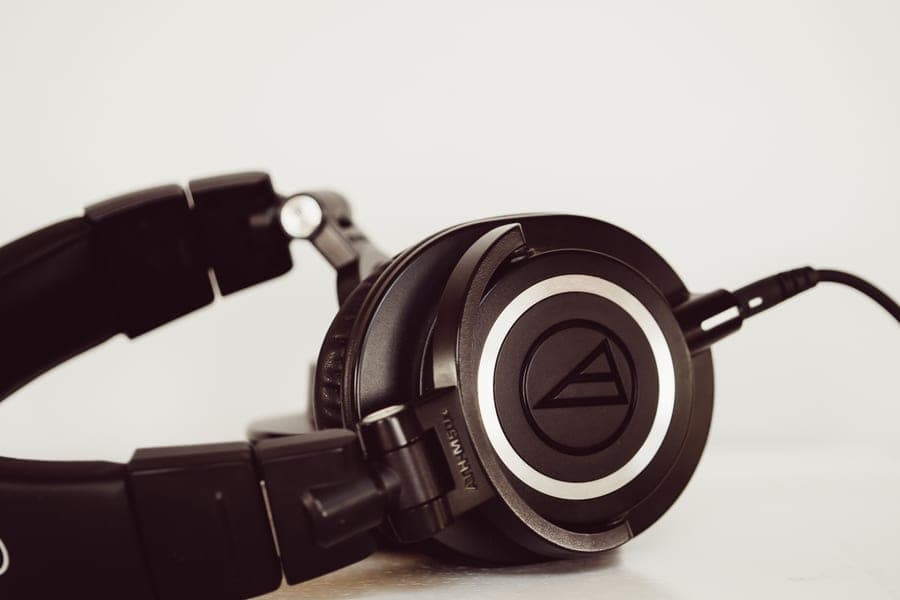 Bose QuietComfort Ultra Headphones (2nd Gen)The quietest cabin of anything here, and the only over-ear in this group whose box already contains the audio cable a seatback screen needs. | Best overall for a work trip | 9.09.0 out of 10, our editorial score | |
| 2 |  JBL Tour One M3The only headphone here that ships with the answer to the airline-jack problem in the box: the Smart Tx transmitter plugs into the seat and sends the movie to your headphones over Bluetooth. | Best if you never want to pack a charger | 8.78.7 out of 10, our editorial score | |
| 3 | 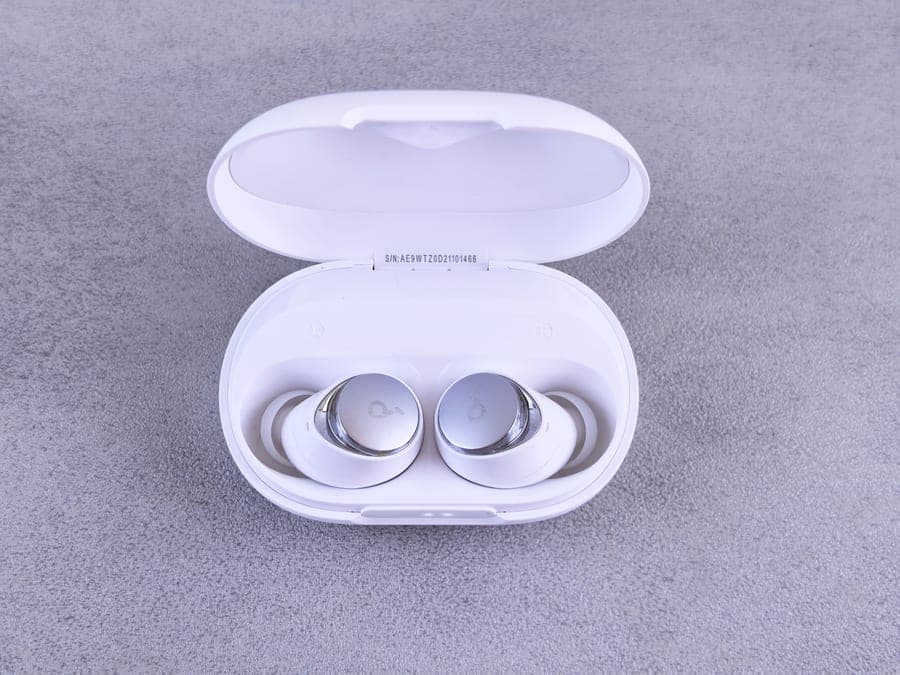 Sony WF-1000XM6Eight rated hours per bud and 24 with the case, at roughly 6.5 g each. The most sensible premium earbud for a flight, because you never have to plan around the battery. | Best if the carry-on is already full | 8.98.9 out of 10, our editorial score | |
| 4 | 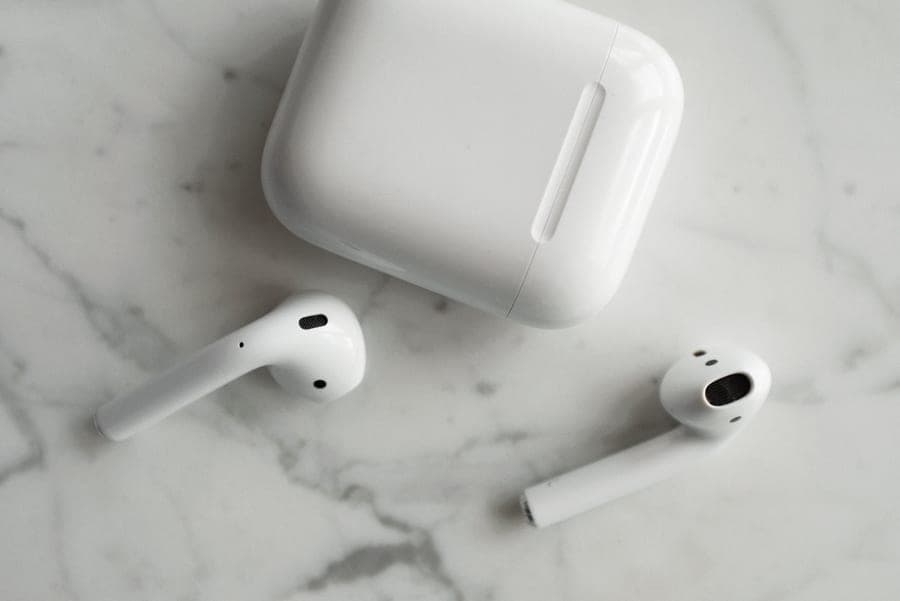 Apple AirPods Pro 3Eight rated hours with canceling on, foam tips in five sizes and an IP57 rating. If your phone is an iPhone this is the least friction of anything here. | Best for an iPhone-and-Mac traveler | 8.88.8 out of 10, our editorial score | |
| 5 | 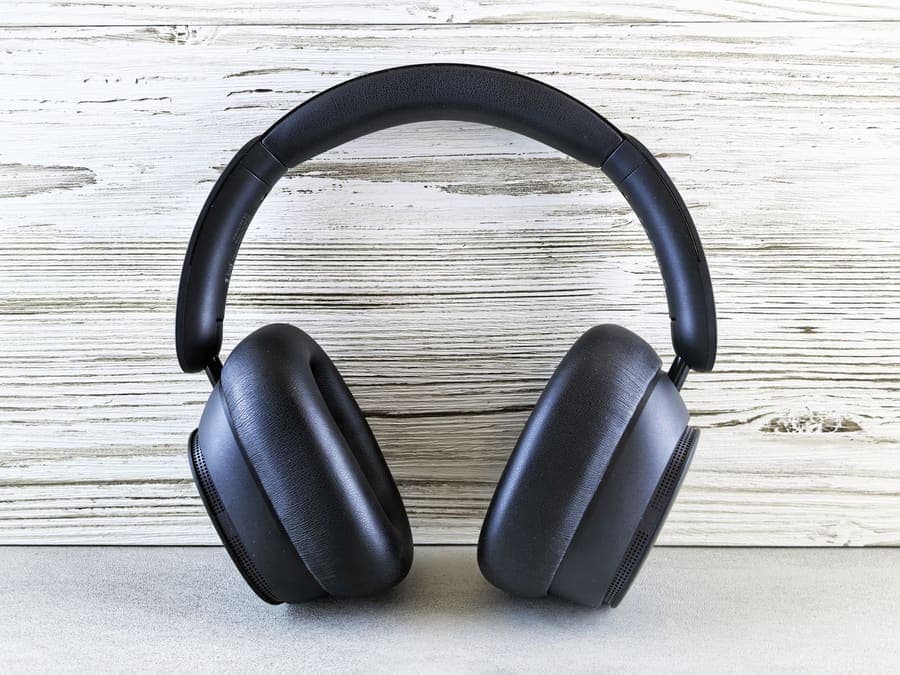 Soundcore Space OneA $99.99 list price that buys 40 rated hours with canceling on, LDAC, 40 mm drivers, a folding hinge and an aux cable. The specification sheet at this level is genuinely hard to argue with. | Best if the company will not expense it | 8.58.5 out of 10, our editorial score |
#ad Amazon links are affiliate links. No live price is shown anywhere on this site, so every button reads “Check price on Amazon”. How this is funded.
The picks in full
Every pick, in detail
1. Best overall for a work trip
Bose QuietComfort Ultra Headphones (2nd Gen)
The quietest cabin of anything here, and the only over-ear in this group whose box already contains the audio cable a seatback screen needs.
Our editorial score: 9.0 / 10
#ad Live price not shown. How this is funded
Also sold direct by Bose — we earn nothing there, so check both.
The pick, because it answers the two business-travel problems nobody else answers together. Up to 30 rated hours with canceling on and 45 with it off, and a 16-bit, 44.1 or 48 kHz lossless audio input over USB-C — which means it works as a wired headset on a company laptop whose IT policy has quietly disabled Bluetooth.
The box also contains a hard case, a USB-C cable and a 2.5 mm-to-3.5 mm audio cable, so the seatback screen is covered without buying anything. The earcups rotate flat into the case, which is the difference between taking it to a two-night meeting and leaving it at home.
Two honest limits. Immersive Audio drops rated battery to 23 hours, so leave it off on a long routing. And Bose does not publish a weight in the specifications we could verify; approximately 264 g is the figure widely reported, which is why it is labeled as reported rather than quoted as a spec.
What works on a plane
- The best low-frequency canceling in this group, which is exactly the band engine drone lives in
- The 2.5 mm-to-3.5 mm cable is in the box, so a seatback screen needs nothing extra
- Compact hard case for a full-size over-ear
- Up to 45 hours with canceling off, if you only want isolation on a train
What does not
- Immersive Audio costs you a third of the battery, dropping to 23 rated hours
- Heavier than the Sony by roughly 10 g, and clamp is firmer out of the box
- The hard case is compact but still rigid, so it will not squash into a full bag
How it scores against the five travel axes
Published specifications
| Spec | Figure | Source |
|---|---|---|
| Battery, ANC on | Up to 30 hours | Bose |
| Battery, ANC off | Up to 45 hours | Bose |
| Battery, Immersive Audio on | Up to 23 hours | Bose |
| Weight | Approx. 264 g (9.3 oz) as reported | Published reviews |
| USB-C audio | 16-bit, 44.1 or 48 kHz lossless input | Bose support |
| In the box | Hard case, USB-C cable, 2.5 mm-to-3.5 mm audio cable | Bose |
| Folds | Earcups rotate flat into a compact hard case | Bose |
Read the full Bose QuietComfort Ultra Headphones (2nd Gen) review
2. Best if you never want to pack a charger
JBL Tour One M3
The only headphone here that ships with the answer to the airline-jack problem in the box: the Smart Tx transmitter plugs into the seat and sends the movie to your headphones over Bluetooth.
Our editorial score: 8.7 / 10
#ad Live price not shown. How this is funded
Also sold direct by JBL — we earn nothing there, so check both.
Up to 70 rated hours over Bluetooth and up to 40 with canceling on, from an 850 mAh cell that fills in roughly two hours, with five minutes of charge buying about five hours. Across a Monday-out, Thursday-back itinerary that is the spec that removes a whole category of worry.
The second argument is Smart Tx: a transmitter that streams from non-Bluetooth sources, including in-flight entertainment. A business traveler meets more legacy 3.5 mm sockets than anyone — seatback screens, hotel gym televisions, conference-room AV — and this is the one product here that solves all of them with what is already in the box, alongside USB-C-to-3.5 mm, USB-C-to-USB-C and a USB-C-to-USB-A adapter.
278 g. The weak spot is that JBL publishes less about canceling depth than Bose does, so if the deciding factor is the last few decibels in a cabin, the Bose above is the safer buy.
What works on a plane
- The Smart Tx transmitter solves in-flight entertainment without a separate purchase
- Up to 40 rated hours with canceling on, comfortably over a long-haul plus layover
- Five minutes of charge buys five hours
- Both a 3.5 mm and a USB-C wired path in the box
What does not
- The Smart Tx is one more small object to lose, and it needs its own charge
- 278 g sits between the Sony and the Sennheiser without beating either at their own game
- Noise canceling is very good rather than class-leading
How it scores against the five travel axes
Published specifications
| Spec | Figure | Source |
|---|---|---|
| Battery, Bluetooth | Up to 70 hours | JBL |
| Battery, ANC on | Up to 40 hours | JBL |
| Quick charge | 5 minutes gives 5 hours | JBL |
| Battery cell | 850 mAh, full charge approx. 2 hours | JBL |
| Weight | 278 g | JBL |
| Smart Tx | Transmitter streams from non-Bluetooth sources including in-flight entertainment | JBL |
| In the box | USB-C-to-3.5 mm and USB-C-to-USB-C cables, USB-C to USB-A adapter | JBL |
3. Best if the carry-on is already full
Sony WF-1000XM6
Eight rated hours per bud and 24 with the case, at roughly 6.5 g each. The most sensible premium earbud for a flight, because you never have to plan around the battery.
Our editorial score: 8.9 / 10
#ad Live price not shown. How this is funded
Also sold direct by Sony — we earn nothing there, so check both.
The answer when the real constraint is bag space rather than battery. Approximately 6.5 g per bud with the medium tips, up to 8 rated hours per bud and up to 24 with the case, 16 of those coming from the case itself.
For calls this is the strongest earbud specification here: the HD Noise Canceling Processor QN3e, dual processors and eight microphones. SBC, AAC, LDAC and LC3, IPX4, and an 8.4 mm driver. Eight hours covers a transatlantic leg; the case covers the rest of the day.
The limit is structural and worth stating plainly: there is no socket, so there is no wired fallback for a seatback screen or a laptop with Bluetooth locked down. If either of those matters, pair it with the adapter on the adapters page or buy an over-ear instead.
What works on a plane
- Eight rated hours per charge clears most short-haul flights without touching the case
- 24 hours total with the case is the strongest reserve in the premium earbud set
- LDAC means it is not tied to one phone platform
- Roughly 6.5 g per bud effectively disappears when you are trying to sleep on your side
What does not
- Canceling is excellent but the Bose still takes the low-frequency band
- No wired fallback at all, so a seatback screen needs a transmitter
- IPX4 is splash resistance, not weather resistance
How it scores against the five travel axes
Published specifications
| Spec | Figure | Source |
|---|---|---|
| Battery, earbuds | Up to 8 hours | Sony |
| Total with case | Up to 24 hours (16 from the case) | Sony |
| Weight | Approx. 6.5 g per bud with M tips | Sony |
| Driver | 8.4 mm | Sony |
| Bluetooth | 5.3 | Sony |
| Codecs | SBC, AAC, LDAC, LC3 | Sony |
| Water resistance | IPX4 | Sony |
| Processor | HD Noise Canceling Processor QN3e, dual processors, eight microphones | Sony |
4. Best for an iPhone-and-Mac traveler
Apple AirPods Pro 3
Eight rated hours with canceling on, foam tips in five sizes and an IP57 rating. If your phone is an iPhone this is the least friction of anything here.
Our editorial score: 8.8 / 10
#ad Live price not shown. How this is funded
Also sold direct by Apple — we earn nothing there, so check both.
If your phone and laptop are both Apple, the handoff between them is the feature you will use forty times a day, and no specification sheet captures how much friction that removes between a taxi call and a lounge call.
8 hours of listening with canceling on, up to 10 in Transparency, and up to 24 with the case. Five minutes in the case gives around an hour. Foam tips in five sizes, and IP57 on both the buds and the case — the most durable rating in this group, which matters when the buds live in a jacket pocket through a week of airports.
Apple states the canceling removes up to 2x more noise than AirPods Pro 2. That is Apple’s own claim and not an independent measurement, so treat it as a direction of travel rather than a figure. Same structural limit as the Sony: no wired option.
What works on a plane
- Eight rated hours and 24 with the case, matching the best of the premium earbuds
- Foam tips in five sizes solve the fit problem that ruins canceling on most buds
- IP57 on both buds and case is the toughest rating in this group
- Live Translation and heart-rate sensing are genuinely useful abroad, not spec-sheet filler
What does not
- Apple's 2x noise figure is a manufacturer claim measured against its own predecessor, not an independent measurement
- The best features need an iPhone; on Android it is a good but ordinary earbud
- No wired option, so in-flight entertainment needs a transmitter
How it scores against the five travel axes
Published specifications
| Spec | Figure | Source |
|---|---|---|
| Battery, ANC on | 8 hours listening | Apple tech specs |
| Battery, Transparency | Up to 10 hours | Apple tech specs |
| Total with case | Up to 24 hours with ANC | Apple tech specs |
| Quick charge | 5 minutes in the case gives around 1 hour | Apple tech specs |
| Ear tips | Foam tips in five sizes | Apple |
| Water resistance | IP57, buds and case | Apple |
| Apple's ANC claim | Removes up to 2x more noise than AirPods Pro 2 | Apple newsroom |
5. Best if the company will not expense it
Soundcore Space One
A $99.99 list price that buys 40 rated hours with canceling on, LDAC, 40 mm drivers, a folding hinge and an aux cable. The specification sheet at this level is genuinely hard to argue with.
Our editorial score: 8.5 / 10
#ad Live price not shown. How this is funded
Also sold direct by Soundcore — we earn nothing there, so check both.
$99.99 at the time of writing, with up to 40 rated hours with canceling on and up to 55 in normal mode. For somebody flying four times a year on their own money, the gap between this and a flagship is not worth three hundred dollars.
265 g, 40 mm drivers, LDAC, five minutes of charge for four hours, and the earcups rotate and fold. A travel pouch and an aux cable are in the box, so the seatback screen is covered.
What you give up is canceling depth, pad quality over a long sitting, and the laptop-grade USB-C audio path the Bose has. It is also the pick if you are nervous about leaving a $400 headphone in a seat pocket.
What works on a plane
- 40 rated hours with canceling on, from a headphone listed at $99.99
- LDAC at this price is unusual, and it is the codec Android users actually want
- Folds and ships with an aux cable, so the seatback screen is covered
- 265 g is not heavy, and the pouch means it travels without a hard case
What does not
- The 98 percent noise-reduction claim is marketing, not a published measurement
- A pouch is not a hard case, so it needs care in a crushed bag
- Pads are the first thing that gives at this price, well before the electronics
How it scores against the five travel axes
Published specifications
| Spec | Figure | Source |
|---|---|---|
| List price | $99.99 at the time of writing | Soundcore |
| Battery, ANC on | Up to 40 hours | Soundcore |
| Battery, normal mode | Up to 55 hours | Soundcore |
| Quick charge | 5 minutes for 4 hours | Soundcore |
| Weight | 265 g (9.35 oz) | Soundcore |
| Drivers | 40 mm | Soundcore |
| Codecs | LDAC | Soundcore |
| Folds | Yes, ear cups rotate and fold | Soundcore |
| In the box | Travel pouch and aux cable | Soundcore |
How we decide
How these picks were chosen
We do not run a test lab and we do not claim to have flown with these units. Every verdict on this page is one of three things: a measurement published by somebody who does own a test rig and is credited by name, a manufacturer specification we quote and then interpret against what a long flight actually demands, or a plainly-labeled editorial judgment. The five axes we score on — cabin-noise reduction, battery on a long-haul, pack size, comfort past hour three, and wired fallback — are the ones that decide a travel purchase, and the weighting is published in full.
Questions
Common questions
What are the best headphones for business travel?
The Bose QuietComfort Ultra Headphones (2nd Gen), for up to 30 rated hours with canceling on, 16-bit lossless audio over USB-C that works on a locked-down company laptop, and a 2.5 mm-to-3.5 mm cable in the box for the seatback screen. The JBL Tour One M3 is the alternative if battery is the deciding factor, at up to 70 rated hours over Bluetooth.
Are earbuds or over-ear headphones better for a work trip?
Over-ear if you take long calls and watch the seatback screen, because the battery is larger and a wired path usually exists. Earbuds if the carry-on is the constraint or you move between taxis and meetings all day. The hard trade is that most canceling earbuds have no socket at all.
Do I need noise canceling for business travel, or just a good microphone?
Both, for different reasons. Canceling decides whether you can concentrate in a cabin or a lounge. Microphones decide whether the person on the other end can stand the call. They are unrelated systems, and a headphone can be excellent at one and ordinary at the other.
Will my headphones work with the in-flight entertainment screen?
Only if they have a wired option or you carry a Bluetooth transmitter. Most seatback systems are 3.5 mm, some are a two-prong variant, and Bluetooth is not generally supported. The JBL Tour One M3 solves it in the box with Smart Tx; everything else needs a cable or an adapter.
Can I claim headphones as a business expense?
That depends entirely on your employer’s policy and your local tax rules, and it is not something we can answer. What we can say is that the specification that most often justifies the spend is the wired or USB-C path, because it is what makes the headphone usable on a managed work laptop.
Sources
Where these figures come from
- Bose QuietComfort Ultra Headphones (2nd Gen) product page (battery, USB-C lossless input, in the box)
- JBL Tour One M3 product page (70 hours, 40 hours canceling on, quick charge, Smart Tx, weight, in the box)
- Sony WF-1000XM6 specifications (battery, weight per bud, processor, eight microphones, codecs)
- Apple AirPods Pro 3 tech specs (battery, quick charge, foam tips, IP57, ANC claim)
- Soundcore Space One product page (list price $99.99, battery, weight, LDAC, in the box)
Read next
Related reading
- Best headphones for long-haul flights
When the trip is one very long leg rather than four short ones.
- Best noise-cancelling headphones for office calls
Judged on how you sound, not on what you hear.
- Best multipoint Bluetooth headphones
The two-device problem, solved properly.
- Can you bring headphones through TSA?
Carry-on, checked bags and the lithium rule that catches people out.