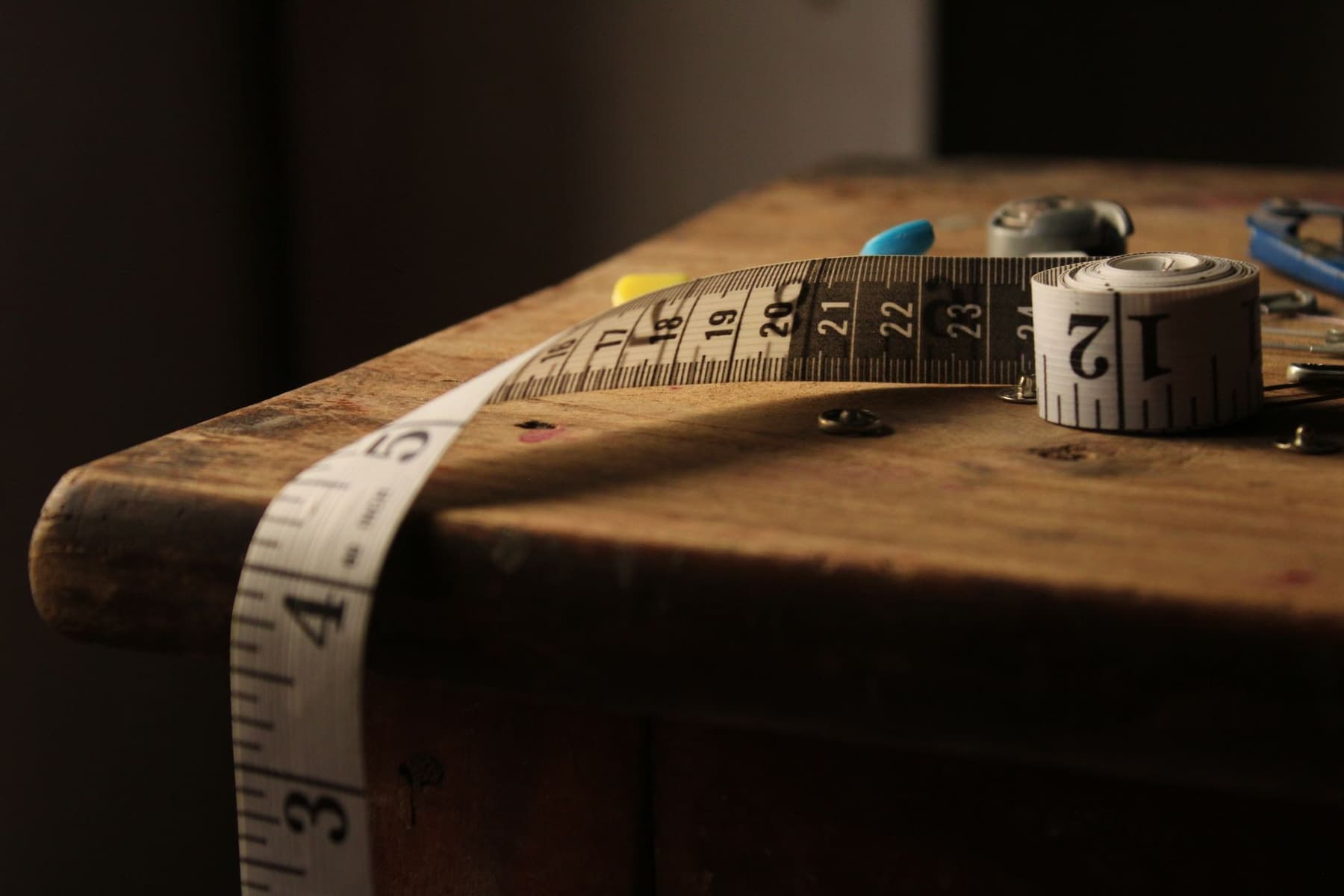
There is no standard headphone size chart because manufacturers do not publish headband adjustment ranges. Take four measurements instead: head circumference just above the eyebrows and ears, the arc from ear-top over the crown to the other ear-top, your outer ear length from helix to lobe, and how far your glasses arms stand out. Use the crown arc to judge headband span and ear length to judge earcup aperture.
The problem
Why there is no size chart
Headphones are sold as one size fits all, and the adjustment range that claim rests on is almost never published. We checked the registry: of twenty-five products, Apple is effectively alone in publishing full external dimensions for an over-ear, and nobody publishes a headband extension range or a clamping force.
That leaves you with your own measurements and a process of elimination. It is also why the big-heads roundup and the small-heads roundup exist as separate pages: the fit question is real enough to need its own answer at both ends.
The four measurements
What to measure, and with what
- Head circumference. A soft tailor’s tape, level, just above the eyebrows and above the ears. Snug, not tight. This is the number you will find quoted in forum threads, and it is the least useful of the four.
- Crown arc, ear-top to ear-top. From the top of one ear, over the highest point of your head, to the top of the other. This is the span a headband actually has to cover, and it is what runs out first on a large head.
- Ear length. Top of the helix to the bottom of the lobe. If your ear is longer than the inside of the earcup aperture, the pad will sit on your ear rather than around it, and an over-ear becomes an on-ear with worse ventilation.
- Glasses arm thickness. Not a head measurement, but it belongs in the same exercise, because the arm passing under a pad is the most common cause of a seal leak and of a sore spot — the glasses-wearers roundup covers the fix.
No tape measure to hand? A phone charging cable and a ruler works: lay the cable along the path, mark it with your thumb, then measure the cable flat.
Circumference is the number everybody quotes. The arc over your crown is the number that decides whether the headband runs out.
Using the numbers
What each measurement rules in or out
| Your measurement | What it predicts | What to do with it |
|---|---|---|
| Head circumference | Roughly how much headband extension you need | Use it to compare yourself against other buyers' reports, not against a spec |
| Crown arc, ear to ear | Whether the band will run out of travel, or sit too loose | Compare against published height, where it exists; otherwise prefer a design with more adjustment |
| Ear length | Whether the earcup encircles your ear or presses on it | If your ear is long, favour a deep, large-aperture pad or an on-ear by choice |
| Glasses arm thickness | Where the seal will leak and where it will hurt | Favour soft, deep pads and a gentler clamp |
Three outcomes
What to buy, by what you measured
If the band is the problem
A headband at the end of its travel produces a hotspot on the crown within an hour. Look for designs with visible extension left and avoid non-folding one-piece bands. The big-heads page ranks on exactly this.
If the earcup is the problem
A long ear in a shallow cup touches the driver housing, which hurts and breaks the seal. Deeper pads help; so does accepting an on-ear design deliberately rather than by accident — over-ear versus on-ear is the honest comparison.
If nothing fits
Stop buying over-ears. A sealed earbud removes head geometry from the equation entirely, and tip size is a solvable problem in a way headband travel is not — the small-ears picks cover the equivalent problem at the other end.
What to check
Four checks when the box arrives
- Is there extension left on both sliders? If you are at maximum on day one, it will be worse in a year as the pads compress.
- Does the pad meet skin all the way round? Run a finger along the seal. Any gap is lost canceling and lost isolation.
- Does your ear touch anything inside? Twenty minutes is enough to find out, and it never improves.
- Does it still fit with a hat, a hood or glasses? Test it the way you will use it, not sitting still at a desk.
In short
Key takeaways
- There is no headphone size chart. Almost no manufacturer publishes headband range or clamping force.
- Take four measurements: circumference, crown arc ear-to-ear, ear length, and glasses arm thickness.
- The crown arc is the most predictive of the four. Circumference is the least.
- Apple publishes full dimensions for the AirPods Max at 168.6 x 83.4 x 187.3 mm, which makes it the one product you can check numerically.
- A design that both rotates and folds, such as the Soundcore Space One, is the most forgiving of an unusual shape.
- If no over-ear fits, an on-ear or a sealed earbud removes head geometry from the problem entirely.
At a glance
Quick picks
Scores are our editorial judgment from published specifications and cited third-party measurements, not our own testing. The rubric is published in full. Tap any row for the full write-up.
| # | Product | Best for | Score | Price |
|---|---|---|---|---|
| 1 | 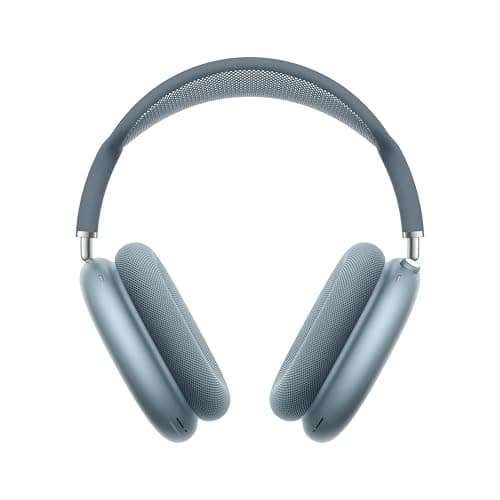 Apple AirPods Max (USB-C)Superb on an iPhone and genuinely hostile to a carry-on: 386.2 g, no fold, a soft case that leaves the headband exposed, and no audio cable in the box. | The only pick with published dimensions | 7.47.4 out of 10, our editorial score | |
| 2 | 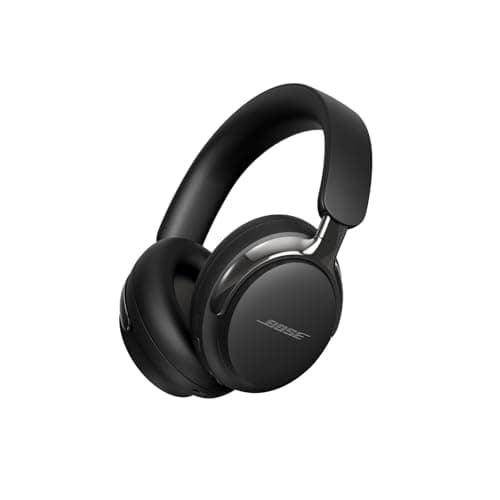 Bose QuietComfort Ultra Headphones (2nd Gen)The quietest cabin of anything here, and the only over-ear in this group whose box already contains the audio cable a seatback screen needs. | Best for a firm seal on an average head | 9.09.0 out of 10, our editorial score | |
| 3 | 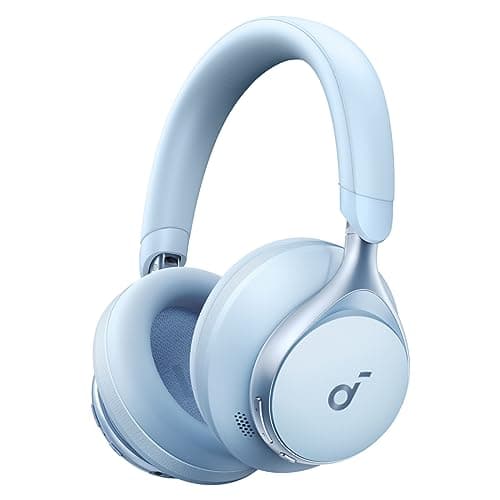 Soundcore Space OneThe budget specification sheet that is genuinely hard to argue with: 40 rated hours with canceling on, LDAC, 40 mm drivers, a folding hinge and an aux cable in the box. | Best for an unusual head shape | 8.58.5 out of 10, our editorial score | |
| 4 | 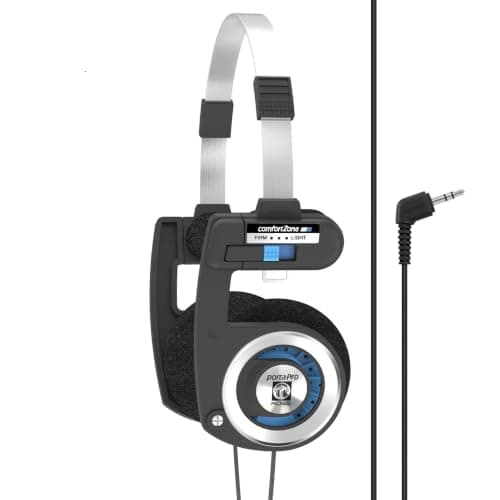 Koss Porta ProA limited lifetime warranty on the cheapest over-ear here, which means the least expensive headphone on this site is also the one least likely to need replacing. | If no over-ear fits | 7.47.4 out of 10, our editorial score |
#ad Amazon links are affiliate links. Prices come from Amazon’s own data on the date stamped under the buttons above; where we have no current figure the button reads “Check price on Amazon” instead of guessing. How this is funded.
The picks in full
Every pick, in detail
1. The only pick with published dimensions
Apple AirPods Max (USB-C)
Superb on an iPhone and genuinely hostile to a carry-on: 386.2 g, no fold, a soft case that leaves the headband exposed, and no audio cable in the box.
Our editorial score: 7.4 / 10
#ad Price as of November 11, 2026. How this is funded
Apple publishes a full set of dimensions, which almost nobody else does: 168.6 mm wide, 83.4 mm deep and 187.3 mm high. That makes it the one product here you can genuinely compare against your own crown-arc measurement before buying.
13.6 oz (386.2 g) for the headphones and 4.74 oz (134.5 g) for the Smart Case, which together make this the heaviest option on the site by a wide margin. Up to 20 rated hours of listening with canceling on, with five minutes of charge giving around 1.5 hours.
It does not fold, which matters to your measurement decision as well: a non-folding headband has no hinge to accommodate an unusual head shape. Bluetooth 5.0, and a Smart Case, USB-C cable and documentation in the box.
What works on a plane
- Lossless audio over USB-C, and the tightest handoff between an iPhone, iPad and Mac of anything here
- The metal-and-mesh build is the most durable in this group
- Spatial Audio with head tracking makes a movie on your own iPad genuinely better
What does not
- 386.2 g, the heaviest here by roughly 90 g, and you feel every gram past hour three
- Does not fold, and the Smart Case leaves the headband exposed while adding 134.5 g
- 20 rated hours is the shortest battery in this group and will not clear a long-haul plus a layover
- No 3.5 mm cable in the box, so a seatback screen needs an adapter you buy separately
How it scores against the five travel axes
Published specifications
| Spec | Figure | Source |
|---|---|---|
| Weight | 13.6 oz (386.2 g) | Apple tech specs |
| Smart Case weight | 4.74 oz (134.5 g) | Apple tech specs |
| Dimensions | 168.6 mm W x 83.4 mm D x 187.3 mm H | Apple tech specs |
| Battery, ANC on | Up to 20 hours listening | Apple tech specs |
| Quick charge | 5 minutes gives around 1.5 hours | Apple tech specs |
| Bluetooth | 5.0 | Apple tech specs |
| In the box | Headphones, Smart Case, USB-C cable, documentation | Apple tech specs |
| Folds | No | Apple tech specs |
2. Best for a firm seal on an average head
Bose QuietComfort Ultra Headphones (2nd Gen)
The quietest cabin of anything here, and the only over-ear in this group whose box already contains the audio cable a seatback screen needs.
Our editorial score: 9.0 / 10
#ad Price as of November 11, 2026. How this is funded
The product whose canceling depends most on a good seal, which makes measurement matter more here than on a looser-fitting design. Approximately 264 g as reported, with earcups that rotate flat into a compact hard case.
Up to 30 rated hours with canceling on, up to 45 with it off, up to 23 with Immersive Audio, USB-C audio at 16-bit 44.1 or 48 kHz lossless input, and a hard case, USB-C cable and 2.5 mm-to-3.5 mm audio cable supplied.
Bose does not publish a headband range, so treat the firm clamp as the variable: it is what produces the class-leading low-frequency reduction, and it is also what makes a poor fit uncomfortable rather than merely loose.
What works on a plane
- The best low-frequency canceling in this group, which is exactly the band engine drone lives in
- The 2.5 mm-to-3.5 mm cable is in the box, so a seatback screen needs nothing extra
- Compact hard case for a full-size over-ear
- Up to 45 hours with canceling off, if you only want isolation on a train
What does not
- Immersive Audio costs you a third of the battery, dropping to 23 rated hours
- Heavier than the Sony by roughly 10 g, and clamp is firmer out of the box
- The hard case is compact but still rigid, so it will not squash into a full bag
How it scores against the five travel axes
Published specifications
| Spec | Figure | Source |
|---|---|---|
| Battery, ANC on | Up to 30 hours | Bose |
| Battery, ANC off | Up to 45 hours | Bose |
| Battery, Immersive Audio on | Up to 23 hours | Bose |
| Weight | Approx. 264 g (9.3 oz) as reported | Published reviews |
| USB-C audio | 16-bit, 44.1 or 48 kHz lossless input | Bose support |
| In the box | Hard case, USB-C cable, 2.5 mm-to-3.5 mm audio cable | Bose |
| Folds | Earcups rotate flat into a compact hard case | Bose |
Read the full Bose QuietComfort Ultra Headphones (2nd Gen) review
3. Best for an unusual head shape
Soundcore Space One
The budget specification sheet that is genuinely hard to argue with: 40 rated hours with canceling on, LDAC, 40 mm drivers, a folding hinge and an aux cable in the box.
Our editorial score: 8.5 / 10
#ad Price as of November 11, 2026. How this is funded
The most forgiving over-ear here, because the earcups both rotate and fold. Two axes of movement means the pad can find your head rather than the other way round, which is exactly what helps an unusual shape.
265 g, 40 mm drivers, up to 40 rated hours with canceling on and up to 55 in normal mode, LDAC, five minutes of charge for four hours, and a travel pouch and aux cable in the box.
It is also the cheapest way to find out whether over-ear suits you at all, which is a sensible thing to establish before spending flagship money. The pads run warm past hour four.
What works on a plane
- 40 rated hours with canceling on, from a headphone in the budget tier
- LDAC at this price is unusual, and it is the codec Android users actually want
- Folds and ships with an aux cable, so the seatback screen is covered
- 265 g is not heavy, and the pouch means it travels without a hard case
What does not
- The 98 percent noise-reduction claim is marketing, not a published measurement
- A pouch is not a hard case, so it needs care in a crushed bag
- Pads are the first thing that gives at this price, well before the electronics
How it scores against the five travel axes
Published specifications
| Spec | Figure | Source |
|---|---|---|
| Battery, ANC on | Up to 40 hours | Soundcore |
| Battery, normal mode | Up to 55 hours | Soundcore |
| Quick charge | 5 minutes for 4 hours | Soundcore |
| Weight | 265 g (9.35 oz) | Soundcore |
| Drivers | 40 mm | Soundcore |
| Codecs | LDAC | Soundcore |
| Folds | Yes, ear cups rotate and fold | Soundcore |
| In the box | Travel pouch and aux cable | Soundcore |
4. If no over-ear fits
Koss Porta Pro
A limited lifetime warranty on the cheapest over-ear here, which means the least expensive headphone on this site is also the one least likely to need replacing.
Our editorial score: 7.4 / 10
#ad Price as of November 11, 2026. How this is funded
The answer for a head that over-ears simply do not suit. It is an on-ear with an adjustable headband and foam cushions that rest against the ear rather than enclosing it, so ear length stops being a constraint entirely.
15 Hz to 25,000 Hz, 60 ohms, 101 dB SPL/1mW, a straight 4 ft dual-entry cable with a 3.5 mm plug, and a limited lifetime warranty. Wired, so there is nothing to charge.
It gives up isolation and canceling completely, which makes it a desk and quiet-room product rather than a travel one. As a way out of a fit problem for very little money, it is the most useful thing on this page.
What works on a plane
- A limited lifetime warranty at this price, which is not a normal thing to find
- Wired, so there is no battery to degrade and nothing to charge
- Collapses flat into a bag with no case and no hinge to snap
- The 3.5 mm plug works with a seatback screen directly, no transmitter required
What does not
- Open-backed on-ear, so it blocks very little and leaks sound to your neighbor
- No noise canceling whatsoever — this is the wrong purchase for engine drone
- Foam pads wear out, though replacements are cheap and easy to fit
How it scores against the five travel axes
Questions
Common questions
How do I measure my head for headphones?
Take four measurements with a soft tape: circumference just above the eyebrows and ears, the arc from the top of one ear over your crown to the other, your outer ear length from helix to lobe, and how far your glasses arms stand out. The crown arc is the most useful of the four.
Is there a headphone size chart?
No standard one exists, because manufacturers do not publish headband adjustment ranges or clamping force. Apple publishes full external dimensions for the AirPods Max, and that is close to the only numeric comparison you can make directly.
What head size do over-ear headphones fit?
They are sold as one size fits all, and in practice that covers a broad middle range and fails at both ends. If you are at the extremes, judge by the amount of slider extension left when the fit is right, rather than by any published figure.
How do I know if my ears are too big for a headphone?
Measure your ear from the top of the helix to the bottom of the lobe, then check whether it touches anything inside the earcup within the first twenty minutes of wear. If the pad rests on your ear instead of around it, the aperture is too small for you.
Do headphones stretch to fit over time?
The band relaxes slightly and the pads compress, which usually loosens the clamp a little over months. That helps a tight fit marginally and makes a band already at full extension worse, because the compressed pads bring the cups closer to your head.
Sources
Where these figures come from
- Apple AirPods Max tech specs (dimensions, weight, Smart Case weight, battery, quick charge, Bluetooth)
- Bose QuietComfort Ultra Headphones (2nd Gen) product page (battery modes, weight, USB-C audio, box contents)
- Soundcore Space One product page (battery, weight, drivers, rotate and fold, box contents)
- Koss Porta Pro product page (on-ear categorisation, adjustable headband, specs, warranty)
Read next
Related reading
- Best headphones for big heads
What to buy when the headband runs out of travel.
- Best headphones for small heads
The same problem at the other end, where clamp goes slack.
- Over-ear vs on-ear headphones
If your ear length is the constraint rather than your head.
- Best headphones for glasses wearers
The fourth measurement, and the products that forgive it.