The best LDAC headphone is the Sony WH-1000XM6, which supports SBC, AAC, LDAC and LC3 and happens to be the best travel headphone here anyway: 254 g, up to 30 rated hours, folds into a case. The Soundcore Space 2 is the value pick with LDAC and 50 rated hours; the EarFun Air Pro 4 is the LDAC earbud, and it adds aptX Lossless. The budget pick is the Soundcore Space One, the cheapest LDAC product in our registry. LDAC only works on a phone that supports it, which excludes every iPhone. Prices come from Amazon’s own data, stamped with the date in each button.
The comparison
The published codec list on each pick
| Form | Codecs published | Bluetooth | Battery, ANC on | |
|---|---|---|---|---|
| Sony WH-1000XM6 | Over-ear | SBC, AAC, LDAC, LC3 | 5.3 | Up to 30 h |
| Soundcore Space 2 | Over-ear | SBC, AAC, LDAC | 6.1 | Up to 50 h |
| EarFun Air Pro 4 | Earbuds | aptX Lossless, LDAC, AAC, SBC | 5.4 | 11 h per bud |
| Soundcore Space One | Over-ear | LDAC | Not published | Up to 40 h |
A codec is a transport, not a tuning. LDAC moves more data to the headphone; it cannot make a headphone better than it is.
The codec
What LDAC does, and what it does not
LDAC is a Sony codec that carries more data over Bluetooth than SBC or AAC, with selectable bitrates up to 990 kbps. On detailed material, through a headphone with the resolution to show it, the difference is audible but modest. On a bus with canceling running, the background noise is a far bigger factor than the codec.
Two practical limits matter more than the number. The first is the phone: LDAC is part of Android, so an iPhone cannot use it at all — on iOS these four headphones fall back to AAC and the line item is worth nothing. The second is the radio: the highest LDAC bitrate is the first thing to stutter in a crowded carriage, and most phones let you prioritize stability instead.
| LDAC helps | LDAC does not help |
|---|---|
| A quiet room and detailed material | An iPhone, at all |
| A headphone with real driver headroom | A noisy bus, train or cabin |
| Android with developer codec control | Spoken-word podcasts and audiobooks |
| Lossless-tier streaming subscriptions | A crowded 2.4 GHz environment |
The full comparison, including why AAC is not the disaster audio forums suggest, is at LDAC vs AAC for travel. If latency rather than fidelity is your problem — lip sync on a seatback screen, for instance — the page you want is Bluetooth audio latency on a plane.
Which one
Pick by your phone first
An Android phone
Any of the four. The Sony if you want the best headphone, the Space 2 if you want the best value, the EarFun if you want earbuds. The wider Android shortlist is at best noise-canceling earbuds for Android.
An iPhone
Ignore the codec column entirely and buy on canceling, fit and battery. The Sony WF-1000XM6 also carries LDAC and is a fine iPhone earbud without it, and the iPhone-first shortlist is at best earbuds for iPhone.
A plane, where the codec is least relevant
What matters in a cabin is canceling depth, battery and whether there is a wired path at all. Three of these four have a 3.5 mm input or an included cable, which is worth more at 35,000 feet than any bitrate: best wired headphones for flights and best noise-canceling headphones under $100.
No price is written into this page. Today’s figure sits inside each buy button, read from Amazon’s own data and stamped with the date it was read, and the rubric behind the scores is at how we choose.
In short
Key takeaways
- Sony WH-1000XM6: SBC, AAC, LDAC and LC3, with 30 rated hours and a 254 g folding design.
- Soundcore Space 2: LDAC plus 50 rated hours, a 3.5 mm input and a case, for a fraction of flagship money.
- EarFun Air Pro 4: the LDAC earbud, and it adds aptX Lossless on a Qualcomm QCC3091 chipset.
- Budget pick: Soundcore Space One, the cheapest LDAC product in our registry, with 40 rated hours and a fold.
- LDAC is an Android feature. On an iPhone every one of these falls back to AAC, so buy on canceling and fit instead.
At a glance
Quick picks
Scores are our editorial judgment from published specifications and cited third-party measurements, not our own testing. The rubric is published in full. Tap any row for the full write-up.
| # | Product | Best for | Score | Price |
|---|---|---|---|---|
| 1 | 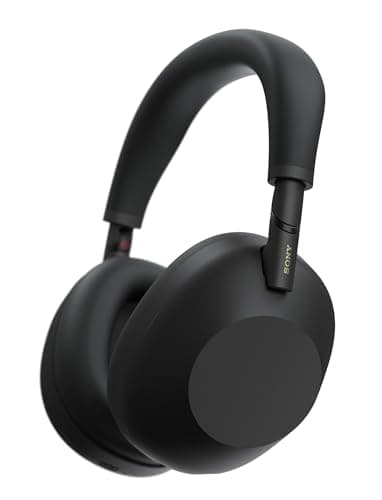 Sony WH-1000XM6The most complete travel headphone on sale: 254 g, 30 rated hours with noise canceling on, and it folds into a case small enough to stop being a decision. | Best LDAC headphone overall | 9.19.1 out of 10, our editorial score | |
| 2 | 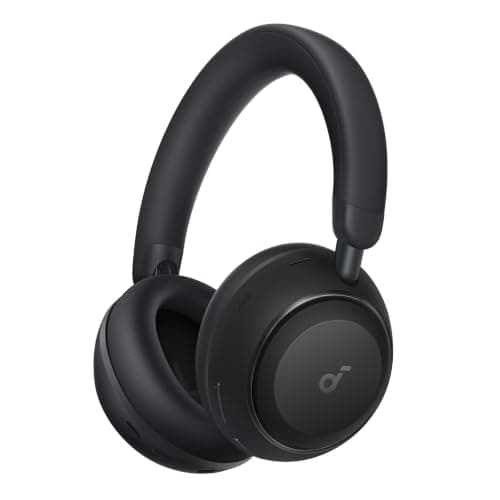 Soundcore Space 2Fifty rated hours with canceling on, a 3.5 mm input and a case in the box, at a fraction of flagship money. The compromise is in the last 10 percent of quiet, not the first 80. | Best LDAC for the money | 8.28.2 out of 10, our editorial score | |
| 3 | 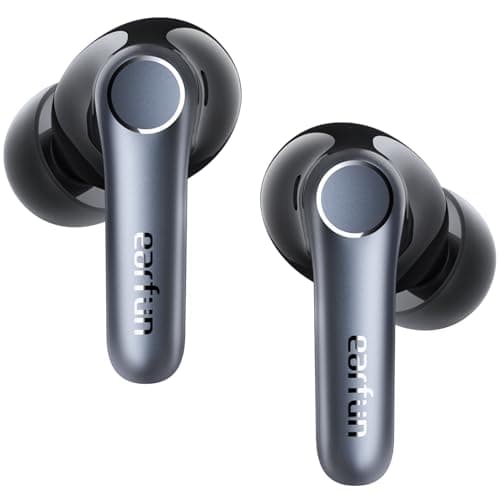 EarFun Air Pro 4Eleven rated hours per bud and 52 with the case, plus LDAC and aptX Lossless, for a small fraction of flagship money. It buys most of the quiet for a little of the price. | Best LDAC earbud | 8.08.0 out of 10, our editorial score | |
| 4 | 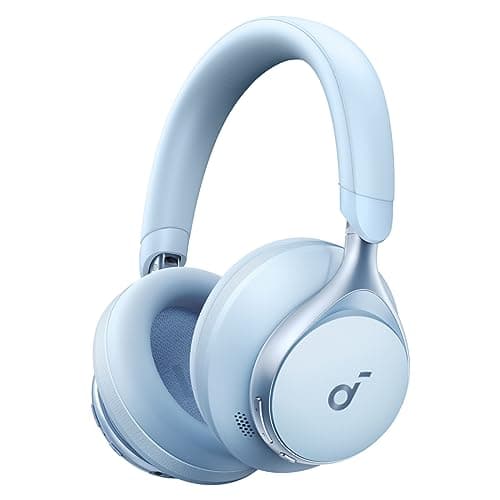 Soundcore Space OneThe budget specification sheet that is genuinely hard to argue with: 40 rated hours with canceling on, LDAC, 40 mm drivers, a folding hinge and an aux cable in the box. | Budget pick: the cheapest LDAC here | 8.58.5 out of 10, our editorial score |
#ad Amazon links are affiliate links. Prices come from Amazon’s own data on the date stamped under the buttons above; where we have no current figure the button reads “Check price on Amazon” instead of guessing. How this is funded.
The picks in full
Every pick, in detail
1. Best LDAC headphone overall
Sony WH-1000XM6
The most complete travel headphone on sale: 254 g, 30 rated hours with noise canceling on, and it folds into a case small enough to stop being a decision.
Our editorial score: 9.1 / 10
#ad Price as of November 27, 2026. How this is funded
LDAC is Sony’s own codec, and this is the headphone it was built around. Sony publishes SBC, AAC, LDAC and LC3 support, Bluetooth 5.3, and a wired response of 4 Hz to 40,000 Hz with the cable that comes in the box.
It is also the best travel headphone here independent of the codec: roughly 254 g, up to 30 hours with canceling on and 40 with it off, and it folds into a magnetic-closure case small enough to stop being a decision.
You pay flagship money for the last increment of canceling, the folding hinge is one more mechanism to wear out, and there is no airline two-prong adapter in the box. LDAC at its highest bitrate is also the setting most likely to drop on a crowded train, which is a radio problem rather than a headphone problem.
What works on a plane
- Folds, which halves the space it takes in a personal item
- 254 g is light for a flagship over-ear, and weight is what you feel at hour four
- LDAC plus LC3 means it is not locked to one phone ecosystem
- 30 rated hours with noise canceling on covers almost any single routing
What does not
- You pay a flagship price for the last increment of noise canceling
- The folding hinge is one more mechanism to eventually wear out
- No airline two-prong adapter in the box
How it scores against the five travel axes
Published specifications
| Spec | Figure | Source |
|---|---|---|
| Weight | Approx. 254 g (9 oz) | Sony Help Guide specifications |
| Battery, NC on | Up to 30 hours | Sony specifications |
| Battery, NC off | Up to 40 hours | Sony specifications |
| Full charge | Approx. 3.5 hours | Sony Help Guide specifications |
| Bluetooth | 5.3 | Sony Help Guide specifications |
| Codecs | SBC, AAC, LDAC, LC3 | Sony Help Guide specifications |
| Wired response | 4 Hz - 40,000 Hz (IEC) | Sony Help Guide specifications |
| Folds | Yes, into a magnetic-closure case | Sony |
| In the box | Headset, headphone cable, USB-C cable, carrying case, documents | Sony Help Guide, Included items |
2. Best LDAC for the money
Soundcore Space 2
Fifty rated hours with canceling on, a 3.5 mm input and a case in the box, at a fraction of flagship money. The compromise is in the last 10 percent of quiet, not the first 80.
Our editorial score: 8.2 / 10
#ad Price as of November 27, 2026. How this is funded
The pick for an Android listener who does not want to pay flagship money for a codec. soundcore publishes SBC, AAC and LDAC, Bluetooth 6.1, 40 mm double-layer diaphragm drivers and Hi-Res support in wired mode through the 3.5 mm input.
The surrounding specification is what makes it a buy: up to 50 hours with canceling on and 70 with it off, a carrying case in the box, and five minutes of charge worth four hours.
The −37 dB canceling figure is Anker’s own laboratory number, not an independent measurement, and the gap to Bose is audible at the bottom of the drone band. Pads are plainer than a flagship’s, and the plastic build is less robust.
What works on a plane
- Up to 50 rated hours with canceling on, which beats every flagship here
- A 3.5 mm input and a case in the box, so nothing else to buy for a seatback screen
- Five minutes of charge buys four hours, which covers a gate-side mistake
- The cheapest way here to get genuinely useful drone reduction on a plane
What does not
- The -37 dB canceling figure is Anker's own laboratory number, not an independent measurement, and the gap to Bose is audible
- Plainer pad materials than the Sennheiser, so hour four is less comfortable
- Plastic build will not survive being crushed in an overhead bin the way the metal Apple would
How it scores against the five travel axes
Published specifications
| Spec | Figure | Source |
|---|---|---|
| Battery, ANC on | Up to 50 hours | soundcore |
| Battery, ANC off | Up to 70 hours | soundcore |
| Quick charge | 5 minutes gives 4 hours | soundcore |
| Full charge | Approx. 2 hours | soundcore support specifications |
| Weight | 264 g (9.31 oz) | soundcore |
| Bluetooth | 6.1 | soundcore |
| Microphones | 3, with AI enhancement for calls | soundcore |
| Codecs | SBC, AAC, LDAC | soundcore support specifications |
| Drivers | 40 mm double-layer diaphragm | soundcore |
| Canceling depth | -37 dB, measured in Anker's own laboratory | soundcore support specifications |
| In the box | Headphones, charging cable, carrying case | soundcore |
| Wired | 3.5 mm input, Hi-Res in wired mode | soundcore |
3. Best LDAC earbud
EarFun Air Pro 4
Eleven rated hours per bud and 52 with the case, plus LDAC and aptX Lossless, for a small fraction of flagship money. It buys most of the quiet for a little of the price.
Our editorial score: 8.0 / 10
#ad Price as of November 27, 2026. How this is funded
For the Android listener who wants the codec in a pocket. EarFun publishes aptX Lossless, LDAC, AAC and SBC on a Qualcomm QCC3091 chipset with Bluetooth 5.4 — two high-bitrate codecs on one earbud, which is unusual at any price.
It is also the battery leader among earbuds here at 11 published hours per bud and 52 with the case, which matters more than the codec on a long travel day. The 10 mm composite dynamic drivers have the headroom to make the extra bitrate worth having.
The 50 dB canceling rating is EarFun’s own, adaptive canceling is less steady than a flagship when noise changes, and app polish trails the majors. Neither codec is usable on an iPhone.
What works on a plane
- Eleven rated hours per bud is longer than any premium earbud here
- 52 hours with the case means a two-week trip without a charger thought
- aptX Lossless and LDAC at this price is genuinely unusual
- Losing one on a plane is an annoyance rather than a disaster
What does not
- The 50 dB figure is EarFun's own rating, not an independent measurement, and the gap to Bose is clear
- Adaptive canceling is less steady than the flagships when cabin noise changes
- App polish and firmware support are a step behind the majors
How it scores against the five travel axes
4. Budget pick: the cheapest LDAC here
Soundcore Space One
The budget specification sheet that is genuinely hard to argue with: 40 rated hours with canceling on, LDAC, 40 mm drivers, a folding hinge and an aux cable in the box.
Our editorial score: 8.5 / 10
#ad Price as of November 27, 2026. How this is funded
The budget pick, and the least expensive route to LDAC in our registry. soundcore lists LDAC support outright, which is genuinely unusual this far down the market.
The rest of the sheet holds up: up to 40 hours with canceling on and 55 in normal mode, 40 mm drivers, 265 g, ear cups that rotate and fold, and a travel pouch with an aux cable in the box.
The “98 percent noise reduction” marketing line is not a published measurement and we do not treat it as one. A pouch is not a hard case, and the pads are the first thing to give at this price.
What works on a plane
- 40 rated hours with canceling on, from a headphone in the budget tier
- LDAC at this price is unusual, and it is the codec Android users actually want
- Folds and ships with an aux cable, so the seatback screen is covered
- 265 g is not heavy, and the pouch means it travels without a hard case
What does not
- The 98 percent noise-reduction claim is marketing, not a published measurement
- A pouch is not a hard case, so it needs care in a crushed bag
- Pads are the first thing that gives at this price, well before the electronics
How it scores against the five travel axes
Published specifications
| Spec | Figure | Source |
|---|---|---|
| Battery, ANC on | Up to 40 hours | Soundcore |
| Battery, normal mode | Up to 55 hours | Soundcore |
| Quick charge | 5 minutes for 4 hours | Soundcore |
| Weight | 265 g (9.35 oz) | Soundcore |
| Drivers | 40 mm | Soundcore |
| Codecs | LDAC | Soundcore |
| Folds | Yes, ear cups rotate and fold | Soundcore |
| In the box | Travel pouch and aux cable | Soundcore |
How we decide
How these picks were chosen
We do not run a test lab and we do not claim to have flown with these units. Every verdict on this page is one of three things: a measurement published by somebody who does own a test rig and is credited by name, a manufacturer specification we quote and then interpret against what a long flight actually demands, or a plainly-labeled editorial judgment. The five axes we score on — cabin-noise reduction, battery on a long-haul, pack size, comfort past hour three, and wired fallback — are the ones that decide a travel purchase, and the weighting is published in full.
Questions
Common questions
Does LDAC work on an iPhone?
No. LDAC is supported in Android and is not available on iOS, so an iPhone connects to these headphones over AAC. If your phone is an iPhone, the codec column should not influence the purchase at all.
Can you actually hear the difference with LDAC?
In a quiet room, on detailed material, through a headphone with the resolution to show it — sometimes, and subtly. On a commute with canceling running, the background noise swamps the difference. It is a nice-to-have, not a reason to buy a worse headphone.
Is LDAC worse for battery life?
It uses more radio bandwidth and more processing, so a high-bitrate LDAC connection drains faster than AAC. Published battery figures are generally quoted with a standard connection, so treat the numbers on this page as best-case rather than LDAC-specific.
Why does LDAC keep cutting out on the train?
Because 990 kbps is a lot of data to push through a carriage full of phones. Most Android phones offer a “connection quality” or “best effort” LDAC setting, and dropping it a step keeps the link stable at a bitrate still well above AAC.
Sources
Where these figures come from
Read next
Related reading
- LDAC vs AAC for travel
What the codec choice is actually worth on a plane.
- Best noise-canceling earbuds for Android
The wider Android shortlist, codec included.
- Best noise-canceling headphones under $100
Where two of these LDAC picks also sit on price.
- Bluetooth audio latency on a plane
The other Bluetooth problem, which codecs do not fix.
- Are audiophile headphones good for travel?
Where fidelity stops being the deciding factor.