The earbuds that stay in best are the Beats Powerbeats Pro 2, because an ear hook holds the bud independently of your ear canal: up to 8 rated hours with canceling, 36 with the case, IPX4. Without a hook, the Bose QuietComfort Ultra Earbuds are the most secure, using three stabilizer band sizes and a shallow fit, and the Apple AirPods Pro 3 ship foam tips in five sizes, the widest stock selection here. The budget pick is the Soundcore P40i. Prices come from Amazon’s own data and are stamped with the date inside each button.
The comparison
How each pair actually holds on
| Holds on by | Stock fit options | Water rating | Battery per charge | |
|---|---|---|---|---|
| Beats Powerbeats Pro 2 | Ear hook over the ear | Tips plus a fixed hook | IPX4 | 8 h ANC, 10 h Adaptive EQ |
| Bose QuietComfort Ultra Earbuds | Stabilizer band, shallow insertion | Three band sizes | IPX4 | 6 h, 4 h with Immersive |
| Apple AirPods Pro 3 | Foam tip seal | Foam tips in five sizes | IP57 | 8 h ANC, 10 h Transparency |
| Soundcore P40i | Silicone tip seal | Narrow stock range | IPX5 | 10 h ANC, 12 h off |
A hook works for every ear. A tip works for the ears it fits. That difference is the whole page.
The mechanism
The three ways an earbud stays in, ranked
A hook transfers the load to the outside of your ear, which is structural and more or less the same shape on everybody. It is the only mechanism that works regardless of canal size, and it is why sports earbuds have used hooks for twenty years. The cost is case bulk and a slower on-and-off.
A stabilizer band or wing braces inside the outer ear without going deep. It is less secure than a hook under hard movement but far more comfortable over hours, and it is the right answer for sleeping, flying and desk work. Fit depends on getting the band size right, which is why shipping three of them matters.
A tip seal alone is the most comfortable and the least secure. It is also the most fixable: a different tip material or size usually solves it outright, and foam solves it more often than silicone. If your canal is small, start at best earbuds for small ears, which is where fit and canal size are dealt with properly.
Which one
Pick by the movement that loosens them
Training and running
Hooks, every time. The sweat makes it worse, because a wet tip grips less, and sweat ratings matter at the same time — both axes are covered at best gym headphones and best headphones for running.
Sleeping and flying
The opposite answer: a hook is uncomfortable against a pillow or a seat, so a shallow band or a soft tip wins. Side-sleeping on a plane is its own problem, worked through at best earbuds for sleeping on a plane.
Walking, commuting and a desk
Any of these work, so buy on canceling, battery and price instead. The commuting case is at best noise-canceling earbuds for commuting, and the cheap end at best budget noise-canceling earbuds.
One more thing worth saying: a loose fit does not only lose you a bud, it loses you the canceling. In an earbud the tip seal does most of the isolating, so a bud that is halfway out is quieter than the specification sheet promised in exactly the way you would expect. No price is written into this page — today’s figure sits inside each buy button, stamped with the date it was read, and the rubric is at how we choose.
The first thing a loose bud loses is bass, because low frequencies need a closed volume to push against. That is the whole premise of best bass earbuds, which ranks the seal above the driver for exactly this reason.
In short
Key takeaways
- Beats Powerbeats Pro 2: an ear hook holds the bud independently of canal shape, with 8 rated hours and 36 with the case.
- Bose QuietComfort Ultra Earbuds: three stabilizer band sizes and a shallow fit, the most secure design without a hook.
- Apple AirPods Pro 3: foam tips in five sizes, the widest stock tip selection in our registry, plus IP57.
- Budget pick: Soundcore P40i, held in by tip alone but cheap enough that a lost bud is not a disaster.
- A loose bud is also a quiet bud: the tip seal does most of an earbud's isolating work.
At a glance
Quick picks
Scores are our editorial judgment from published specifications and cited third-party measurements, not our own testing. The rubric is published in full. Tap any row for the full write-up.
| # | Product | Best for | Score | Price |
|---|---|---|---|---|
| 1 | 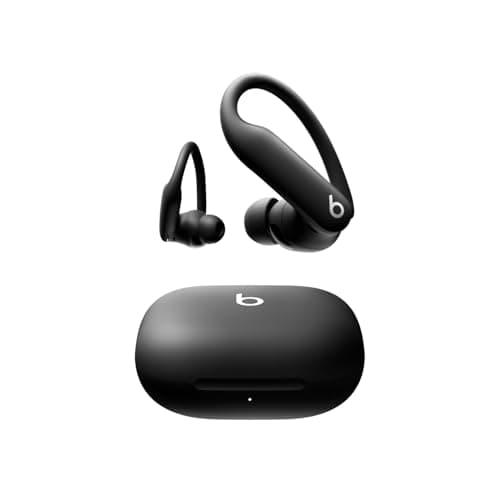 Beats Powerbeats Pro 2The ear hook is the whole argument: a sealed earbud that does not migrate out on a long run, with noise canceling for the treadmill and transparency for the road. | Best retention overall | 8.48.4 out of 10, our editorial score | |
| 2 | 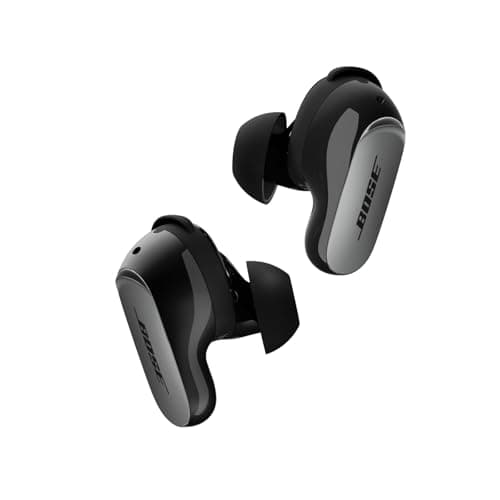 Bose QuietComfort Ultra Earbuds (2nd Gen)The quietest earbuds you can put in a pocket, with the shortest single-charge runtime of the premium set: six rated hours, four with Immersive Audio on. | Best fit without a hook | 8.48.4 out of 10, our editorial score | |
| 3 | 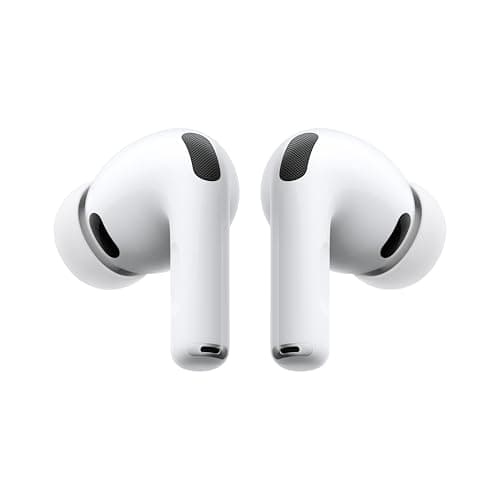 Apple AirPods Pro 3Eight rated hours with canceling on, foam tips in five sizes and an IP57 rating. If your phone is an iPhone this is the least friction of anything here. | Best tip selection | 8.88.8 out of 10, our editorial score | |
| 4 | 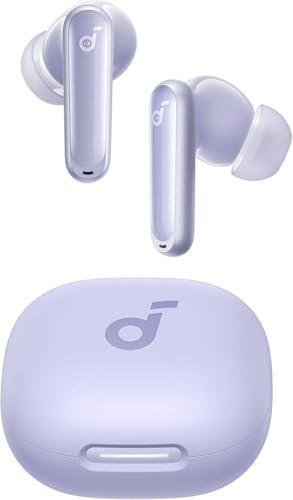 Soundcore P40iA budget earbud rated at 12 hours a charge and 60 with the case, with adaptive canceling and a case that folds out into a phone stand. | Budget pick: cheap enough that losing one is survivable | 8.08.0 out of 10, our editorial score |
#ad Amazon links are affiliate links. Prices come from Amazon’s own data on the date stamped under the buttons above; where we have no current figure the button reads “Check price on Amazon” instead of guessing. How this is funded.
The picks in full
Every pick, in detail
1. Best retention overall
Beats Powerbeats Pro 2
The ear hook is the whole argument: a sealed earbud that does not migrate out on a long run, with noise canceling for the treadmill and transparency for the road.
Our editorial score: 8.4 / 10
#ad Price as of November 27, 2026. How this is funded
The pick for anyone whose earbuds have ever worked their way out, because a hook does not depend on your ear canal at all. It loops over the ear and holds the bud against the movement that defeats stem designs.
Beats publishes up to 8 hours a bud with canceling or transparency on and 36 with the case, or 10 and 45 in Adaptive EQ, on the Apple H2 chip. The rating is IPX4, heart-rate sensors are built in, and the case charges over USB-C or Qi.
The hooks make the case noticeably larger than a stem earbud case, which matters in a personal item. Glasses arms and hooks share the same space, so spectacle wearers should expect a fiddle, and the best features assume an Apple device.
What works on a plane
- Ear hooks solve the one problem that ruins running earbuds, which is drift
- Switchable canceling and transparency, so the same pair works on the treadmill and the road
- Heart-rate sensing on board removes one more strap from the kit
- USB-C and Qi charging, so it uses whatever cable you already carry
What does not
- IPX4 is splash and sweat only — do not take these into a pool
- The hooks make the case noticeably larger than a stem earbud case
- Best features assume an Apple device, so an Android buyer loses part of what they paid for
How it scores against the five travel axes
Published specifications
| Spec | Figure | Source |
|---|---|---|
| Battery, ANC or transparency on | Up to 8 hours per bud, 36 hours with the case | Beats |
| Battery, Adaptive EQ | Up to 10 hours per bud, 45 hours with the case | Beats |
| Water resistance | IPX4 (sweat and splashes) | Beats |
| Chip | Apple H2 | Beats |
| Noise control | Active noise canceling and transparency | Beats |
| Heart rate | Built-in heart-rate sensors | Beats |
| Charging | USB-C and Qi wireless | Beats |
2. Best fit without a hook
Bose QuietComfort Ultra Earbuds (2nd Gen)
The quietest earbuds you can put in a pocket, with the shortest single-charge runtime of the premium set: six rated hours, four with Immersive Audio on.
Our editorial score: 8.4 / 10
#ad Price as of November 27, 2026. How this is funded
For the listener who wants security and the deepest canceling in an earbud without wearing a hook. Bose ships three stabilizer band sizes and uses a shallow insertion depth, so the band braces against the ear rather than the tip wedging into the canal.
That shallow fit is also why it is the most tolerable premium earbud on a long flight: there is far less pressure than a deep-insertion design. Bose publishes up to 6 hours with Immersive Audio off, 4 with it on, 18 with the case, IPX4, and a case that charges wirelessly.
Six rated hours means a case top-up on any long-haul, and Immersive Audio cuts that to four, so on a plane you will mostly leave it off. Eighteen hours total is the weakest reserve in the premium earbud set.
What works on a plane
- Canceling that genuinely rivals a full-size over-ear, in something pocketable
- The shallow fit is far more tolerable than deep-insertion buds on a long flight
- Wireless case charging is one fewer cable in the bag
What does not
- Six rated hours means a case top-up mid-flight on any long-haul
- Immersive Audio cuts that to four, so on a plane you will mostly leave it off
- 18 hours total with the case is the weakest reserve in the premium earbud set
How it scores against the five travel axes
Published specifications
| Spec | Figure | Source |
|---|---|---|
| Battery, Immersive off | Up to 6 hours | Bose support |
| Battery, Immersive on | Up to 4 hours | Bose support |
| Total with case | Up to 18 hours | Bose support |
| Case charging | USB-C and wireless | Bose support |
| Water resistance | IPX4 | Bose support |
| Fit | Three stabilizer band sizes, shallow insertion | Bose |
Read the full Bose QuietComfort Ultra Earbuds (2nd Gen) review
3. Best tip selection
Apple AirPods Pro 3
Eight rated hours with canceling on, foam tips in five sizes and an IP57 rating. If your phone is an iPhone this is the least friction of anything here.
Our editorial score: 8.8 / 10
#ad Price as of November 27, 2026. How this is funded
For the buyer whose fit problem is really a tip problem. Apple ships foam tips in five sizes, which is the widest stock selection in our registry and the single most useful thing a manufacturer can do about retention.
Foam conforms to the canal in a way silicone does not, so it both grips better and seals better — and the seal is what decides how much canceling you actually get. Apple publishes 8 hours with canceling on, 24 with the case, and IP57 on both buds and case.
There is no hook or wing, so for heavy lifting or sprint work a hooked design is still more secure. Apple’s 2x noise figure is measured against its own predecessor, the best features need an iPhone, and there is no wired path.
What works on a plane
- Eight rated hours and 24 with the case, matching the best of the premium earbuds
- Foam tips in five sizes solve the fit problem that ruins canceling on most buds
- IP57 on both buds and case is the toughest rating in this group
- Live Translation and heart-rate sensing are genuinely useful abroad, not spec-sheet filler
What does not
- Apple's 2x noise figure is a manufacturer claim measured against its own predecessor, not an independent measurement
- The best features need an iPhone; on Android it is a good but ordinary earbud
- No wired option, so in-flight entertainment needs a transmitter
How it scores against the five travel axes
Published specifications
| Spec | Figure | Source |
|---|---|---|
| Battery, ANC on | 8 hours listening | Apple tech specs |
| Battery, Transparency | Up to 10 hours | Apple tech specs |
| Total with case | Up to 24 hours with ANC | Apple tech specs |
| Quick charge | 5 minutes in the case gives around 1 hour | Apple tech specs |
| Ear tips | Foam tips in five sizes | Apple |
| Water resistance | IP57, buds and case | Apple |
| Apple's ANC claim | Removes up to 2x more noise than AirPods Pro 2 | Apple newsroom |
4. Budget pick: cheap enough that losing one is survivable
Soundcore P40i
A budget earbud rated at 12 hours a charge and 60 with the case, with adaptive canceling and a case that folds out into a phone stand.
Our editorial score: 8.0 / 10
#ad Price as of November 27, 2026. How this is funded
The budget pick, chosen for an honest reason: it holds on by tip seal alone, so it is the least secure pair here — and it costs so little that the stakes of a lost bud are low.
soundcore publishes 10 hours a charge and 50 with the case with canceling on, 12 and 60 with it off, adaptive canceling, IPX5 and six microphones. For a commute, a desk or a walk, retention is rarely the issue.
The stock tip selection is narrow, which is exactly the wrong thing on a retention page — budget for a set of aftermarket foam tips, which is the cheapest fix for a loose fit that exists. Canceling depth also trails the premium earbuds by a wide margin.
What works on a plane
- 60 rated hours with the case, from an earbud in the budget tier
- IPX5 means sweat and rain are not a worry on a commute
- The fold-out case stand is a genuinely useful thing on a tray table
- Adaptive canceling at a price where fixed canceling is the norm
What does not
- Canceling depth is a long way behind the premium earbuds, especially in the low band
- No LDAC, so Android listeners do not get the better codec
- The stock tip selection is narrow, and the seal is what decides earbud canceling
How it scores against the five travel axes
Published specifications
| Spec | Figure | Source |
|---|---|---|
| Battery, canceling off | 12 hours per charge, 60 hours with the case | Soundcore |
| Battery, canceling on | 10 hours per charge, 50 hours with the case | Soundcore |
| Noise canceling | Adaptive ANC | Soundcore |
| Drivers | 11 mm composite | Soundcore |
| Water resistance | IPX5 | Soundcore |
| Microphones | 6, with an AI call algorithm | Soundcore |
| Case | Doubles as a phone stand | Soundcore |
How we decide
How these picks were chosen
We do not run a test lab and we do not claim to have flown with these units. Every verdict on this page is one of three things: a measurement published by somebody who does own a test rig and is credited by name, a manufacturer specification we quote and then interpret against what a long flight actually demands, or a plainly-labeled editorial judgment. The five axes we score on — cabin-noise reduction, battery on a long-haul, pack size, comfort past hour three, and wired fallback — are the ones that decide a travel purchase, and the weighting is published in full.
Questions
Common questions
Why do my earbuds keep falling out of one ear?
Because ears are not symmetrical. One canal is usually slightly larger, and a matched pair of tips will seal one side and not the other. Buying tips in two sizes and using one of each is the standard fix, and it costs almost nothing.
Do foam tips really help?
Usually, yes. Foam expands to the shape of the canal, so it grips over more surface area than silicone and seals better, which also improves the canceling. The trade-offs are that foam wears out faster and holds moisture, so it is worse for sweaty training than a silicone tip.
Are ear hooks uncomfortable with glasses?
They compete for the same space behind your ear, and most people can make it work by seating the hook first and the glasses second. If you wear glasses all day, a stabilizer-band design or a well-fitted tip is the easier life — the same conflict with over-ear headphones is covered at best headphones for glasses wearers.
Which is more secure, a hook or a wing tip?
A hook. A wing or stabilizer band braces inside the outer ear and holds well for walking, lifting and ordinary movement, but a hook is the only mechanism that keeps working through sprinting and head movement regardless of your ear shape.
Sources
Where these figures come from
Read next
Related reading
- Best earbuds for small ears
When the fit problem is canal size rather than mechanism.
- Best gym headphones
Retention plus a sweat rating, which is the training question.
- Best earbuds for sleeping on a plane
Where a hook becomes the wrong answer.
- Best budget noise-canceling earbuds
The cheap end, where a tip upgrade is the best money you can spend.
- Best noise-canceling earbuds for travel
The full travel shortlist these picks come from.