The best bass earbud is the Beats Powerbeats Pro 2, because an ear hook holds the seal that every bass claim depends on: up to 8 rated hours with canceling, 36 with the case, IPX4, plus an Adaptive EQ mode. On a plane the Bose QuietComfort Ultra Earbuds deliver more perceived bass than anything here by removing the drone that masks it, and the Sony WF-1000XM6 keeps the most detail alongside the low end. The budget pick is the Soundcore P40i, which publishes the largest driver on this page at 11 mm for the least money. Prices come from Amazon’s own data and are stamped with the date inside each button.
The criteria
How we ranked bass, and why the driver comes third
Bass is the one part of the audio spectrum an earbud cannot fake. Low frequencies need air moved against a closed volume, and the closed volume is your ear canal with a tip sealing it. Break that seal by a fraction of a millimeter and the low end drains out first — long before anything happens to the vocals or the treble. That is why a bud that sounds thin is usually a bud that fits badly, not a bud with a small driver.
So the ranking order on this page is deliberate:
- Seal and retention first. A hook or a stabilizer band holds the bud at a fixed depth. A tip alone works perfectly for the ears it fits and loosens on the rest, and a bud that has shifted by hour two is quieter at the bottom than it was at the start.
- Canceling floor second. Cabin, bus and office noise lives in roughly the same band as bass guitar and kick drum. Lowering that floor is indistinguishable from raising the bass, except that it does not cost you any headroom or any hearing.
- Published driver third. Driver area is real — 11 mm moves more air than 8.4 mm — but it is the third-largest effect here, and it is the only one a specification sheet reliably tells you.
- Codec and EQ last. A high-bitrate codec and an app EQ change the signal, not the acoustics. They are worth having and they will not rescue a bad fit.
What we did not rank on: bass quality judgments. We do not run a listening lab, and no manufacturer on this page except Sennheiser publishes a frequency response for an earbud, so a page claiming to have measured “deeper” bass between these five would be inventing its evidence. The full rubric is at how we choose.
The comparison
What each earbud publishes
| Holds the seal by | Driver | Canceling | Battery per charge | |
|---|---|---|---|---|
| Beats Powerbeats Pro 2 | Ear hook, fixed depth | Not published | Active, switchable with transparency | 8 h ANC, 10 h Adaptive EQ |
| Bose QuietComfort Ultra Earbuds | Stabilizer band, three sizes | Not published | Deepest in our registry | 6 h, 4 h with Immersive |
| Sony WF-1000XM6 | Tip seal, approx. 6.5 g per bud | 8.4 mm | Active, QN3e, eight microphones | 8 h |
| EarFun Air Pro 4 | Tip seal | 10 mm composite dynamic | Active, EarFun's own 50 dB rating | 11 h |
| Soundcore P40i | Tip seal, narrow stock range | 11 mm composite | Adaptive | 10 h ANC, 12 h off |
Two of the five do not publish a driver size at all. That is normal in this category — which is exactly why fit and canceling, both of which are documented, carry more weight here than the one number everyone quotes.
Fit
The cheapest bass upgrade is a tip, not a headphone
If you already own earbuds and they sound thin, the first thing to change costs a few dollars. Foam tips expand to the shape of the canal and seal across more surface area than silicone, which both grips better and holds the low end in. The trade is that foam wears out faster and holds moisture, so it is the wrong choice for sweaty training and the right choice for a flight or a desk.
Size matters more than material, and ears are not symmetrical: one canal is usually slightly larger, and a matched pair of tips will often seal one side and not the other. Buying two sizes and using one of each is a standard fix that costs almost nothing. The fit mechanics are worked through at best earbuds that don’t fall out and, for smaller canals, at best earbuds for small ears.
| Change | Effect on bass | Cost |
|---|---|---|
| Fixing a leaking seal | Largest single change | A set of tips |
| Turning canceling on | Large, and free of volume cost | Already in the product |
| A larger published driver | Real but modest | Varies by model |
| An app EQ shelf | Modest, and costs headroom | Free |
| A higher-bitrate codec | Smallest, and phone-dependent | Android only |
Which one
Pick by where the bass has to survive
A plane or a train
Take the Bose. Nothing else here removes as much of the drone that sits on top of your low end, and that is worth more than any driver specification once the engines are at cruise. The wider cabin shortlist is at best noise-canceling earbuds for flights, and the reason canceling and bass are the same conversation is in how noise-canceling headphones work on a plane.
Training and movement
Take the hooks. Bass is the first thing to disappear when a bud works loose, and sweat makes a tip grip less, so a mechanism that does not depend on the tip is worth more than a bigger driver. The training ratings table is at best gym headphones.
A desk, a bus and a tight budget
Take the P40i and spend five dollars on foam tips. You get the biggest published driver on the page, IPX5 and 50 rated hours with the case, and the seal upgrade closes most of the gap to earbuds costing several times as much. Where it sits against the rest of the cheap end is at best budget noise-canceling earbuds and best earbuds for the money.
If bass is the entire point
Then the honest answer is not an earbud at all. An over-ear seals a much larger volume of air around the whole ear, and the one product in our registry with dedicated haptic bass drivers and a physical bass slider is a full-size headphone. That case is made at best headphones with deep bass, and the form-factor trade for flying is at earbuds vs over-ear for flying.
One more option worth knowing about: the only earbud in our registry that publishes a frequency response at all is a wired stage monitor, the Sennheiser IE 100 PRO, at 20 Hz to 18,000 Hz with distortion under 0.1 percent. It has no canceling and no battery, and its bass depends entirely on the foam or silicone adapters in the box — which is the clearest demonstration of this whole page. It is covered at best wired earbuds for flights.
And if the Sony is the bud on your shortlist but the price or the fit is not working out, the substitution set is at Sony WF-1000XM6 alternatives, which ranks each option by the published figure it beats the Sony on.
No price is written into this page. Today’s figure sits inside each buy button, read from Amazon’s own data and stamped with the date it was read, so it expires by itself rather than sitting here being wrong.
In short
Key takeaways
- Bass in an earbud is decided by the tip seal first: break the seal and the low end leaves before anything else does.
- Beats Powerbeats Pro 2: an ear hook holds a fixed depth, so the seal is constant, with 8 rated hours and 36 with the case.
- Bose QuietComfort Ultra Earbuds: the deepest canceling here, which on a plane is the largest increase in bass you can buy.
- Sony WF-1000XM6 publishes an 8.4 mm driver and LDAC; the EarFun Air Pro 4 publishes 10 mm and the Soundcore P40i 11 mm for far less.
- Budget pick: Soundcore P40i, the largest published driver on the page, IPX5 and 50 rated hours with the case - add foam tips.
- If bass is the whole reason for the purchase, an over-ear with a bass slider beats every earbud here.
At a glance
Quick picks
Scores are our editorial judgment from published specifications and cited third-party measurements, not our own testing. The rubric is published in full. Tap any row for the full write-up.
| # | Product | Best for | Score | Price |
|---|---|---|---|---|
| 1 | 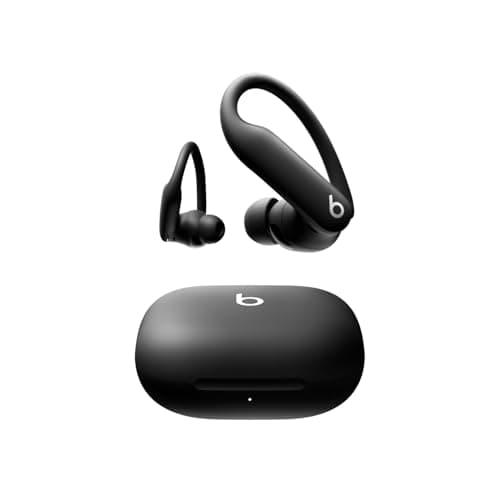 Beats Powerbeats Pro 2The ear hook is the whole argument: a sealed earbud that does not migrate out on a long run, with noise canceling for the treadmill and transparency for the road. | Best bass earbud overall | 8.48.4 out of 10, our editorial score | |
| 2 | 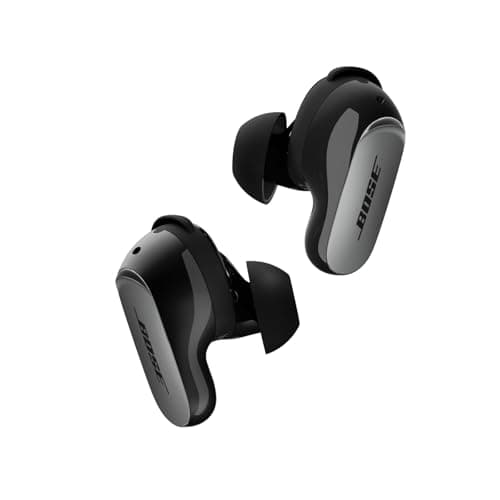 Bose QuietComfort Ultra Earbuds (2nd Gen)The quietest earbuds you can put in a pocket, with the shortest single-charge runtime of the premium set: six rated hours, four with Immersive Audio on. | Best for bass you can hear on a plane | 8.48.4 out of 10, our editorial score | |
| 3 | 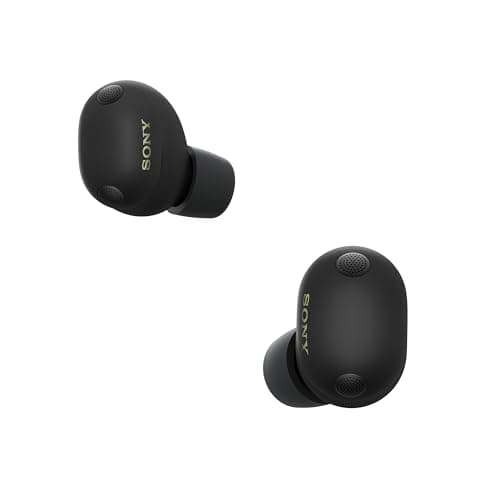 Sony WF-1000XM6Eight rated hours per bud and 24 with the case, at roughly 6.5 g each. The most sensible premium earbud for a flight, because you never have to plan around the battery. | Best bass with the detail kept intact | 8.98.9 out of 10, our editorial score | |
| 4 | 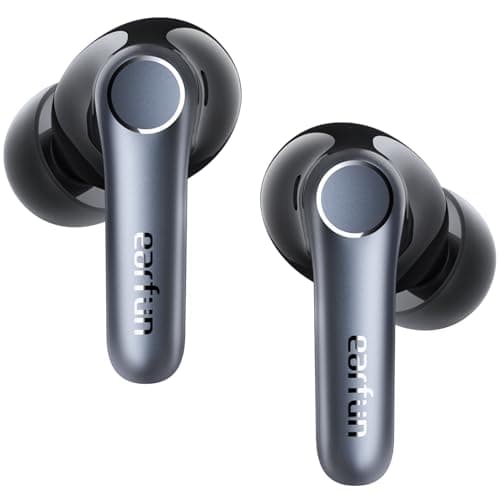 EarFun Air Pro 4Eleven rated hours per bud and 52 with the case, plus LDAC and aptX Lossless, for a small fraction of flagship money. It buys most of the quiet for a little of the price. | Best big-driver bass for the money | 8.08.0 out of 10, our editorial score | |
| 5 | 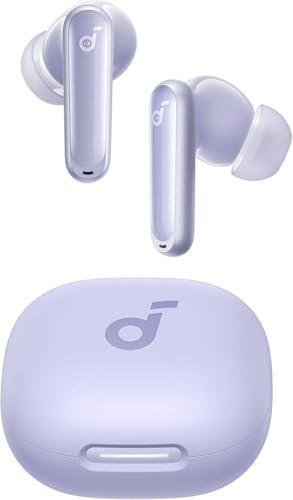 Soundcore P40iA budget earbud rated at 12 hours a charge and 60 with the case, with adaptive canceling and a case that folds out into a phone stand. | Budget pick: the largest driver here, for the least money | 8.08.0 out of 10, our editorial score |
#ad Amazon links are affiliate links. Prices come from Amazon’s own data on the date stamped under the buttons above; where we have no current figure the button reads “Check price on Amazon” instead of guessing. How this is funded.
The picks in full
Every pick, in detail
1. Best bass earbud overall
Beats Powerbeats Pro 2
The ear hook is the whole argument: a sealed earbud that does not migrate out on a long run, with noise canceling for the treadmill and transparency for the road.
Our editorial score: 8.4 / 10
#ad Price as of November 27, 2026. How this is funded
The pick for the listener who wants low end that does not come and go. The ear hook is the reason: it holds the bud at a constant depth, and a constant depth is a constant seal. Every bass claim in this category depends on that seal staying put, and a hooked design is the only mechanism here that does not rely on your ear canal to hold it.
Beats publishes up to 8 hours a bud with canceling or transparency on and 36 with the case, or 10 and 45 in Adaptive EQ, on the Apple H2 chip. Canceling and transparency are both switchable, heart-rate sensors are built in, and the case charges over USB-C or Qi.
What you give up: IPX4 is sweat and splashes, not a rinse. The hooks make the case noticeably larger than a stem earbud case, which matters in a personal item, and they compete with glasses arms for the same space. The best features assume an Apple device, so an Android buyer loses part of what they paid for. Beats does not publish a driver size or a frequency response for it, so the bass case here rests on the fit mechanism and the Adaptive EQ mode rather than on a number.
What works on a plane
- Ear hooks solve the one problem that ruins running earbuds, which is drift
- Switchable canceling and transparency, so the same pair works on the treadmill and the road
- Heart-rate sensing on board removes one more strap from the kit
- USB-C and Qi charging, so it uses whatever cable you already carry
What does not
- IPX4 is splash and sweat only — do not take these into a pool
- The hooks make the case noticeably larger than a stem earbud case
- Best features assume an Apple device, so an Android buyer loses part of what they paid for
How it scores against the five travel axes
Published specifications
| Spec | Figure | Source |
|---|---|---|
| Battery, ANC or transparency on | Up to 8 hours per bud, 36 hours with the case | Beats |
| Battery, Adaptive EQ | Up to 10 hours per bud, 45 hours with the case | Beats |
| Water resistance | IPX4 (sweat and splashes) | Beats |
| Chip | Apple H2 | Beats |
| Noise control | Active noise canceling and transparency | Beats |
| Heart rate | Built-in heart-rate sensors | Beats |
| Charging | USB-C and Qi wireless | Beats |
2. Best for bass you can hear on a plane
Bose QuietComfort Ultra Earbuds (2nd Gen)
The quietest earbuds you can put in a pocket, with the shortest single-charge runtime of the premium set: six rated hours, four with Immersive Audio on.
Our editorial score: 8.4 / 10
#ad Price as of November 27, 2026. How this is funded
For the traveler whose bass problem is actually a noise problem. Engine and carriage drone sits in the same 50-150 Hz band as the bass you are trying to hear, so on a plane the deepest canceller is also the most bass you will perceive without touching the volume.
This is the quietest earbud in our registry in that band, and it does it in something pocketable. Bose publishes up to 6 hours with Immersive Audio off, 4 with it on and up to 18 with the case, IPX4, a case that charges wirelessly, and three stabilizer band sizes with a shallow insertion depth that is far more tolerable on a long flight than a deep-insertion bud.
What you give up: six rated hours means a case top-up on any long-haul, and Immersive Audio cuts that to four, so on a plane you will mostly leave it off. Eighteen hours total is the weakest reserve in the premium earbud set, and the shallow fit that makes it comfortable also makes tip choice matter more, not less.
What works on a plane
- Canceling that genuinely rivals a full-size over-ear, in something pocketable
- The shallow fit is far more tolerable than deep-insertion buds on a long flight
- Wireless case charging is one fewer cable in the bag
What does not
- Six rated hours means a case top-up mid-flight on any long-haul
- Immersive Audio cuts that to four, so on a plane you will mostly leave it off
- 18 hours total with the case is the weakest reserve in the premium earbud set
How it scores against the five travel axes
Published specifications
| Spec | Figure | Source |
|---|---|---|
| Battery, Immersive off | Up to 6 hours | Bose support |
| Battery, Immersive on | Up to 4 hours | Bose support |
| Total with case | Up to 18 hours | Bose support |
| Case charging | USB-C and wireless | Bose support |
| Water resistance | IPX4 | Bose support |
| Fit | Three stabilizer band sizes, shallow insertion | Bose |
Read the full Bose QuietComfort Ultra Earbuds (2nd Gen) review
3. Best bass with the detail kept intact
Sony WF-1000XM6
Eight rated hours per bud and 24 with the case, at roughly 6.5 g each. The most sensible premium earbud for a flight, because you never have to plan around the battery.
Our editorial score: 8.9 / 10
#ad Price as of November 27, 2026. How this is funded
For the listener who wants low end without the rest of the mix going soft. Sony publishes an 8.4 mm driver, the HD Noise Canceling Processor QN3e with dual processors and eight microphones, and LDAC and LC3 alongside SBC and AAC — so on an Android phone there is more data arriving than AAC can carry.
It is also the premium earbud that never makes you plan around the battery: 8 rated hours a bud and 24 with the case, at roughly 6.5 g each with medium tips. A bud that light stays seated when you lie on your side, which is the other half of keeping a seal.
What you give up: canceling is excellent but the Bose still takes the lowest part of the drone band, which on a plane is where perceived bass is won. There is no wired fallback at all, so a seatback screen needs a transmitter, and IPX4 is splash resistance rather than weather resistance.
What works on a plane
- Eight rated hours per charge clears most short-haul flights without touching the case
- 24 hours total with the case is the strongest reserve in the premium earbud set
- LDAC means it is not tied to one phone platform
- Roughly 6.5 g per bud effectively disappears when you are trying to sleep on your side
What does not
- Canceling is excellent but the Bose still takes the low-frequency band
- No wired fallback at all, so a seatback screen needs a transmitter
- IPX4 is splash resistance, not weather resistance
How it scores against the five travel axes
Published specifications
| Spec | Figure | Source |
|---|---|---|
| Battery, earbuds | Up to 8 hours | Sony |
| Total with case | Up to 24 hours (16 from the case) | Sony |
| Weight | Approx. 6.5 g per bud with M tips | Sony |
| Driver | 8.4 mm | Sony |
| Bluetooth | 5.3 | Sony |
| Codecs | SBC, AAC, LDAC, LC3 | Sony |
| Water resistance | IPX4 | Sony |
| Processor | HD Noise Canceling Processor QN3e, dual processors, eight microphones | Sony |
4. Best big-driver bass for the money
EarFun Air Pro 4
Eleven rated hours per bud and 52 with the case, plus LDAC and aptX Lossless, for a small fraction of flagship money. It buys most of the quiet for a little of the price.
Our editorial score: 8.0 / 10
#ad Price as of November 27, 2026. How this is funded
For the Android listener who wants the specification sheet. EarFun publishes 10 mm composite dynamic drivers, aptX Lossless and LDAC on a Qualcomm QCC3091 chipset with Bluetooth 5.4, and 11 hours a bud with 52 in the case — longer per charge than any premium earbud in our registry.
A 10 mm composite driver moves more air than the 8.4 mm unit in the Sony, and at this price that is the most driver area you can buy in a sealed earbud here. With a high-bitrate codec feeding it from an Android phone, it is the cheapest way on this page to get a full-bodied low end.
What you give up: the 50 dB QuietSmart 3.0 figure is EarFun’s own rating rather than an independent measurement, and the gap to Bose is clear in the band that matters on a plane. Adaptive canceling is less steady than a flagship when the noise changes, app polish sits a step behind the majors, and an iPhone cannot use either of those codecs.
What works on a plane
- Eleven rated hours per bud is longer than any premium earbud here
- 52 hours with the case means a two-week trip without a charger thought
- aptX Lossless and LDAC at this price is genuinely unusual
- Losing one on a plane is an annoyance rather than a disaster
What does not
- The 50 dB figure is EarFun's own rating, not an independent measurement, and the gap to Bose is clear
- Adaptive canceling is less steady than the flagships when cabin noise changes
- App polish and firmware support are a step behind the majors
How it scores against the five travel axes
5. Budget pick: the largest driver here, for the least money
Soundcore P40i
A budget earbud rated at 12 hours a charge and 60 with the case, with adaptive canceling and a case that folds out into a phone stand.
Our editorial score: 8.0 / 10
#ad Price as of November 27, 2026. How this is funded
The budget pick, and on paper the most driver area on the page: soundcore publishes 11 mm composite drivers, which is larger than the Sony’s 8.4 mm and the EarFun’s 10 mm, in the cheapest product here by a wide margin.
The rest of the sheet is unusually complete for the price: adaptive canceling, 10 hours a charge and 50 with the case with canceling on, 12 and 60 with it off, IPX5 so rain and sweat are not a worry, six microphones with an AI call algorithm, and a case that folds out into a phone stand.
What you give up: canceling depth trails the premium earbuds by a long way, especially in the low band, so on a plane you will hear less of that big driver than you would at a desk. There is no LDAC, so an Android listener does not get the better codec, and the stock tip selection is narrow — budget a few dollars for foam tips, because on this pick the seal is doing all the work.
What works on a plane
- 60 rated hours with the case, from an earbud in the budget tier
- IPX5 means sweat and rain are not a worry on a commute
- The fold-out case stand is a genuinely useful thing on a tray table
- Adaptive canceling at a price where fixed canceling is the norm
What does not
- Canceling depth is a long way behind the premium earbuds, especially in the low band
- No LDAC, so Android listeners do not get the better codec
- The stock tip selection is narrow, and the seal is what decides earbud canceling
How it scores against the five travel axes
Published specifications
| Spec | Figure | Source |
|---|---|---|
| Battery, canceling off | 12 hours per charge, 60 hours with the case | Soundcore |
| Battery, canceling on | 10 hours per charge, 50 hours with the case | Soundcore |
| Noise canceling | Adaptive ANC | Soundcore |
| Drivers | 11 mm composite | Soundcore |
| Water resistance | IPX5 | Soundcore |
| Microphones | 6, with an AI call algorithm | Soundcore |
| Case | Doubles as a phone stand | Soundcore |
How we decide
How these picks were chosen
We do not run a test lab and we do not claim to have flown with these units. Every verdict on this page is one of three things: a measurement published by somebody who does own a test rig and is credited by name, a manufacturer specification we quote and then interpret against what a long flight actually demands, or a plainly-labeled editorial judgment. The five axes we score on — cabin-noise reduction, battery on a long-haul, pack size, comfort past hour three, and wired fallback — are the ones that decide a travel purchase, and the weighting is published in full.
Questions
Common questions
Do bigger drivers mean more bass in earbuds?
A larger driver moves more air, so all else equal it has more low-frequency capability — the Soundcore P40i publishes 11 mm against the Sony’s 8.4 mm. But all else is rarely equal: tuning, the seal and the canceling floor each change what you hear more than a couple of millimeters of driver does.
Why do my earbuds have no bass?
Almost always the seal. A tip that is slightly too small leaks air, and the low end is what leaks first. Try the next size up, or a foam tip, and check each ear separately — mismatched canals are common. If the fit is good and it still sounds thin, the next suspect is a background noise floor masking the bass.
Does noise canceling improve bass?
It does not add any, but it reveals what was already there. Engine, carriage and HVAC noise occupies the same low band as kick drum and bass guitar, so removing it uncovers detail you were previously turning the volume up to reach. On a plane this is the single biggest difference between these five picks.
Is an app EQ bass boost a good idea?
In moderation. Adding a low shelf costs headroom, so on loud material it can push the driver into distortion where a flat setting would have stayed clean. A better order of operations is fit first, canceling second, EQ third — and the Soundcore and EarFun apps both offer it at no cost.
Are wired earbuds better for bass?
Not inherently, but they remove two variables: there is no codec in the path and no battery-saving processing. What they also remove is active canceling, so on a plane a wired earbud usually delivers less perceived bass than a canceling one, despite having the cleaner signal path.
Sources
Where these figures come from
- Beats Powerbeats Pro 2 product page (battery, IPX4, H2 chip, Adaptive EQ, charging)
- Bose QuietComfort Ultra Earbuds (2nd Gen) specifications (battery with and without Immersive, IPX4, fit)
- Sony WF-1000XM6 specifications (8.4 mm driver, battery, weight, codecs, processor)
- EarFun Air Pro 4 product page (10 mm composite drivers, chipset, codecs, battery)
- Soundcore P40i product page (11 mm composite drivers, battery, IPX5, microphones)
- Sennheiser IE 100 PRO specifications (20 Hz - 18,000 Hz response, distortion, ear adapters)
Read next
Related reading
- Best headphones with deep bass
The over-ear answer, including the one pick with a physical bass slider.
- Best earbuds that don't fall out
The seal mechanisms, which decide bass before the driver does.
- Best earbuds for the money
Where these picks sit on value rather than on low end.
- Best noise-canceling earbuds for flights
Why the deepest canceller sounds like the most bass in a cabin.
- Earbuds vs over-ear for flying
The form-factor decision, which matters most if bass is the priority.