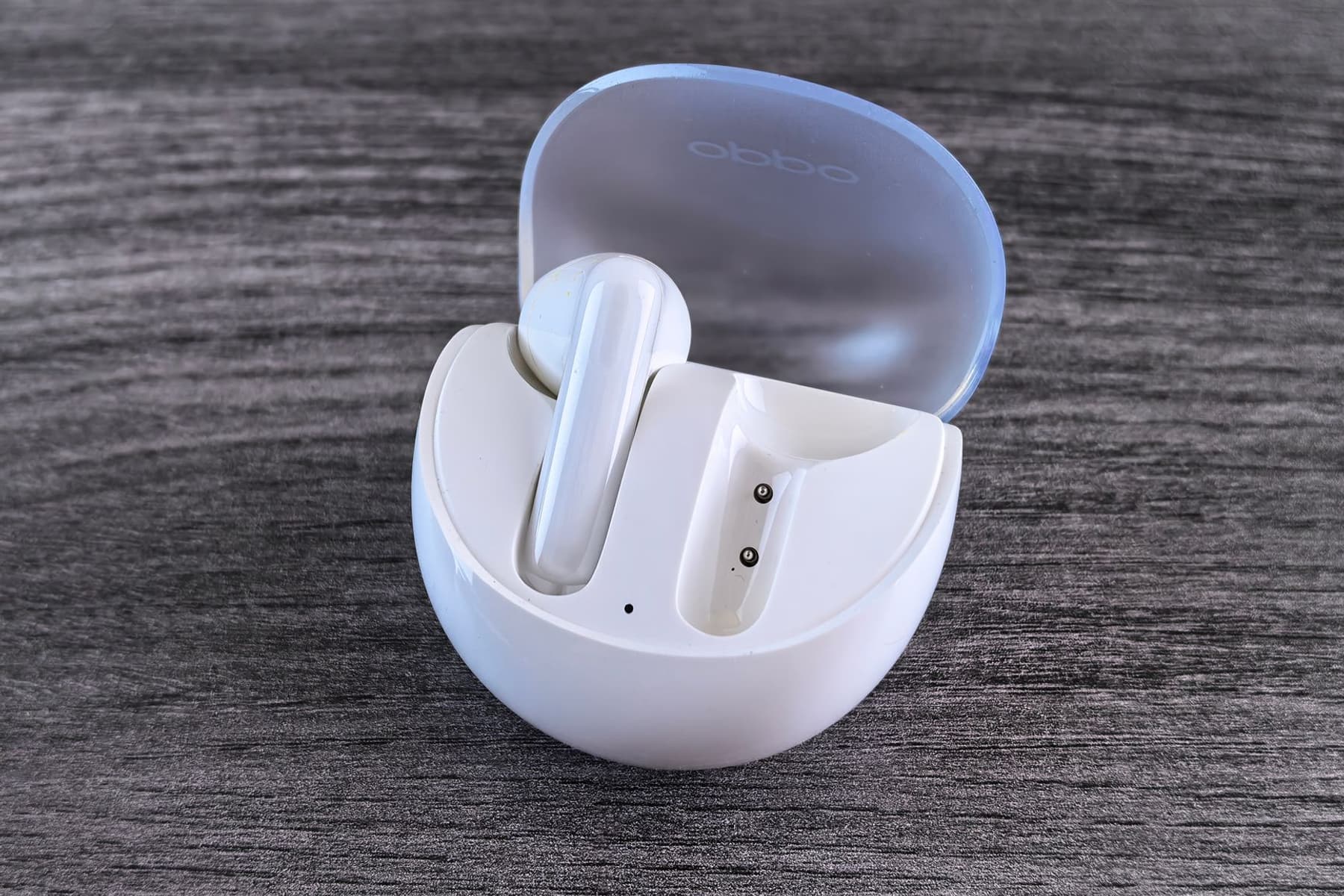
The best earbuds for the money are the EarFun Air Pro 4: 11 rated hours a bud and 52 with the case, with aptX Lossless and LDAC at a fraction of flagship money. If you are buying premium anyway, the Sony WF-1000XM6 is the sensible one at 8 hours a bud and 24 with the case; the Sennheiser IE 100 PRO buys the most sound per dollar if you accept a cable. The budget pick is the Soundcore P40i, the cheapest earbud here with real adaptive canceling. Prices come from Amazon’s own data, stamped with the date in each button.
The comparison
What each value pick publishes
| Per bud | With case | Codecs | Canceling | |
|---|---|---|---|---|
| EarFun Air Pro 4 | 11 h | 52 h | aptX Lossless, LDAC, AAC, SBC | Active, EarFun's own 50 dB rating |
| Sony WF-1000XM6 | 8 h | 24 h | SBC, AAC, LDAC, LC3 | Active, QN3e with eight microphones |
| Sennheiser IE 100 PRO | No battery | No battery | Wired, 3.5 mm | None, passive seal only |
| Soundcore P40i | 10 h ANC on, 12 h off | 50 h / 60 h | No LDAC | Adaptive |
The two cheapest earbuds on this page publish longer battery than both flagships. That is not marketing — it is what happens when a bud does not have to be tiny or packed with processors.
The curve
What the extra money buys in an earbud
Moving up the earbud market buys four things and not much else: canceling depth in the lowest frequencies, canceling that settles rather than hunts when the noise changes, fit hardware such as multiple band or foam tip sizes, and phone integration. It does not buy battery, and it does not reliably buy a better water rating.
| Spending more buys | Spending more does not buy |
|---|---|
| The deepest part of the drone band | Longer battery per charge |
| Canceling that stays steady | A wired path to a seatback screen |
| Better fit hardware and tip options | A tougher water rating, necessarily |
| Tighter phone and ecosystem features | Codec support beyond what your phone has |
| Call quality in wind and noise | Freedom from needing the right tip |
That last row is the one people underestimate. In an earbud the tip seal does most of the isolating, so a badly fitted flagship is quieter than a well-fitted budget pair. If tips have never fitted you, fix that before spending more: best earbuds for small ears and best earbuds that don’t fall out.
Which one
Pick by your phone and your route
Android
The EarFun is the value answer and the Sony is the premium one, because both carry LDAC and Android can use it. The codec question is settled at LDAC vs AAC for travel, and the full Android shortlist is at best noise-canceling earbuds for Android.
iPhone
An iPhone streams AAC and cannot use LDAC or aptX, which erases the EarFun’s headline feature and moves the decision to fit, battery and integration: best earbuds for iPhone.
Long-haul flights
Battery and a wired path decide it. The EarFun and the P40i win the first on published figures; only the Sennheiser answers the second without a transmitter. Both halves are covered at longest battery life earbuds and best wired earbuds for flights.
No price is written into this page. Today’s figure sits inside each buy button, read from Amazon’s own data and stamped with the date it was read, so it expires by itself rather than sitting here being wrong — the policy is at how we choose. The over-ear version of this question is at best headphones for the money.
In short
Key takeaways
- EarFun Air Pro 4: the best value in our registry, at 11 rated hours a bud, 52 with the case, plus aptX Lossless and LDAC.
- Sony WF-1000XM6: 8 hours a bud and 24 with the case, roughly 6.5 g each, with LDAC and the strongest premium reserve.
- Sennheiser IE 100 PRO: a published spec sheet, no battery, and a 3.5 mm plug that works directly with a seatback screen.
- Budget pick: Soundcore P40i, the cheapest earbud here with real adaptive canceling and up to 60 hours with the case.
- Spending more buys canceling depth and fit hardware. It does not buy battery, and the cheap pairs win that outright.
At a glance
Quick picks
Scores are our editorial judgment from published specifications and cited third-party measurements, not our own testing. The rubric is published in full. Tap any row for the full write-up.
| # | Product | Best for | Score | Price |
|---|---|---|---|---|
| 1 | 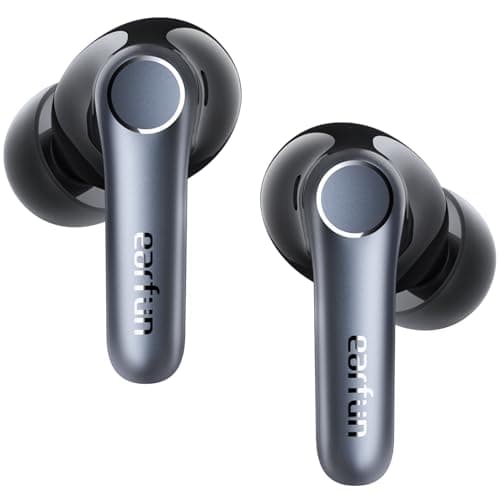 EarFun Air Pro 4Eleven rated hours per bud and 52 with the case, plus LDAC and aptX Lossless, for a small fraction of flagship money. It buys most of the quiet for a little of the price. | Best value overall | 8.08.0 out of 10, our editorial score | |
| 2 | 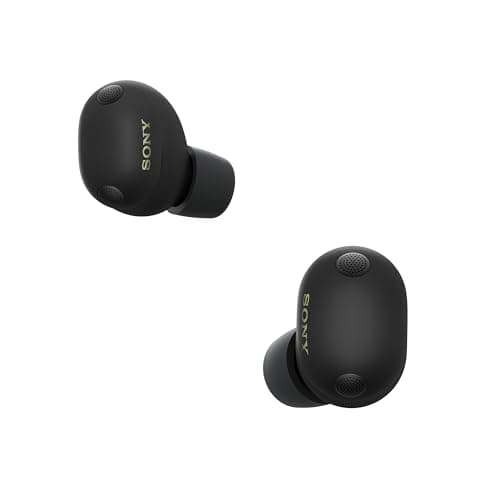 Sony WF-1000XM6Eight rated hours per bud and 24 with the case, at roughly 6.5 g each. The most sensible premium earbud for a flight, because you never have to plan around the battery. | Best value at the top of the market | 8.98.9 out of 10, our editorial score | |
| 3 | 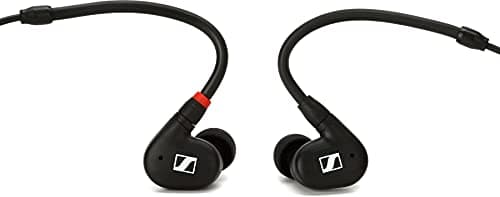 Sennheiser IE 100 PROA stage in-ear monitor with a published specification sheet rather than a marketing number: a single 10 mm broadband driver, a detachable cable and a distortion figure Sennheiser is willing to print. | Best sound per dollar, with a cable | 8.58.5 out of 10, our editorial score | |
| 4 | 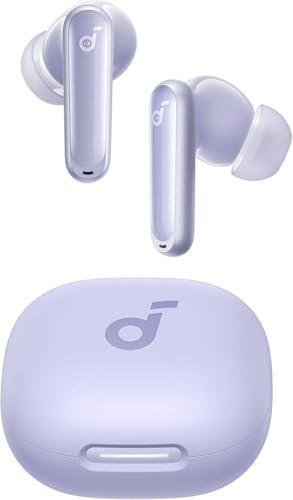 Soundcore P40iA budget earbud rated at 12 hours a charge and 60 with the case, with adaptive canceling and a case that folds out into a phone stand. | Budget pick: the cheapest canceller worth owning | 8.08.0 out of 10, our editorial score |
#ad Amazon links are affiliate links. Prices come from Amazon’s own data on the date stamped under the buttons above; where we have no current figure the button reads “Check price on Amazon” instead of guessing. How this is funded.
The picks in full
Every pick, in detail
1. Best value overall
EarFun Air Pro 4
Eleven rated hours per bud and 52 with the case, plus LDAC and aptX Lossless, for a small fraction of flagship money. It buys most of the quiet for a little of the price.
Our editorial score: 8.0 / 10
#ad Price as of November 27, 2026. How this is funded
The pick for most people, and the clearest value case in our registry: EarFun publishes 11 hours per bud and 52 with the case — longer per charge than any premium earbud here — plus aptX Lossless and LDAC on a Qualcomm QCC3091 chipset with Bluetooth 5.4.
Those are specifications the flagships charge several times as much for, and the 11-hour figure is the one that changes a travel day: a long sector and the train at the other end without opening the case. Losing one is an annoyance rather than a disaster, which has its own value.
The 50 dB QuietSmart 3.0 rating is EarFun’s own number, not an independent measurement, and the gap to Bose is clear. Adaptive canceling is less steady than a flagship when noise changes, app polish trails the majors, and an iPhone cannot use either of those codecs.
What works on a plane
- Eleven rated hours per bud is longer than any premium earbud here
- 52 hours with the case means a two-week trip without a charger thought
- aptX Lossless and LDAC at this price is genuinely unusual
- Losing one on a plane is an annoyance rather than a disaster
What does not
- The 50 dB figure is EarFun's own rating, not an independent measurement, and the gap to Bose is clear
- Adaptive canceling is less steady than the flagships when cabin noise changes
- App polish and firmware support are a step behind the majors
How it scores against the five travel axes
2. Best value at the top of the market
Sony WF-1000XM6
Eight rated hours per bud and 24 with the case, at roughly 6.5 g each. The most sensible premium earbud for a flight, because you never have to plan around the battery.
Our editorial score: 8.9 / 10
#ad Price as of November 27, 2026. How this is funded
For the traveler who is going to buy a premium earbud anyway and wants the one that does not make them plan around it. Sony publishes 8 hours a bud and 24 with the case, which is the strongest reserve in the premium earbud set.
It is roughly 6.5 g a bud with medium tips, so it effectively disappears when you are trying to sleep on your side, and it carries LDAC and LC3 so it is not tied to one phone platform. The canceling runs on the QN3e processor with dual processors and eight microphones.
Canceling is excellent but the Bose still takes the lowest part of the drone band, there is no wired fallback at all so a seatback screen needs a transmitter, and IPX4 is splash resistance rather than weather resistance.
What works on a plane
- Eight rated hours per charge clears most short-haul flights without touching the case
- 24 hours total with the case is the strongest reserve in the premium earbud set
- LDAC means it is not tied to one phone platform
- Roughly 6.5 g per bud effectively disappears when you are trying to sleep on your side
What does not
- Canceling is excellent but the Bose still takes the low-frequency band
- No wired fallback at all, so a seatback screen needs a transmitter
- IPX4 is splash resistance, not weather resistance
How it scores against the five travel axes
Published specifications
| Spec | Figure | Source |
|---|---|---|
| Battery, earbuds | Up to 8 hours | Sony |
| Total with case | Up to 24 hours (16 from the case) | Sony |
| Weight | Approx. 6.5 g per bud with M tips | Sony |
| Driver | 8.4 mm | Sony |
| Bluetooth | 5.3 | Sony |
| Codecs | SBC, AAC, LDAC, LC3 | Sony |
| Water resistance | IPX4 | Sony |
| Processor | HD Noise Canceling Processor QN3e, dual processors, eight microphones | Sony |
3. Best sound per dollar, with a cable
Sennheiser IE 100 PRO
A stage in-ear monitor with a published specification sheet rather than a marketing number: a single 10 mm broadband driver, a detachable cable and a distortion figure Sennheiser is willing to print.
Our editorial score: 8.5 / 10
#ad Price as of November 27, 2026. How this is funded
For the listener who would rather have a published specification sheet than a battery. This is a stage in-ear monitor: a 10 mm dynamic broadband transducer, 20 ohm, 115 dB SPL at 1 kHz and distortion under 0.1 percent.
On a plane the 1.3 m detachable cable with its 3.5 mm plug is an advantage rather than a compromise — it reaches a seatback screen with no transmitter, and there is no battery to run out on hour nine. Foam and silicone adapters are in the box, and a detachable cable makes a frayed cable a repair rather than a replacement.
There is no active canceling at all, so isolation comes entirely from the tip seal, and no microphone on the stock cable, so it is not a call headset. There is also a cable in your lap, which some people will not accept.
What works on a plane
- A real specification sheet with distortion and impedance figures, which most earbuds never publish
- No battery at all, so it never runs out and never degrades
- Detachable cable means a frayed cable is a repair rather than a replacement
- Foam and silicone tips in the box, so the seal that does all the isolating is yours to tune
What does not
- Wired, so there is a cable in your lap and no Bluetooth on a plane without an adapter
- No active noise canceling at all — isolation comes entirely from the tip seal
- No microphone on the stock cable, so it is not a call headset
How it scores against the five travel axes
Published specifications
| Spec | Figure | Source |
|---|---|---|
| Frequency response | 20 - 18,000 Hz | Sennheiser |
| Impedance | 20 ohm | Sennheiser |
| Sound pressure level | 115 dB (1 kHz, 1 Vrms) | Sennheiser |
| Distortion | THD < 0.1 % (1 kHz, 94 dB) | Sennheiser |
| Transducer | 10 mm dynamic broadband | Sennheiser |
| Cable | 1.3 m detachable, 3.5 mm jack plug | Sennheiser |
| In the box | Foam and silicone ear adapters, soft pouch, cleaning tool | Sennheiser |
4. Budget pick: the cheapest canceller worth owning
Soundcore P40i
A budget earbud rated at 12 hours a charge and 60 with the case, with adaptive canceling and a case that folds out into a phone stand.
Our editorial score: 8.0 / 10
#ad Price as of November 27, 2026. How this is funded
The budget pick, and the floor of this category rather than its basement. It is the cheapest product in our registry with real adaptive canceling, and it holds the largest total runtime of anything here.
soundcore publishes 12 hours per charge and 60 with the case with canceling off, 10 and 50 with it on, IPX5, 11 mm composite drivers, six microphones with an AI call algorithm, and a case that folds out into a phone stand.
Canceling depth is a long way behind the premium earbuds, especially in the low band where engine drone lives. There is no LDAC, and the stock tip selection is narrow — budget a little for aftermarket tips, because the seal is what decides earbud canceling.
What works on a plane
- 60 rated hours with the case, from an earbud in the budget tier
- IPX5 means sweat and rain are not a worry on a commute
- The fold-out case stand is a genuinely useful thing on a tray table
- Adaptive canceling at a price where fixed canceling is the norm
What does not
- Canceling depth is a long way behind the premium earbuds, especially in the low band
- No LDAC, so Android listeners do not get the better codec
- The stock tip selection is narrow, and the seal is what decides earbud canceling
How it scores against the five travel axes
Published specifications
| Spec | Figure | Source |
|---|---|---|
| Battery, canceling off | 12 hours per charge, 60 hours with the case | Soundcore |
| Battery, canceling on | 10 hours per charge, 50 hours with the case | Soundcore |
| Noise canceling | Adaptive ANC | Soundcore |
| Drivers | 11 mm composite | Soundcore |
| Water resistance | IPX5 | Soundcore |
| Microphones | 6, with an AI call algorithm | Soundcore |
| Case | Doubles as a phone stand | Soundcore |
How we decide
How these picks were chosen
We do not run a test lab and we do not claim to have flown with these units. Every verdict on this page is one of three things: a measurement published by somebody who does own a test rig and is credited by name, a manufacturer specification we quote and then interpret against what a long flight actually demands, or a plainly-labeled editorial judgment. The five axes we score on — cabin-noise reduction, battery on a long-haul, pack size, comfort past hour three, and wired fallback — are the ones that decide a travel purchase, and the weighting is published in full.
Questions
Common questions
Are cheap earbuds good enough now?
For battery, codecs and water resistance, yes — the budget tier publishes figures the flagships do not match. What it does not match is the lowest part of the canceling band, canceling steadiness when noise changes, and long-term firmware support.
Which earbuds have the best battery for the money?
On published figures, the EarFun Air Pro 4 at 11 hours a bud and 52 with the case, and the Soundcore P40i at 12 hours a charge and 60 with the case with canceling off. Both are the cheapest products on this page, which is the quiet joke of the category.
Is it worth paying for LDAC or aptX Lossless?
Only if your phone supports it. An iPhone cannot use either, so on iOS those line items are worth nothing; on Android they are a genuine upgrade over AAC on detailed material. The comparison is at LDAC vs AAC for travel.
Should I buy wired earbuds to save money?
If a plane is where you use them most, it is a serious option: a 3.5 mm plug works with a seatback screen where no wireless earbud can, there is no battery to age, and the money goes into the driver instead of the radio. You give up canceling, a microphone and convenience.
Sources
Where these figures come from
- EarFun Air Pro 4 product page (11 h per bud, 52 h with case, chipset, codecs)
- Sony WF-1000XM6 specifications (battery, weight, codecs, processor, IPX4)
- Sennheiser IE 100 PRO specifications (transducer, impedance, SPL, distortion, cable)
- Soundcore P40i product page (battery in both canceling states, IPX5, microphones)
Read next
Related reading
- Best headphones for the money
The over-ear version of the same value question.
- Best budget noise-canceling earbuds
The bottom of this market, ranked on canceling alone.
- Best earbuds under $200
The same shortlist under a hard ceiling.
- Longest battery life earbuds
Why the cheap picks lead on runtime.
- Best noise-canceling earbuds for travel
The travel shortlist these four come from.