For travel, wireless with a wired fallback is the right answer: a pair like the Sony WH-1000XM6 gives Bluetooth 5.3 with LDAC for daily use and a 4 Hz to 40,000 Hz wired mode for seatback screens and dead batteries. Buy genuinely wired — a Koss Porta Pro or a Sennheiser IE 100 PRO — only if you want zero batteries and zero latency, and accept losing canceling to get them.
The figures
What each side actually gives you
| Wireless (Bluetooth) | Wired (3.5 mm) | |
|---|---|---|
| Battery | Required. 8 to 60 rated hours depending on model | None needed |
| Latency | Codec-dependent, audible on video without a low-latency codec | None |
| Noise canceling | Available, and the reason to buy wireless | Passive isolation only, except on hybrid models |
| In-flight entertainment | Needs a transmitter such as an AirFly | Plugs straight into the socket |
| Phone compatibility | Universal | Often needs a USB-C or Lightning dongle |
| Failure mode | Flat battery, dropped pairing, firmware | A broken cable, usually at the plug |
| Cost for equivalent sound | Higher | Lower |
Latency
The gap that only shows up on video
Bluetooth has to buffer, encode, transmit and decode, and each stage adds delay. For music that is invisible. For a film it is lip-sync, and whether you notice depends almost entirely on the codec in use — Bluetooth audio latency on a plane goes through the mechanism and the numbers manufacturers do publish.
A wire has no such stage. That is the single clearest technical win for wired, and it is why the AirFly Pro 2 specifically advertises aptX HD Adaptive rather than plain Bluetooth.
Codec choice is the wireless answer
LDAC prioritises bitrate, AAC prioritises compatibility, and the low-latency codecs prioritise exactly the thing a film needs. LDAC versus AAC for travel covers which to pick and when the difference is audible at all.
Wireless lost one argument and won the war. The one it lost happens at 35,000 feet with a film playing.
Sound quality
Does wired still sound better?
At the same price, usually yes, and for a reason that has nothing to do with the cable: a wired product spends none of its budget on a battery, a radio, microphones, a processor or an app, so more of it goes into the driver and the housing. That is why a wired pair at $50 can embarrass a wireless pair at $100.
At flagship prices the gap narrows to the point where, on a plane, it is the wrong thing to optimise. Cabin noise raises your listening floor far more than a codec lowers your ceiling. If sound quality is genuinely your first criterion, are audiophile headphones good for travel is the page that argues this out properly.
In the cabin
The seatback screen decides more of this than sound does
Plenty of aircraft still present a 3.5 mm socket, and some older systems use a twin-pin arrangement that needs an adapter. Airplane headphone jack adapters covers what to carry. A growing number of airlines also support Bluetooth pairing directly — Bluetooth headphones and in-flight entertainment is the current state of that.
Until that is universal, the three workable strategies are: carry a cable for your wireless pair, carry a transmitter, or carry a cheap wired pair as a backup. All three are cheaper than buying the wrong headphones.
The verdict
Who should buy which
- Wireless with a cable in the box for almost every traveller. You get canceling, which is the thing that makes a flight bearable, and a wire for when Bluetooth is not an option.
- A transmitter if you fly often and refuse to carry a cable. 25+ hours and two-headphone pairing makes the AirFly the practical choice.
- Genuinely wired if you want zero batteries, zero latency and the most sound per dollar — and you are not relying on it to quiet an aircraft.
- Both is the honest answer for frequent flyers. A cheap wired pair weighs almost nothing and removes an entire category of failure.
In short
Key takeaways
- Sony WH-1000XM6: Bluetooth 5.3 with LDAC plus a 4 Hz to 40,000 Hz wired mode, and canceling still works on the cable. No cable supplied.
- Twelve South AirFly Pro 2: 25+ hours, aptX HD Adaptive and two-headphone pairing, so wireless works on a seatback socket.
- Koss Porta Pro: wired, no battery, 15 Hz to 25,000 Hz and a limited lifetime warranty, but almost no isolation.
- Sennheiser IE 100 PRO: a sealed wired in-ear with a detachable 1.3 m cable and THD below 0.1 percent.
- Latency is the one technical argument wired wins outright, and it only matters on video.
- At equal price wired sounds better because none of the budget goes on radios, batteries and processors.
At a glance
Quick picks
Scores are our editorial judgment from published specifications and cited third-party measurements, not our own testing. The rubric is published in full. Tap any row for the full write-up.
| # | Product | Best for | Score | Price |
|---|---|---|---|---|
| 1 | 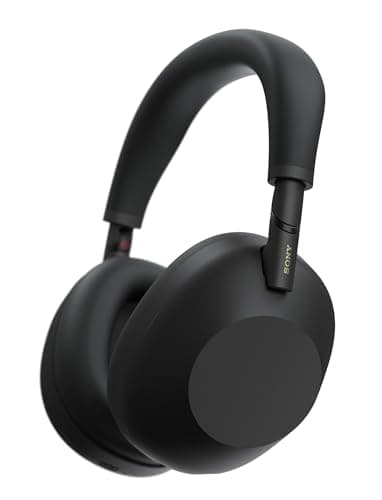 Sony WH-1000XM6The most complete travel headphone on sale: 254 g, 30 rated hours with noise canceling on, and it folds into a case small enough to stop being a decision. | Best wireless with a real wired fallback | 9.19.1 out of 10, our editorial score | |
| 2 | 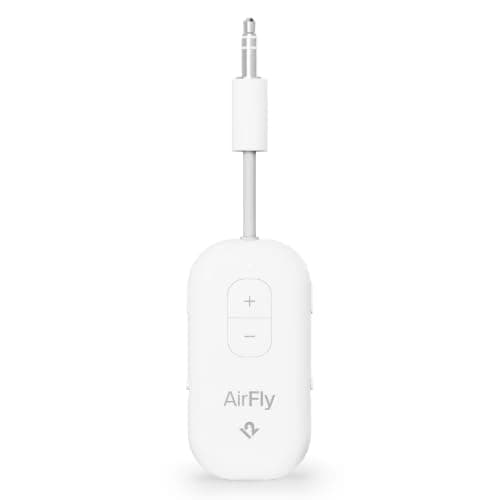 Twelve South AirFly Pro 2The single accessory that makes any wireless headphone work with a seatback screen: plug it into the airline jack and it sends the audio to your headphones over Bluetooth. | Best way to keep wireless on a plane | 9.09.0 out of 10, our editorial score | |
| 3 | 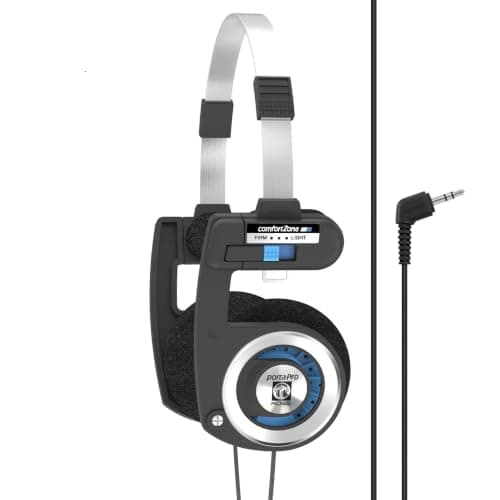 Koss Porta ProA limited lifetime warranty on the cheapest over-ear here, which means the least expensive headphone on this site is also the one least likely to need replacing. | Best cheap wired pair | 7.47.4 out of 10, our editorial score | |
| 4 | 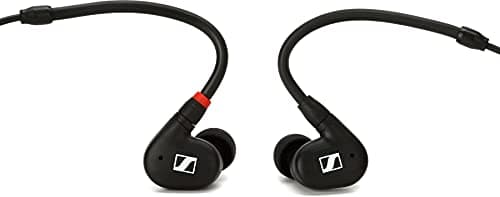 Sennheiser IE 100 PROA stage in-ear monitor with a published specification sheet rather than a marketing number: a single 10 mm broadband driver, a detachable cable and a distortion figure Sennheiser is willing to print. | Best wired option with a real seal | 8.58.5 out of 10, our editorial score |
#ad Amazon links are affiliate links. Prices come from Amazon’s own data on the date stamped under the buttons above; where we have no current figure the button reads “Check price on Amazon” instead of guessing. How this is funded.
The picks in full
Every pick, in detail
1. Best wireless with a real wired fallback
Sony WH-1000XM6
The most complete travel headphone on sale: 254 g, 30 rated hours with noise canceling on, and it folds into a case small enough to stop being a decision.
Our editorial score: 9.1 / 10
#ad Price as of November 11, 2026. How this is funded
The answer for most people is wireless that can go wired, and this is the best example of it. Bluetooth 5.3 with SBC, AAC, LDAC and LC3 for daily use, plus a wired response quoted at 4 Hz to 40,000 Hz for the cases Bluetooth cannot cover.
Approximately 254 g, up to 30 rated hours with canceling on and 40 with it off, folding into a magnetic-closure case. Active canceling still works in wired mode, which is the detail that makes the fallback genuinely useful rather than a formality.
The caveat is specific and worth knowing before you fly: Sony does not supply a cable. A pair sold on its wired fallback that arrives without the cable is a $15 errand you should run before the trip, not at the airport.
What works on a plane
- Folds, which halves the space it takes in a personal item
- 254 g is light for a flagship over-ear, and weight is what you feel at hour four
- LDAC plus LC3 means it is not locked to one phone ecosystem
- 30 rated hours with noise canceling on covers almost any single routing
What does not
- You pay a flagship price for the last increment of noise canceling
- The folding hinge is one more mechanism to eventually wear out
- No airline two-prong adapter in the box
How it scores against the five travel axes
Published specifications
| Spec | Figure | Source |
|---|---|---|
| Weight | Approx. 254 g (9 oz) | Sony Help Guide specifications |
| Battery, NC on | Up to 30 hours | Sony specifications |
| Battery, NC off | Up to 40 hours | Sony specifications |
| Full charge | Approx. 3.5 hours | Sony Help Guide specifications |
| Bluetooth | 5.3 | Sony Help Guide specifications |
| Codecs | SBC, AAC, LDAC, LC3 | Sony Help Guide specifications |
| Wired response | 4 Hz - 40,000 Hz (IEC) | Sony Help Guide specifications |
| Folds | Yes, into a magnetic-closure case | Sony |
| In the box | Headset, headphone cable, USB-C cable, carrying case, documents | Sony Help Guide, Included items |
2. Best way to keep wireless on a plane
Twelve South AirFly Pro 2
The single accessory that makes any wireless headphone work with a seatback screen: plug it into the airline jack and it sends the audio to your headphones over Bluetooth.
Our editorial score: 9.0 / 10
#ad Price as of November 11, 2026. How this is funded
The product that removes the main reason to own wired headphones. It plugs into the seatback 3.5 mm socket and transmits to the wireless headphones you already own, over Bluetooth 5.3 with aptX HD Adaptive — a low-latency codec, which is the part that matters for a film.
25+ hours of battery, a full charge in about two hours over USB-C, transmitter and receiver modes, and pairing for two sets of headphones at once so two people can watch the same screen.
It is one more thing to charge and one more thing to lose, and it does not help if the socket itself is the odd twin-pin type. For a frequent flyer who refuses to carry a second pair of headphones, it is still the cleanest fix available.
What works on a plane
- 25+ rated hours outlasts any single flight you will ever take
- Pairs two sets of headphones, so two people can watch one screen
- Receiver mode makes it useful in a rental car with only an aux input
- Works with any Bluetooth headphone, so it outlives whatever you own now
What does not
- One more small object to charge and not lose
- Adds a small amount of latency, which shows on lip sync for some people
- A single 3.5 mm plug, so older twin-socket seats still want a two-prong adapter
How it scores against the five travel axes
Published specifications
| Spec | Figure | Source |
|---|---|---|
| Battery | 25+ hours | Twelve South |
| Full charge | About 2 hours via USB-C | Twelve South |
| Bluetooth | 5.3, aptX HD Adaptive | Twelve South |
| Modes | Transmitter and receiver | Twelve South |
| Pairing | Two sets of headphones at once | Twelve South |
| Connection | 3.5 mm AUX | Twelve South |
3. Best cheap wired pair
Koss Porta Pro
A limited lifetime warranty on the cheapest over-ear here, which means the least expensive headphone on this site is also the one least likely to need replacing.
Our editorial score: 7.4 / 10
#ad Price as of November 11, 2026. How this is funded
The argument for wired, stated plainly. No battery, no pairing, no firmware, no codec negotiation and no latency — and a limited lifetime warranty on a product that costs a fraction of anything wireless here.
15 Hz to 25,000 Hz, 60 ohms, 101 dB SPL/1mW sensitivity, and a straight 4 ft dual-entry cable with a 3.5 mm plug. Koss categorises it as an on-ear, and it does not seal against the head at all, so it runs cool and survives a long session in a warm room better than any sealed design.
What it gives up is everything to do with isolation: no canceling and very little passive attenuation, so on a plane or a subway it is the wrong tool. As a second pair in a bag for the day the first pair dies, it is close to unbeatable.
What works on a plane
- A limited lifetime warranty at this price, which is not a normal thing to find
- Wired, so there is no battery to degrade and nothing to charge
- Collapses flat into a bag with no case and no hinge to snap
- The 3.5 mm plug works with a seatback screen directly, no transmitter required
What does not
- Open-backed on-ear, so it blocks very little and leaks sound to your neighbor
- No noise canceling whatsoever — this is the wrong purchase for engine drone
- Foam pads wear out, though replacements are cheap and easy to fit
How it scores against the five travel axes
4. Best wired option with a real seal
Sennheiser IE 100 PRO
A stage in-ear monitor with a published specification sheet rather than a marketing number: a single 10 mm broadband driver, a detachable cable and a distortion figure Sennheiser is willing to print.
Our editorial score: 8.5 / 10
#ad Price as of November 11, 2026. How this is funded
The wired pick that actually works in a noisy cabin, because the isolation comes from the tip rather than from a processor. 20 Hz to 18,000 Hz, 20 ohms, 115 dB at 1 kHz and 1 Vrms, with total harmonic distortion below 0.1 percent.
A 10 mm dynamic broadband transducer, a 1.3 m detachable cable terminating in a 3.5 mm jack, and both foam and silicone ear adapters plus a soft pouch and a cleaning tool in the box. The detachable cable is the quiet advantage: cables are the part that fails, and this one is replaceable.
The trade is obvious — a cable to your phone in 2026 usually means a dongle, and there is no canceling, no transparency and no app. In exchange nothing can run out of charge. Headphones versus IEMs is the longer version of that decision.
What works on a plane
- A real specification sheet with distortion and impedance figures, which most earbuds never publish
- No battery at all, so it never runs out and never degrades
- Detachable cable means a frayed cable is a repair rather than a replacement
- Foam and silicone tips in the box, so the seal that does all the isolating is yours to tune
What does not
- Wired, so there is a cable in your lap and no Bluetooth on a plane without an adapter
- No active noise canceling at all — isolation comes entirely from the tip seal
- No microphone on the stock cable, so it is not a call headset
How it scores against the five travel axes
Published specifications
| Spec | Figure | Source |
|---|---|---|
| Frequency response | 20 - 18,000 Hz | Sennheiser |
| Impedance | 20 ohm | Sennheiser |
| Sound pressure level | 115 dB (1 kHz, 1 Vrms) | Sennheiser |
| Distortion | THD < 0.1 % (1 kHz, 94 dB) | Sennheiser |
| Transducer | 10 mm dynamic broadband | Sennheiser |
| Cable | 1.3 m detachable, 3.5 mm jack plug | Sennheiser |
| In the box | Foam and silicone ear adapters, soft pouch, cleaning tool | Sennheiser |
How we decide
How these picks were chosen
We do not run a test lab and we do not claim to have flown with these units. Every verdict on this page is one of three things: a measurement published by somebody who does own a test rig and is credited by name, a manufacturer specification we quote and then interpret against what a long flight actually demands, or a plainly-labeled editorial judgment. The five axes we score on — cabin-noise reduction, battery on a long-haul, pack size, comfort past hour three, and wired fallback — are the ones that decide a travel purchase, and the weighting is published in full.
Questions
Common questions
Are wired headphones better than wireless?
For sound per dollar and for latency, yes. For travel overall, no — wireless gives you active noise canceling, which removes more of an aircraft than any wired pair can, and most good wireless models accept a cable as a fallback anyway.
Do wired headphones work with in-flight entertainment?
Yes, provided the seat has a 3.5 mm socket. Some older systems use a twin-pin arrangement and need a cheap adapter. A wireless pair needs either airline Bluetooth support or a transmitter plugged into the same socket.
Is there a noticeable delay with wireless headphones?
On music, no. On video, it depends on the codec: standard Bluetooth codecs can put audio far enough behind the picture to be visible on lip movement, while low-latency codecs such as aptX Adaptive are built specifically to avoid it.
Do noise cancelling headphones still cancel when plugged in?
On most models yes, as long as the battery has charge — canceling is an active system and needs power regardless of how the audio arrives. The Sony WH-1000XM6 keeps canceling in wired mode, which is what makes its wired fallback worth having.
Should I buy a wired pair as a backup for flights?
It is cheap insurance. A pair like the Koss Porta Pro weighs almost nothing, costs a fraction of a flagship, needs no charge and plugs straight into a seatback screen. It will not quiet the cabin, which is why it is a backup rather than a replacement.
Sources
Where these figures come from
- Sony WH-1000XM6 specifications (Bluetooth, codecs, wired response, battery, weight)
- Twelve South AirFly Pro 2 product page (battery, Bluetooth 5.3, aptX HD Adaptive, modes)
- Koss Porta Pro product page (frequency response, impedance, sensitivity, cable, warranty)
- Sennheiser IE 100 PRO product page (frequency response, impedance, SPL, THD, cable)
Read next
Related reading
- Koss Porta Pro review
The cheapest wired argument on the site, reviewed.
- Best wired headphones for flights
If this page convinced you to go wired, these are the picks.
- Bluetooth audio latency on a plane
The mechanism behind the one argument wired wins.
- Bluetooth headphones and in-flight entertainment
Which airlines pair directly, and what to do when they do not.
- Airplane headphone jack adapters
The twin-pin socket and the cheap thing that fixes it.