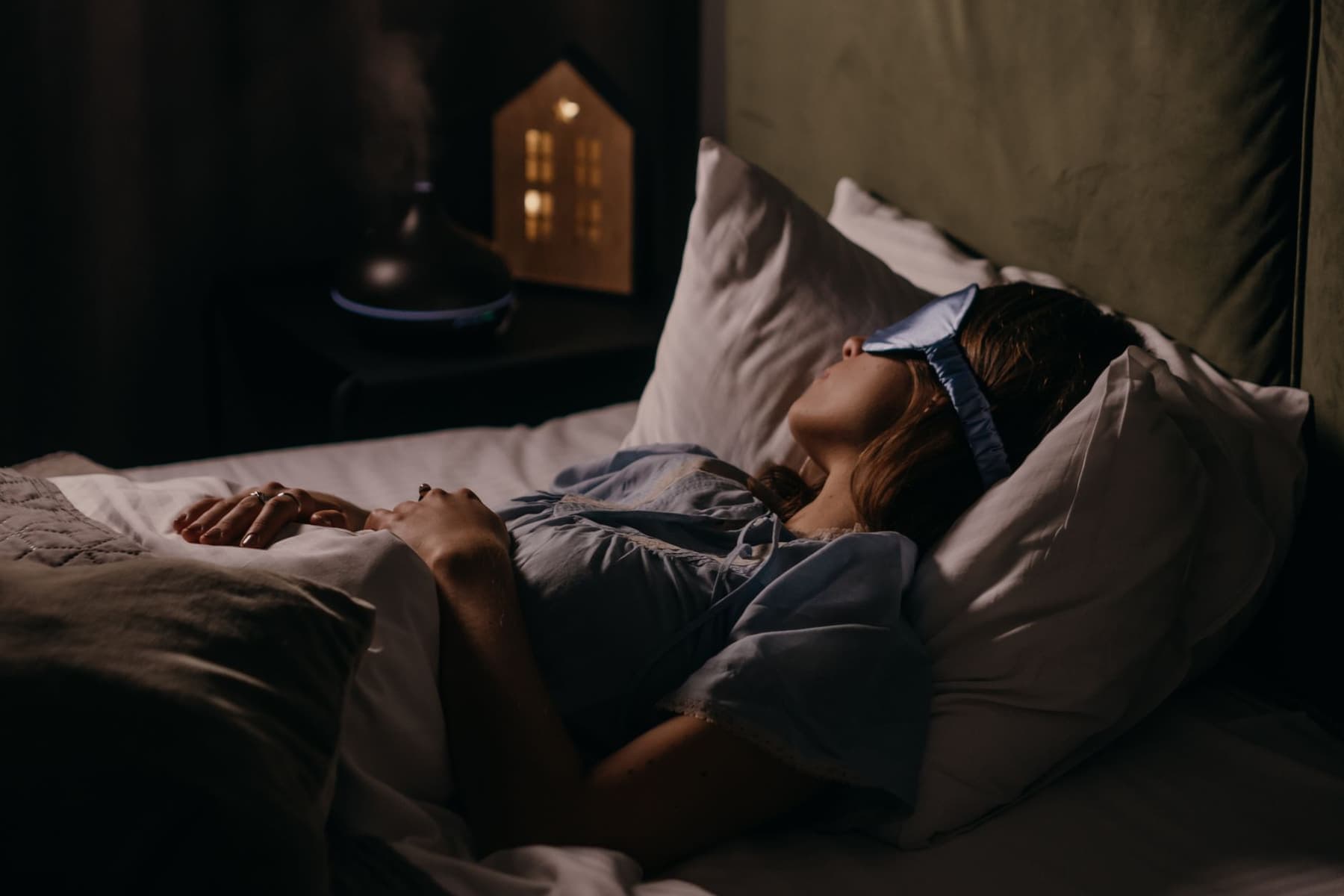
Partly. Active canceling removes the low rumbling part of a snore effectively, but a snore is irregular and broadband, and the rasping upper component is exactly the kind of sound active systems handle worst. The combination that works is a good physical seal plus a steady masking sound of your own, in a product you can comfortably wear lying down.
Why it is hard
Three reasons a snore defeats canceling
It is irregular
Active canceling predicts the next fraction of a waveform and plays its inverse. That works beautifully on a steady drone and poorly on a sound that starts, stops, changes pitch and occasionally stops breathing altogether. A jet engine is predictable; a snore is not.
It is broadband
A snore has a low rumbling component and a rasping, hissing component sitting well above it. Canceling is strongest at the bottom and weakest at the top, so what you are left with is the rasp — which is the part that actually wakes people. Active canceling versus passive isolation explains the frequency split.
It is close
An aircraft engine is metres away through a fuselage. A snore is half a metre away across a pillow, at a level that no consumer attenuation figure was designed for. Distance is a specification nobody quotes and it matters enormously.
The same three reasons explain why canceling does not remove voices either. A snore is, acoustically, a very unhelpful kind of speech.
Canceling removes the rumble. The rasp is what wakes you, and the rasp is the part it cannot reach.
What works
The three things that genuinely reduce a snore
| Approach | What it does | What it costs |
|---|---|---|
| A good physical seal | Attenuates the mid and high rasp, which canceling cannot | Comfort against a pillow; a well-fitted tip |
| A steady masking sound | Raises your hearing floor so the rasp stops standing out | You have to be able to sleep with sound playing |
| Active canceling | Removes the low rumbling component | Battery, and it does nothing about the rasp |
| Earplugs instead | Best pure attenuation, nothing to charge | No audio at all; no alarm, no podcast |
In practice the answer most people land on is a sealed earbud plus brown or pink noise. Canceling headphones and white noise covers which sound to use and at what level, and canceling versus earplugs is the honest comparison with the cheaper option.
The practical problem
You still have to sleep in them
Battery will not cover a night
The best single-charge figure here is 11 hours, and most are 6 to 8. That is enough for the hour it takes to fall asleep and not enough for eight hours of masking. Decide which you are buying for.
Side sleeping rules out most products
Anything that protrudes gets pressed into your ear canal by the pillow. Shallow insertion and a low profile beat canceling depth every time here — the sleeping-earbud picks are chosen on exactly that basis.
Waking up with a bud still in
It will happen. The bud is uncharged, possibly warm, and occasionally lost in the bedding. None of that is dangerous and all of it is annoying. How to sleep with headphones on has the workarounds.
Ear health over many nights
Wearing a sealed tip for eight hours a night, every night, keeps the canal warm and humid. If you are going to do it long term, clean the tips, and read are canceling headphones bad for your ears for what is and is not a real concern.
The verdict
What to do about a snoring partner
- If you sleep on your side: a shallow-insertion earbud like the Bose QuietComfort Ultra Earbuds, plus masking sound for the first hour.
- If you sleep on your back: an over-ear is viable, and the deeper canceling of the Bose QuietComfort Ultra Headphones does more about the rumble.
- If you want sound all night: the 11-hour EarFun figure is the only one that makes it plausible.
- If you do not need audio at all: buy earplugs. They attenuate better, cost almost nothing, and never run out of charge.
In short
Key takeaways
- Active canceling removes the low rumble of a snore and leaves the rasp, which is the part that wakes you.
- A snore is irregular, broadband and very close, which are the three conditions canceling handles worst.
- A physical seal plus a steady masking sound does more than canceling for this specific problem.
- Bose QuietComfort Ultra Earbuds: shallow insertion and three stabiliser band sizes, the best shape for side sleeping.
- EarFun Air Pro 4: 11 hours per charge, the only figure here that makes a full night plausible.
- If you do not need audio, earplugs attenuate better and cost almost nothing.
At a glance
Quick picks
Scores are our editorial judgment from published specifications and cited third-party measurements, not our own testing. The rubric is published in full. Tap any row for the full write-up.
| # | Product | Best for | Score | Price |
|---|---|---|---|---|
| 1 | 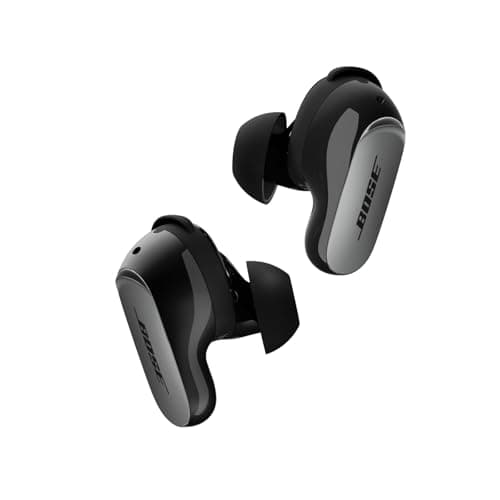 Bose QuietComfort Ultra Earbuds (2nd Gen)The quietest earbuds you can put in a pocket, with the shortest single-charge runtime of the premium set: six rated hours, four with Immersive Audio on. | Best shape for sleeping on your side | 8.48.4 out of 10, our editorial score | |
| 2 | 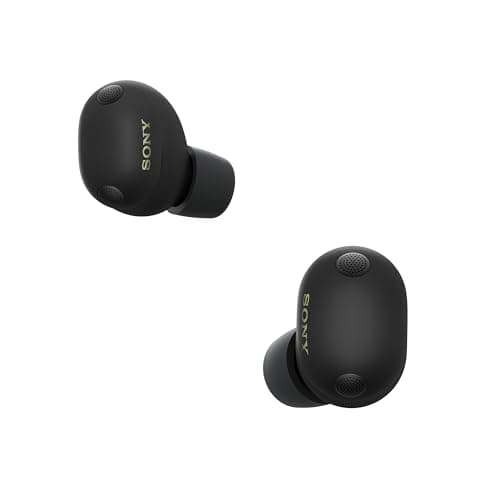 Sony WF-1000XM6Eight rated hours per bud and 24 with the case, at roughly 6.5 g each. The most sensible premium earbud for a flight, because you never have to plan around the battery. | Best canceling in a small bud | 8.98.9 out of 10, our editorial score | |
| 3 | 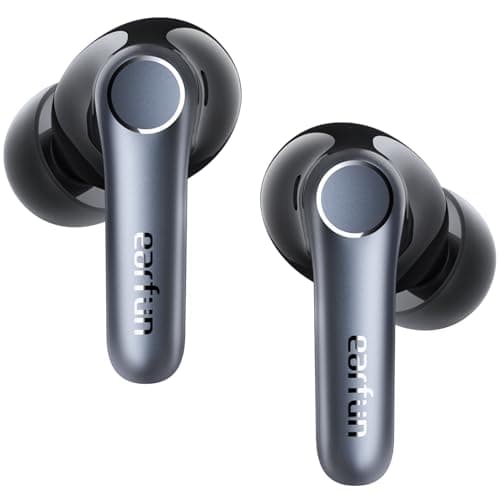 EarFun Air Pro 4Eleven rated hours per bud and 52 with the case, plus LDAC and aptX Lossless, for a small fraction of flagship money. It buys most of the quiet for a little of the price. | Best battery for a full night attempt | 8.08.0 out of 10, our editorial score | |
| 4 | 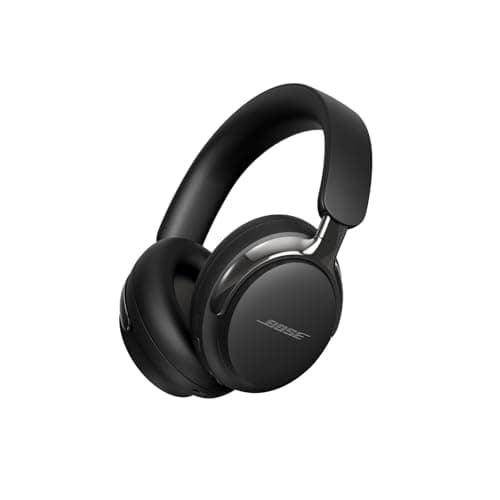 Bose QuietComfort Ultra Headphones (2nd Gen)The quietest cabin of anything here, and the only over-ear in this group whose box already contains the audio cable a seatback screen needs. | Best if you sleep on your back | 9.09.0 out of 10, our editorial score |
#ad Amazon links are affiliate links. Prices come from Amazon’s own data on the date stamped under the buttons above; where we have no current figure the button reads “Check price on Amazon” instead of guessing. How this is funded.
The picks in full
Every pick, in detail
1. Best shape for sleeping on your side
Bose QuietComfort Ultra Earbuds (2nd Gen)
The quietest earbuds you can put in a pocket, with the shortest single-charge runtime of the premium set: six rated hours, four with Immersive Audio on.
Our editorial score: 8.4 / 10
#ad Price as of November 11, 2026. How this is funded
The pick for this problem specifically, because of fit rather than canceling. The design uses shallow insertion and three stabiliser band sizes, which means less of the bud sits inside the canal and less of it protrudes into a pillow.
Up to 6 rated hours with Immersive Audio off and up to 4 with it on, up to 18 hours in total with the case, which charges over USB-C and wirelessly. IPX4.
Six hours will not cover a whole night, and that is the honest limit of every product on this page. Used for the first hour, while you are actually trying to fall asleep, it is the part of the night that matters most.
What works on a plane
- Canceling that genuinely rivals a full-size over-ear, in something pocketable
- The shallow fit is far more tolerable than deep-insertion buds on a long flight
- Wireless case charging is one fewer cable in the bag
What does not
- Six rated hours means a case top-up mid-flight on any long-haul
- Immersive Audio cuts that to four, so on a plane you will mostly leave it off
- 18 hours total with the case is the weakest reserve in the premium earbud set
How it scores against the five travel axes
Published specifications
| Spec | Figure | Source |
|---|---|---|
| Battery, Immersive off | Up to 6 hours | Bose support |
| Battery, Immersive on | Up to 4 hours | Bose support |
| Total with case | Up to 18 hours | Bose support |
| Case charging | USB-C and wireless | Bose support |
| Water resistance | IPX4 | Bose support |
| Fit | Three stabilizer band sizes, shallow insertion | Bose |
Read the full Bose QuietComfort Ultra Earbuds (2nd Gen) review
2. Best canceling in a small bud
Sony WF-1000XM6
Eight rated hours per bud and 24 with the case, at roughly 6.5 g each. The most sensible premium earbud for a flight, because you never have to plan around the battery.
Our editorial score: 8.9 / 10
#ad Price as of November 11, 2026. How this is funded
The strongest active system here in a package small enough to consider in bed. Approximately 6.5 g per bud with the medium tips, with the HD Noise Canceling Processor QN3e, dual processors and eight microphones.
Up to 8 rated hours per bud and up to 24 with the case, 16 of those from the case, plus SBC, AAC, LDAC and LC3 and IPX4. Eight hours is the longest single-charge figure of any earbud on this page.
It is a deeper-fitting bud than the Bose, which is better for the seal and worse against a pillow. There is also no wired fallback, so if the battery goes mid-night the product is inert.
What works on a plane
- Eight rated hours per charge clears most short-haul flights without touching the case
- 24 hours total with the case is the strongest reserve in the premium earbud set
- LDAC means it is not tied to one phone platform
- Roughly 6.5 g per bud effectively disappears when you are trying to sleep on your side
What does not
- Canceling is excellent but the Bose still takes the low-frequency band
- No wired fallback at all, so a seatback screen needs a transmitter
- IPX4 is splash resistance, not weather resistance
How it scores against the five travel axes
Published specifications
| Spec | Figure | Source |
|---|---|---|
| Battery, earbuds | Up to 8 hours | Sony |
| Total with case | Up to 24 hours (16 from the case) | Sony |
| Weight | Approx. 6.5 g per bud with M tips | Sony |
| Driver | 8.4 mm | Sony |
| Bluetooth | 5.3 | Sony |
| Codecs | SBC, AAC, LDAC, LC3 | Sony |
| Water resistance | IPX4 | Sony |
| Processor | HD Noise Canceling Processor QN3e, dual processors, eight microphones | Sony |
3. Best battery for a full night attempt
EarFun Air Pro 4
Eleven rated hours per bud and 52 with the case, plus LDAC and aptX Lossless, for a small fraction of flagship money. It buys most of the quiet for a little of the price.
Our editorial score: 8.0 / 10
#ad Price as of November 11, 2026. How this is funded
The only product here with a realistic chance of lasting a night: 11 hours per charge, and 52 hours in total with the case. If you want something playing masking sound from lights-out to alarm, this is the figure that makes it possible.
Qualcomm QCC3091, Bluetooth 5.4, aptX Lossless, LDAC, AAC and SBC, 10 mm composite dynamic drivers, and EarFun’s own QuietSmart 3.0 claim of up to 50 dB — a vendor figure.
It is a conventional sealed bud, so comfort against a pillow is worse than the Bose. For a back sleeper it is the most practical choice on the page by a clear margin.
What works on a plane
- Eleven rated hours per bud is longer than any premium earbud here
- 52 hours with the case means a two-week trip without a charger thought
- aptX Lossless and LDAC at this price is genuinely unusual
- Losing one on a plane is an annoyance rather than a disaster
What does not
- The 50 dB figure is EarFun's own rating, not an independent measurement, and the gap to Bose is clear
- Adaptive canceling is less steady than the flagships when cabin noise changes
- App polish and firmware support are a step behind the majors
How it scores against the five travel axes
4. Best if you sleep on your back
Bose QuietComfort Ultra Headphones (2nd Gen)
The quietest cabin of anything here, and the only over-ear in this group whose box already contains the audio cable a seatback screen needs.
Our editorial score: 9.0 / 10
#ad Price as of November 11, 2026. How this is funded
The deepest low-frequency reduction on this site, which removes more of the rumbling component of a snore than anything else here. If you sleep flat on your back, an over-ear is genuinely usable and this is the one to pick.
Up to 30 rated hours with canceling on and up to 45 with it off, approximately 264 g as reported, earcups that rotate flat, and a hard case plus a 2.5 mm-to-3.5 mm audio cable in the box.
Two plain warnings. It is impossible on your side, and a sealed over-ear in a warm bedroom gets hot. Thirty hours means battery is not the constraint — your sleeping position is.
What works on a plane
- The best low-frequency canceling in this group, which is exactly the band engine drone lives in
- The 2.5 mm-to-3.5 mm cable is in the box, so a seatback screen needs nothing extra
- Compact hard case for a full-size over-ear
- Up to 45 hours with canceling off, if you only want isolation on a train
What does not
- Immersive Audio costs you a third of the battery, dropping to 23 rated hours
- Heavier than the Sony by roughly 10 g, and clamp is firmer out of the box
- The hard case is compact but still rigid, so it will not squash into a full bag
How it scores against the five travel axes
Published specifications
| Spec | Figure | Source |
|---|---|---|
| Battery, ANC on | Up to 30 hours | Bose |
| Battery, ANC off | Up to 45 hours | Bose |
| Battery, Immersive Audio on | Up to 23 hours | Bose |
| Weight | Approx. 264 g (9.3 oz) as reported | Published reviews |
| USB-C audio | 16-bit, 44.1 or 48 kHz lossless input | Bose support |
| In the box | Hard case, USB-C cable, 2.5 mm-to-3.5 mm audio cable | Bose |
| Folds | Earcups rotate flat into a compact hard case | Bose |
Read the full Bose QuietComfort Ultra Headphones (2nd Gen) review
Questions
Common questions
Do noise cancelling headphones block snoring?
Partly. They remove the low rumbling component well, but a snore is irregular and broadband and the rasping upper part survives. A good physical seal plus a steady masking sound does more about the part you actually hear.
Are earbuds or over-ear headphones better for a snoring partner?
Earbuds, unless you sleep flat on your back. An over-ear cannot be worn on your side and gets hot in a bedroom, while a shallow-insertion earbud stays tolerable against a pillow. Over-ear wins on canceling depth if your position allows it.
Will the battery last all night?
Usually not. The best single-charge figure among these picks is 11 hours and most are 6 to 8, so plan for the hour it takes to fall asleep rather than for eight hours of continuous masking.
Are earplugs better than headphones for snoring?
For pure attenuation, yes — a well-fitted earplug beats consumer canceling across the mid and high frequencies where a snore does its damage, costs almost nothing and needs no charge. You lose audio entirely, including an alarm.
What sound should I play to mask snoring?
A steady broadband sound rather than music: brown or pink noise, rain, or fan noise. The aim is to raise your hearing floor so the irregular rasp stops standing out, which works at a lower volume than trying to drown it out.
Sources
Where these figures come from
- Bose QuietComfort Ultra Earbuds (2nd Gen) specifications (battery, case total, IPX4, stabiliser bands, shallow insertion)
- Sony WF-1000XM6 specifications (battery, weight per bud, processor, codecs, IPX4)
- EarFun Air Pro 4 product page (11 h buds, 52 h total, chipset, codecs, ANC claim)
- Bose QuietComfort Ultra Headphones (2nd Gen) product page (battery modes, weight, box contents)
Read next
Related reading
- How to sleep with headphones on
The practical problems of wearing anything for eight hours.
- Noise-canceling headphones vs earplugs
The cheaper option, and where it genuinely wins.
- Best earbuds for sleeping on a plane
Chosen on exactly the shallow-insertion criteria this page needs.
- Canceling headphones and white noise
Which masking sound to use, and at what level.