
The advantages of noise-canceling headphones are real and narrow: deep reduction of steady low-frequency noise, lower listening volume for the same clarity, much less fatigue on a long flight, better sleep in transit, and easier focus. The disadvantages are price, weight, a dependency on battery, a pressure or fullness sensation some people dislike, almost no effect on voices, reduced safety on a street, and audible self-noise on cheaper systems.
The pros
Six advantages that hold up
It removes the one noise that nothing else touches
Engine drone, train rumble and building plant live in a low-frequency band that no earplug and no amount of padding removes efficiently. Active canceling does, and this is the advantage that justifies the whole category — how canceling works on a plane explains why.
You listen at a lower volume
Removing the background means you do not have to raise the foreground to compete with it. That is the mechanism by which canceling plausibly helps your hearing rather than harming it — do they protect your hearing is the careful version of that claim.
Much less fatigue after a long flight
The benefit that is hard to market and obvious once experienced: eight hours of constant low-frequency noise is tiring in a way you only notice when it stops.
Sleep becomes possible in transit
Not guaranteed, but far more likely. The caveats are physical rather than acoustic — how to sleep with headphones on covers them.
Focus in a noisy room
Partly canceling, partly the social signal that you are not available. Both are real, and the second is not a technical feature.
It works without music
You can wear canceling headphones with nothing playing and still get most of the low-frequency reduction. That is a genuinely useful property for a nap or for concentration.
The cons
Seven disadvantages, including the ones nobody lists
Price
Canceling is the most expensive part of the product to do well, and the price reflects it — why they are so expensive breaks down where the money goes.
Weight and bulk
A canceling over-ear carries a battery, a radio, a processor and microphone housings. Nothing in this registry is lighter than approximately 236 g, and the heaviest is 386.2 g before you add its case.
A dependency on battery
When the charge goes, so does the feature, and on some products so does the audio. A wired pair never has this problem — wired versus wireless makes that comparison properly.
The pressure sensation
A minority of people feel a fullness or slight pressure in the ears with canceling on. It is not harmful and it is not imaginary, and for some people it is enough to make the category unusable — why do canceling headphones hurt my ears goes into it.
It does almost nothing about voices
The most common disappointment. Speech is mid-frequency and irregular, which is the worst case for an active system — do they block voices is the honest answer, and the answer is mostly no.
Reduced safety outdoors
Canceling removes the approach warning you need on a pavement, and a sealed earcup removes your sense of direction — is it safe to wear headphones while walking sets out the rules that make it reasonable.
Self-noise on cheaper systems
An active system has a noise floor of its own, and on budget products you can hear it as a faint hiss in a quiet room. It disappears under cabin noise, which is why it bothers people at a desk rather than on a plane.
Canceling does one thing superbly, several things badly, and nothing at all about the passenger talking two rows back.
The ledger
Both sides, in one table
| Situation | Pros dominate? | Why |
|---|---|---|
| Long-haul flight | Yes, decisively | Steady low-frequency noise for many hours is the ideal case |
| Train or bus commute | Yes | Same noise profile, shorter exposure |
| Open-plan office | Partly | The noise is mostly speech, which canceling barely touches |
| Walking or cycling | No | It removes the warnings you need, and an open-ear design is better |
| Quiet room at home | No | Nothing to cancel, and you may hear the system's own noise floor |
| Sleeping beside a snorer | Partly | The rumble goes, the rasp stays |
Who should skip it
Three people for whom the answer is no
- Anyone who feels the pressure sensation. No product fixes this. Buy open-ear or a sealed passive design instead.
- Anyone whose noise is voices. A good seal plus a masking sound will serve you better, and canceling versus earplugs is the comparison to read.
- Anyone who mostly listens outdoors on foot or on a bike. The feature is working against you there.
In short
Key takeaways
- The core advantage is deep reduction of steady low-frequency noise, which earplugs and padding cannot match.
- Lower listening volume for the same clarity and much less fatigue after a long flight are the two underrated pros.
- The disadvantages are price, weight, battery dependency, a pressure sensation for some people, and self-noise on cheap systems.
- Canceling does almost nothing about voices, which is the single most common disappointment.
- On a pavement or a bike the feature reduces your safety margin and an open-ear design is better.
- Bose QuietComfort Ultra for the strongest pros, Soundcore Space One if price is the objection, Shokz OpenRun Pro 2 if the cons win.
At a glance
Quick picks
Scores are our editorial judgment from published specifications and cited third-party measurements, not our own testing. The rubric is published in full. Tap any row for the full write-up.
| # | Product | Best for | Score | Price |
|---|---|---|---|---|
| 1 | 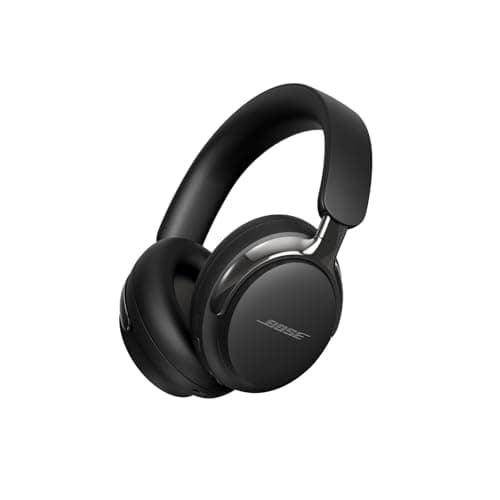 Bose QuietComfort Ultra Headphones (2nd Gen)The quietest cabin of anything here, and the only over-ear in this group whose box already contains the audio cable a seatback screen needs. | The strongest case for the pros | 9.09.0 out of 10, our editorial score | |
| 2 | 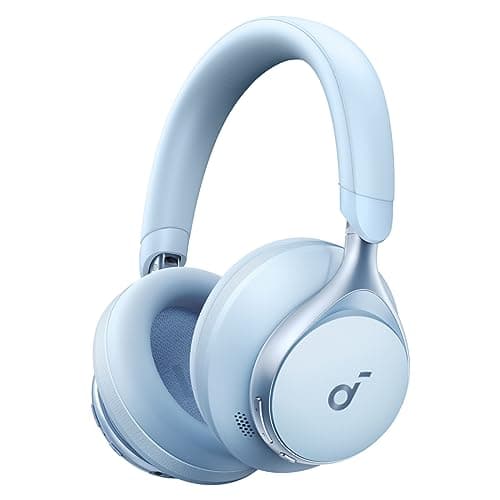 Soundcore Space OneThe budget specification sheet that is genuinely hard to argue with: 40 rated hours with canceling on, LDAC, 40 mm drivers, a folding hinge and an aux cable in the box. | If the main con is the price | 8.58.5 out of 10, our editorial score | |
| 3 | 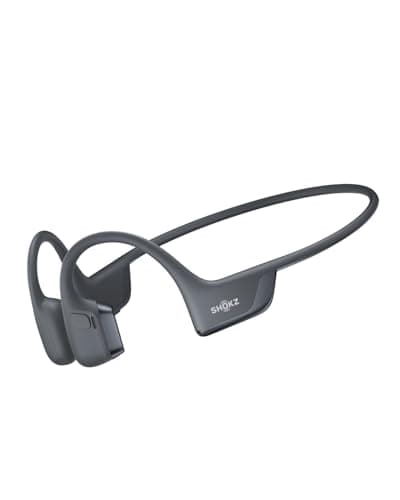 Shokz OpenRun Pro 2An open-ear headphone that leaves your ear canal empty, so you hear the traffic behind you as well as the playlist. The point of it is the opposite of noise canceling. | If the cons outweigh the pros for you | 8.58.5 out of 10, our editorial score |
#ad Amazon links are affiliate links. Prices come from Amazon’s own data on the date stamped under the buttons above; where we have no current figure the button reads “Check price on Amazon” instead of guessing. How this is funded.
The picks in full
Every pick, in detail
1. The strongest case for the pros
Bose QuietComfort Ultra Headphones (2nd Gen)
The quietest cabin of anything here, and the only over-ear in this group whose box already contains the audio cable a seatback screen needs.
Our editorial score: 9.0 / 10
#ad Price as of November 11, 2026. How this is funded
If the advantages on this page are what you want, this is the product that delivers most of them. The deepest low-frequency reduction on this site, which is the single advantage that justifies the whole category for a flyer.
Up to 30 rated hours with canceling on, up to 45 with it off, up to 23 with Immersive Audio, and approximately 264 g as reported. Earcups rotate flat into a compact hard case, USB-C audio accepts 16-bit 44.1 or 48 kHz lossless input, and a hard case, USB-C cable and 2.5 mm-to-3.5 mm audio cable are supplied.
It also carries the cons honestly: it is the most expensive thing here, the clamp is firm, and the Immersive Audio figure shows what a processing mode costs you in battery.
What works on a plane
- The best low-frequency canceling in this group, which is exactly the band engine drone lives in
- The 2.5 mm-to-3.5 mm cable is in the box, so a seatback screen needs nothing extra
- Compact hard case for a full-size over-ear
- Up to 45 hours with canceling off, if you only want isolation on a train
What does not
- Immersive Audio costs you a third of the battery, dropping to 23 rated hours
- Heavier than the Sony by roughly 10 g, and clamp is firmer out of the box
- The hard case is compact but still rigid, so it will not squash into a full bag
How it scores against the five travel axes
Published specifications
| Spec | Figure | Source |
|---|---|---|
| Battery, ANC on | Up to 30 hours | Bose |
| Battery, ANC off | Up to 45 hours | Bose |
| Battery, Immersive Audio on | Up to 23 hours | Bose |
| Weight | Approx. 264 g (9.3 oz) as reported | Published reviews |
| USB-C audio | 16-bit, 44.1 or 48 kHz lossless input | Bose support |
| In the box | Hard case, USB-C cable, 2.5 mm-to-3.5 mm audio cable | Bose |
| Folds | Earcups rotate flat into a compact hard case | Bose |
Read the full Bose QuietComfort Ultra Headphones (2nd Gen) review
2. If the main con is the price
Soundcore Space One
The budget specification sheet that is genuinely hard to argue with: 40 rated hours with canceling on, LDAC, 40 mm drivers, a folding hinge and an aux cable in the box.
Our editorial score: 8.5 / 10
#ad Price as of November 11, 2026. How this is funded
The product that removes the most common objection. Up to 40 rated hours with canceling on and up to 55 in normal mode, 265 g, 40 mm drivers, LDAC, folding earcups, and a travel pouch and aux cable in the box.
Five minutes of charge buys four hours, which also addresses the battery-dependency disadvantage more practically than a bigger rated figure does.
The cons it keeps are canceling depth at the very bottom of the range and pads that run warm past hour four. For an occasional flyer those are the right disadvantages to accept.
What works on a plane
- 40 rated hours with canceling on, from a headphone in the budget tier
- LDAC at this price is unusual, and it is the codec Android users actually want
- Folds and ships with an aux cable, so the seatback screen is covered
- 265 g is not heavy, and the pouch means it travels without a hard case
What does not
- The 98 percent noise-reduction claim is marketing, not a published measurement
- A pouch is not a hard case, so it needs care in a crushed bag
- Pads are the first thing that gives at this price, well before the electronics
How it scores against the five travel axes
Published specifications
| Spec | Figure | Source |
|---|---|---|
| Battery, ANC on | Up to 40 hours | Soundcore |
| Battery, normal mode | Up to 55 hours | Soundcore |
| Quick charge | 5 minutes for 4 hours | Soundcore |
| Weight | 265 g (9.35 oz) | Soundcore |
| Drivers | 40 mm | Soundcore |
| Codecs | LDAC | Soundcore |
| Folds | Yes, ear cups rotate and fold | Soundcore |
| In the box | Travel pouch and aux cable | Soundcore |
3. If the cons outweigh the pros for you
Shokz OpenRun Pro 2
An open-ear headphone that leaves your ear canal empty, so you hear the traffic behind you as well as the playlist. The point of it is the opposite of noise canceling.
Our editorial score: 8.5 / 10
#ad Price as of November 11, 2026. How this is funded
The alternative for someone who reads this ledger and decides canceling is not for them. An open-ear bone-conduction design with an 18 x 11 mm air-conduction low-frequency unit, which blocks nothing and cancels nothing.
30.3 g, up to 12 rated hours, five minutes of charge for 2.5 hours, a full charge in an hour, Bluetooth 5.3, IP55 and multipoint.
It solves the pressure sensation, the safety problem on a street and the occlusion of your own voice, all at once, by not attempting the thing that causes them. It is useless against an aircraft, which is the honest other half.
What works on a plane
- Your ear canal stays open, so road and trail awareness is not a compromise
- 30.3 g on a titanium band means it stops registering as something you are wearing
- IP55 shrugs off sweat, which is the failure mode that kills running earbuds
- 12 rated hours covers a marathon block without a mid-week charge
What does not
- Bone conduction gives up bass depth against a sealed earbud, and no firmware fixes physics
- IP55 is splash resistance, not submersion — this is not a swimming headphone
- Open by design, so it is the wrong tool on a plane or in an open-plan office
How it scores against the five travel axes
Published specifications
| Spec | Figure | Source |
|---|---|---|
| Weight | 30.3 g | Shokz OpenRun Pro 2 specifications |
| Battery | Up to 12 hours | Shokz OpenRun Pro 2 specifications |
| Quick charge | 5 minutes for 2.5 hours | Shokz OpenRun Pro 2 specifications |
| Full charge | 1 hour | Shokz OpenRun Pro 2 specifications |
| Bluetooth | 5.3 | Shokz OpenRun Pro 2 specifications |
| Water resistance | IP55 (sweat and splashes, not swimming) | Shokz OpenRun Pro 2 specifications |
| Drivers | Bone conduction plus an 18 x 11 mm air-conduction low-frequency unit | Shokz OpenRun Pro 2 specifications |
| Multipoint | Yes | Shokz OpenRun Pro 2 specifications |
Questions
Common questions
What are the pros and cons of noise cancelling headphones?
The pros are deep reduction of steady low-frequency noise, a lower listening volume for the same clarity, much less fatigue on long journeys, better sleep in transit and easier focus. The cons are price, weight, battery dependency, a pressure sensation for some people, almost no effect on voices, reduced safety outdoors and audible self-noise on cheaper systems.
What are the disadvantages of noise cancelling headphones?
Seven, in rough order of how often they matter: price, weight and bulk, dependency on battery, the pressure or fullness sensation some people feel, very little effect on speech, reduced situational awareness outdoors, and a faint hiss from the system’s own noise floor on budget products.
Is noise cancelling bad for your ears?
There is no mechanism by which the canceling signal itself damages hearing, and by letting you listen quieter in a loud place it plausibly helps. The pressure sensation some people report is real but not harmful. Volume, not canceling, is the thing to watch.
Do noise cancelling headphones work without music playing?
Yes. The canceling system is independent of playback, so you get most of the low-frequency reduction with nothing playing at all. That makes them useful for a nap or for concentration as well as for listening.
Who should not buy noise cancelling headphones?
Anyone who feels the pressure sensation, since no product solves it; anyone whose noise problem is voices rather than machinery, since a seal plus masking sound does more; and anyone who mostly listens while walking or cycling, where the feature works against their safety.
Sources
Where these figures come from
- Bose QuietComfort Ultra Headphones (2nd Gen) product page (battery modes, weight, USB-C audio, box contents)
- Soundcore Space One product page (battery, weight, drivers, quick charge, box contents)
- Shokz OpenRun Pro 2 specifications (weight, battery, drivers, IP55, multipoint)
- Apple AirPods Max tech specs (386.2 g headphones, 134.5 g Smart Case)
- Bose QuietComfort Headphones product page (0.520 lb, approximately 236 g)
Read next
Related reading
- Are noise-canceling headphones worth it for flying?
The same ledger, applied to the one case where the pros dominate.
- Noise-canceling headphones vs earplugs
The cheaper alternative, and where it genuinely wins.
- Why are noise-canceling headphones so expensive?
Where the money goes, and where the curve flattens.
- Do noise-canceling headphones block voices?
The most common disappointment, explained.